
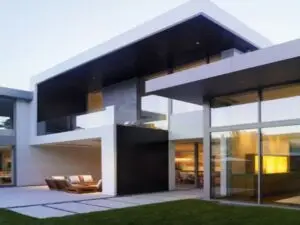
Modern Architecture has changed how we build cities and homes. It began in the early 20th century when architects rejected old decoration. They wanted simplicity, function, and clean lines. Over time, modern architecture shaped our urban landscapes with open floor plans, flat roofs, and large windows. This style made buildings more efficient and closer to nature.
Architects like Le Corbusier and Frank Lloyd Wright showed how form can follow function. Today, modern architecture influences sustainable design, technology in buildings, and even how we live. In this guide we explore modern architecture, its features, materials, styles, impact, challenges, and future.
1. Defining Features of Modern Architecture
Modern architecture puts purpose first. Buildings are designed to do their job well. There is less ornamentation. There are clean surfaces, smooth facades, and geometric shapes. Walls often made of glass or concrete. Rooms flow into each other. Sunlight is used to brighten areas. The design feels open and airy.
Nature is invited in through large windows and open views.
Another feature is the use of advanced materials. Steel, reinforced concrete, glass allow longer spans, thinner supports, and more light. Flat roofs, straight edges, minimal curves become common. Interiors avoid heavy decoration. Colours often neutral. The goal is calm, order, efficiency. This results in buildings that feel modern, purposeful, and connected to their environment.
Table: Key Features of Modern Architecture
| Feature | Description | Example |
| Open Floor Plans | Little separation between rooms; fluid movement | Farnsworth House |
| Flat Roofs | Straight roof lines; streamlined silhouette | Villa Savoye |
| Large Windows | Floor-to-ceiling glass for light and views | Fallingwater |
2. Key Movements and Styles within Modern Architecture
The first style is the International Style. It focuses on volume, balance, simple forms, use of steel and glass. Buildings look light and sleek. There is no decoration. The structure shows itself. Then the Bauhaus Movement blends art, craft, and technology. It values function, simplicity, and modern materials.
Designers and architects worked to make every element matter. In Brutalism, concrete is raw and bold. Forms are sculptural and heavy. It often feels powerful but can feel cold.
Mid-Century Modern came next. Homes used natural materials like wood, open interiors, and harmony with nature. Windows open views; walls blur indoor and outdoor. Finally Minimalism goes further: less is more. Only what is essential stays. Colours neutral, shapes simple. In all these styles the aim is clarity, simplicity, and usefulness.
3. Iconic Examples of Modern Architecture Around the World
Villa Savoye in France by Le Corbusier embodies the five points of modern architecture: pilotis (supports), flat roof, open plan, horizontal windows, free façade. It changed how houses could float above the ground and use steel-concrete structures. Fallingwater in the USA by Frank Lloyd Wright integrates house and waterfall. It uses natural forms, openness, and the landscape as part of the design.
The Seagram Building in New York by Ludwig Mies van der Rohe showcases steel and glass; minimal decoration; “less is more”. Sydney Opera House in Australia combines sculptural forms and engineering; the roof shells are dramatic and bold. Tokyo’s Metabolism projects imagined modular, futuristic urban units, adapting to growth and change. These buildings show how modern architecture can be visionary and practical.
4. Modern Materials and Construction Techniques
Modern architecture uses materials that were impossible before. Reinforced concrete allows large spans and cantilevers. Steel frameworks permit thin columns and open interiors. Glass curtain walls cover buildings with transparent or reflective skins. Prefabrication methods let parts be built off-site and assembled. This speeds up construction.
Sustainable innovations bring new materials: recycled composites, smart glass, insulation that adapts to weather. Technology helps with precision. Digital modelling, 3D printing allow complex shapes and safer, more efficient structures. Modern architecture is not just style; it is engineering and science working together.
5. Sustainability in Modern Architecture
Modern architecture evolved into eco-modernism. It combines modern design with green thinking. Buildings now use green roofs, passive cooling, solar panels. They reduce energy use. They use materials that are renewable or recycled. Nature is part of design.
Case studies show success. The Edge in Amsterdam is called world’s smartest building. It uses sensors, daylight, energy efficiency for comfort and low power use. Bosco Verticale in Milan is a vertical forest: trees on balconies help clean air and lower heat. Apple Park in California is energy efficient, uses renewable energy, and blends with landscape. These examples show that modern architecture can heal environment instead of harming it.
6. The Role of Technology in Modern Architecture
Technology has changed modern architecture deeply. BIM (Building Information Modeling) tools allow architects to design, analyze, and change buildings before they are built. 3D printing permits complex components and shapes. AI-driven tools help optimize structure, energy, and comfort.
Augmented reality and virtual reality let clients see spaces before construction. Robotics and automation speed up building tasks, reduce errors and waste. These technological tools support innovation in modern architecture and help achieve sustainability, precision, and cost savings.
7. Modern Architecture vs. Contemporary Architecture
Modern architecture refers to designs from early 20th century to around 1970s. It focuses on function, simplicity, minimal decoration, industrial materials. The style is distinct: clean lines, forms that follow purpose. Contemporary architecture is current architecture: 1980s to today. It picks up modern ideas but adds innovation in shape, materials, sustainability.
Modern architecture uses steel, concrete, glass. Contemporary architecture adds smart materials, digital design, sustainable practices. Influence of environmentalism, technology is stronger in contemporary architecture. Thus, modern is more about historical movements, contemporary is about now and future.
8. The Impact of Modern Architecture on Urban Living
Modern architecture shapes city skylines. Glass towers, open plazas, planned roads and blocks. It builds infrastructure: hospitals, schools, offices that are efficient. Homes become lighter, with more space, more light. Public spaces are simpler, cleaner. They become places for people to gather.
Quality of life improves when buildings are functional and healthy. Open layouts improve air flow. Windows improve daylight. Natural surroundings bring calm. Modern architecture ideas live on in smart cities, sustainable homes, adaptive reuse of old buildings. It changes how we live physically and emotionally.
9. Challenges and Criticisms of Modern Architecture
One criticism is that modern architecture can feel cold and sterile. Lack of ornament or decoration may make spaces seem impersonal. Another is environmental problems: early modern buildings used lots of concrete and energy, sometimes ignoring climate.
Balancing cultural and historical context is hard. Modern architecture can clash with traditional neighborhood styles. Also many mid-century buildings age poorly. Adaptive reuse is a solution: renovating old modernist buildings to be energy efficient and livable today. Architects must marry innovation with respect for place and history.
10. The Future of Modern Architecture
The future of modern architecture fuses technology, nature, and human-centered design. Architects design in harmony with climate, use biophilic architecture (bringing nature inside), adaptive urban spaces that change with needs.
There is a shift toward carbon-neutral, net-zero buildings. Materials will be smarter: self-healing concrete, energy-generating façades, recycled plastics. Architects of next generation will think of cities as ecosystems. Modern architecture will continue evolving, staying relevant, inspiring new forms and better living.
Conclusion
Modern Architecture remains one of the most powerful design styles in history. Its focus on simplicity, function, and innovation shaped how we build homes, offices, cities. Even today its principles guide sustainable design, technology integration, and human-centered spaces. Modern architecture is not just old style; it lives in our future. As we face climate change, urban growth, and social needs, modern architecture gives us tools for progress. It shows that buildings can be beautiful, useful, and kind to people and planet.
FAQs about Modern Architecture
| Question | Answer |
| What is modern architecture exactly? | It is the style that began in early 20th century. It rejects ornamentation and emphasizes clean lines, function, and modern materials. |
| How does modern architecture differ from contemporary architecture? | Modern refers to historical movements from 1920s-1970s, with industrial materials and minimal decoration; contemporary refers to current trends with innovation, sustainability, flexible shapes. |
| Why are materials like glass and concrete so common in modern architecture? | Because they allow large spans, open spaces, thin structural elements, and light. They make design efficient and strong. |
| What are examples of sustainable modern architecture? | The Edge in Amsterdam, Bosco Verticale in Milan, Apple Park in California are global examples. They combine efficiency, green materials, and design that respects environment. |
| What are criticisms of modern architecture? | Critics say modern architecture can feel impersonal, too cold. Early modern buildings sometimes ignore local culture and climate. Also durability and adaptability can be issues. |




One thought on “Modern Architecture: The Complete Guide to Contemporary Design and Innovation”