
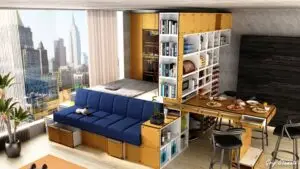
If your home feels tight and crowded, you’re not alone. Many people struggle with small spaces design ideas that make a room look open and airy. The secret isn’t always about having more square footage — it’s about how you design and arrange what you already have. With the right layout, lighting, and color choices, even a small apartment can feel spacious.
In this guide, you’ll discover how to use smart design ideas to transform cramped rooms into relaxing spaces. By the end, you’ll know how to make your home look bigger, brighter, and far more inviting.
1. The Science Behind Space Perception
Understanding how the eye sees space is key to great design. Our brains interpret light, color, and depth to decide how large or small an area feels. When you fill a room with dark colors and bulky furniture, it visually shrinks. But when you open sightlines, use reflective surfaces, and let in natural light, the space expands instantly.
The pillars of small space design are simplicity, light, and proportion. These three elements control how your room feels and flows. For example, a bright studio apartment with fewer furnishings feels twice as large as one packed with clutter and dark walls.
2. Perfecting Layout and Flow
A smart layout can completely change how a room feels. The best trick is to create open pathways where your eyes can move freely. Avoid placing large furniture near doors or windows. When the line of sight stays open, your brain perceives more space.
Floating furniture like wall-mounted desks or shelves can make floors appear larger. Use modular furniture that folds or stacks to save space during the day. A Murphy bed or sofa bed, for instance, lets a studio turn from bedroom to living room in seconds.
3. Choosing Colors, Materials, and Finishes That Expand the Eye
Color plays a major role in how spacious a room feels. Light tones like whites, soft grays, or pastels make walls recede, creating openness. Dark shades absorb light and bring walls inward. For the best effect, use a monochromatic palette that blends smoothly.
Adding reflective materials such as mirrors, glass, or glossy finishes helps bounce light around. Keep patterns minimal, and avoid large prints that can overwhelm small rooms. Long curtains that reach the ceiling add height and make windows look grander.
Table 1: Color Impact on Space Perception
| Color Type | Effect on Space | Best Use |
| Light Shades | Expands visual space | Walls, ceilings |
| Dark Shades | Makes rooms feel smaller | Accent areas |
| Monochrome | Creates unity | Entire room |
| Reflective Finishes | Adds brightness | Furniture, décor |
4. Hidden Storage and Clever Organization
Storage is the backbone of small spaces design ideas. Built-in cabinets that blend into the wall help hide clutter and maintain a clean look. Use ceiling-height shelves to draw the eye upward.
Choose dual-purpose furniture like beds with drawers or ottomans with hidden compartments. Keep counters clear and surfaces minimal. Matching wall and cabinet finishes can make furniture visually disappear, creating a seamless, open flow.
5. Lighting That Enlarges a Room
Lighting has the power to transform any home. A layered lighting plan — with ambient, task, and accent lighting — brings dimension to a small space. Avoid one central light source; instead, use multiple smaller lights to remove shadows.
Natural light should always be your best friend. Replace heavy curtains with sheer ones or blinds that open wide. Slim floor lamps and wall sconces save surface space while spreading light evenly across the room.
Table 2: Lighting Types for Small Rooms
| Lighting Type | Purpose | Ideal Placement |
| Ambient | General brightness | Ceiling, wall sconces |
| Task | Focused use | Desk, kitchen counter |
| Accent | Adds depth | Corners, artwork |
| Natural | Expands space visually | Windows, skylights |
6. Furniture Choices That Fit Just Right
Furniture can make or break your design. In small rooms, scale is everything. Oversized sofas or wardrobes dominate space, while smaller, proportionate pieces maintain balance. Choose furniture with legs — it exposes more floor area and creates a feeling of openness.
Transparent materials like glass or acrylic make furniture seem lighter. Keep only one statement piece per room to avoid visual clutter. A large rug that sits under all your furniture also ties the room together and feels more cohesive.
7. Using Mirrors, Windows, and Visual Tricks
Mirrors are the oldest small space design trick in the book — and for good reason. When placed opposite a window, a mirror doubles the amount of natural light and extends sightlines. Long vertical mirrors stretch walls, making them appear taller.
Windows also play a huge part in design. Keep them simple with light fabrics or sheer blinds. Extending flooring or color tones between connected spaces helps create a continuous visual flow, adding to the illusion of more space.
8. Color Zoning and Seamless Connectivity
Open-plan homes benefit from color zoning — using subtle color shifts to define spaces without solid barriers. For example, you can use soft beige for your living area and a pale gray for your kitchen while keeping the same flooring. This creates identity without breaking flow.
Glass partitions or open shelving divide space while still letting in light. Maintaining consistency in flooring and ceiling color enhances a sense of seamless connection between rooms.
9. Bringing the Outdoors In
Connecting indoor and outdoor spaces instantly makes your home feel larger. Use matching flooring for your balcony or terrace to blur boundaries. Keep window ledges clean and decorate them with slender plants that don’t block views.
When your sightline continues beyond walls, your space expands mentally. Sliding glass doors, large windows, or even indoor plants that reflect outdoor greenery can double the perceived depth of a room.
Table 3: Indoor-Outdoor Design Elements
| Element | Function | Benefit |
| Matching Flooring | Creates continuity | Expands visual area |
| Glass Doors | Opens sightline | Adds light and depth |
| Tall Plants | Directs gaze upward | Adds natural height |
10. Habits That Keep Small Spaces Feeling Big
Design alone isn’t enough — habits matter too. A clutter-free lifestyle keeps your home open and breathable. Try the “one in, one out” rule: when you buy something new, remove one old item.
Rearranging furniture every few months can refresh energy and flow. Treat empty space as valuable design real estate — it’s what makes the room feel calm and comfortable.
11. Real-World Transformations
Case studies show how design can reshape perception. A 400-square-foot apartment in Tokyo used mirrors and wall lighting to feel 40% larger. In another case, a small New York studio added white paint and modular furniture, gaining two feet of walking space.
These real-world examples prove that design ideas for small spaces don’t just look good in magazines — they truly work in real life.
12. Budget-Friendly Quick Fixes
Not every transformation requires a huge investment. Simple updates like repainting ceilings in bright white or switching heavy drapes for sheer curtains make a dramatic difference. Replacing bulky furniture with stackable or modular pieces can open up valuable square footage.
Even adding a single large mirror or rearranging furniture for better sightlines can change how big your home feels — all without breaking the bank.
Conclusion — Big Style, Small Space
Creating a spacious feel in a small home is all about smart thinking. With small spaces design ideas that use light, color, and layout wisely, any home can feel airy and stylish. Start small — maybe a mirror here, a light color there — and you’ll notice how big a difference these small changes make.
A compact home doesn’t have to feel cramped. When designed right, it becomes a cozy, open retreat that feels much larger than it really is.
14. Frequently Asked Questions (FAQs)
Q1. How do I make a small room look bigger instantly?
Use light paint colors, mirrors, and decluttered spaces. Keep furniture minimal and let light in.
Q2. What furniture works best in small rooms?
Choose slim, legged furniture or modular pieces that serve more than one function.
Q3. Do dark colors make rooms look smaller?
Yes, dark shades absorb light and bring walls inward. Use them only as accents.
Q4. How can lighting improve small spaces?
Layer lighting — ambient, task, and accent — to remove shadows and add depth.
Q5. Is minimalism necessary for small spaces?
Minimalism helps a lot. Fewer items mean more open space and cleaner sightlines.



One thought on “Small Spaces Design Ideas That Make Your Home Look Bigger”