
House Renovation Guide: Starting a home renovation without a plan is like driving across the country without a map. You might get there eventually, but you’ll burn through extra time, money, and patience along the way. If you’re staring down a kitchen tear-out, a bathroom overhaul, or a full house renovation, you’re probably asking the same questions every homeowner asks: How much will this cost? Do I need permits? How do I find a contractor I can trust? How long is this going to take over my life?
This guide answers all of that. You’ll learn exactly how to plan a renovation project from the first idea to the final walkthrough, including budgeting, design, building codes, hiring a contractor, scheduling, and the practical, often-overlooked details that determine whether a renovation goes smoothly or turns into a stressful mess. By the end, you’ll have a clear, step-by-step framework you can apply to any home upgrade, whether it’s a single room or your entire house.
Understanding the Renovation Process: What to Expect

Before you pick a paint color or call a contractor, it helps to understand what a renovation actually involves. Most homeowners underestimate the number of moving parts, and that’s where budgets and timelines fall apart.
A typical residential renovation moves through five broad phases: planning and design, permitting, demolition, construction, and inspection/closeout. Each phase depends on the one before it. Skipping or rushing the planning phase is the single biggest reason renovations go over budget — industry cost-estimating firms consistently find that change orders and scope creep, not material price increases, are the leading cause of budget overruns on residential projects.
Renovation vs. Remodel vs. Restoration — Key Differences
These terms get used interchangeably, but they describe different kinds of work, and knowing the difference matters because it affects your budget, your permits, and who you hire.
| Term | What It Means | Typical Scope | Permit Likelihood |
| Renovation | Restoring or updating something that already exists | Repainting, replacing fixtures, updating finishes | Low to moderate |
| Remodel | Changing the structure, layout, or function of a space | Moving walls, reconfiguring a kitchen layout | Moderate to high |
| Restoration | Returning a structure to its original historical condition | Older homes, historic properties | Often high, with added historical review |
Understanding renovation vs remodeling up front helps you set realistic expectations. A simple renovation might take two to three weeks. A structural home remodel that involves moving plumbing or load-bearing walls can take two to four months or longer.
Typical Renovation Timeline by Project Size
| Project Type | Average Timeline |
| Bathroom refresh (no layout changes) | 1–3 weeks |
| Full bathroom remodel | 3–6 weeks |
| Kitchen refresh (cabinets, counters, appliances) | 2–4 weeks |
| Full kitchen remodel (layout changes) | 6–10 weeks |
| Single-room addition | 2–4 months |
| Whole-house renovation | 4–8 months |
These ranges assume permits are approved on schedule and materials arrive on time — two assumptions that don’t always hold up in the real world, which is exactly why planning matters so much.
Step 1: Define Your Renovation Goals

Every successful renovation project starts with a clear answer to one question: what problem are you actually trying to solve? “I want a nicer kitchen” is a feeling, not a goal. “I need more counter space and better storage because my current layout has no workflow” is a goal you can design around.
Cosmetic Updates vs. Structural Changes
Sort your wish list into two buckets early on, because they have very different cost and complexity profiles.
- Cosmetic updates: new paint, updated lighting, new flooring, refaced cabinets, new fixtures
- Structural changes: moving walls, relocating plumbing or electrical, adding square footage, changing rooflines
Cosmetic work is faster, cheaper, and rarely requires major building permits. Structural work almost always requires permits, a more detailed renovation plan, and a licensed professional’s involvement, especially anything touching electrical plumbing or HVAC systems.
Room-by-Room Priorities
If you’re tackling a whole-house project, prioritize by return on daily use and resale value. According to Remodeling Magazine’s long-running Cost vs. Value Report, kitchen and bathroom updates and garage door replacements consistently rank among the home improvement projects that recoup the highest percentage of their cost at resale, while large-scale additions tend to recoup less proportionally, even though they add significant living space.
Expert tip: If your budget is limited, fix function before fashion. A kitchen with poor workflow benefits more from a layout fix than from premium countertops.
Step 2: Set a Realistic Budget
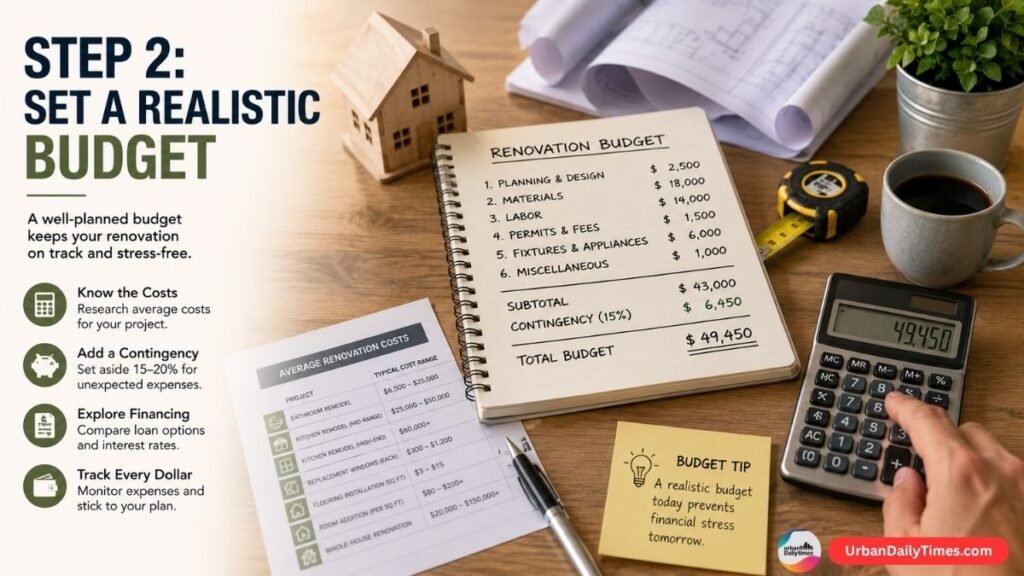
This is the step people most often rush, and it’s the one that determines whether your renovation project stays on track. A realistic budget isn’t just “what I want to spend.” It’s a structured number built from real cost data, contingency planning, and financing decisions made before any demolition starts.
Average Renovation Costs by Project Type
Costs vary significantly by region, home size, and material choices, but national averages give you a reasonable starting benchmark for planning purposes.
| Project | Typical Cost Range |
| Bathroom remodel | $6,500 – $25,000 |
| Kitchen remodel (mid-range) | $25,000 – $50,000 |
| Kitchen remodel (high-end) | $60,000+ |
| Replacement windows (per window) | $300 – $1,200 |
| Flooring installation (per sq ft) | $3 – $15 |
| Room addition | $80 – $200+ per sq ft |
| Whole-house renovation | $20,000 – $150,000+ |
These figures are general planning benchmarks. Always get contractor quotes specific to your home, region, and material selections before finalizing your budget.
Building in a Contingency Fund
Set aside 15–20% of your total budget as a contingency fund. This isn’t optional padding, it’s a near-universal recommendation among contractors and renovation consultants because older homes in particular tend to reveal surprises once walls are opened: outdated wiring, hidden water damage, or plumbing that doesn’t meet current code.
“The renovations that go over budget aren’t the ones that hit problems. They’re the ones that didn’t plan for problems in the first place.” — a sentiment echoed by contractors across the residential construction industry.
Financing Options
Not every renovation gets paid in cash, and that’s completely normal. Common financing routes include:
- Cash savings — no interest, but ties up liquidity
- Home equity loan — fixed lump sum, fixed interest rate, good for well-defined projects
- Home Equity Line of Credit (HELOC) — flexible draw amounts, variable rate, useful for phased projects
- Cash-out refinance — replaces your mortgage with a larger one, releasing equity as cash
- Renovation-specific loans (such as FHA 203(k) loans) — designed specifically for purchase-renovation combos
Talk to a licensed lender or financial advisor about which option fits your situation. Interest rates, loan terms, and qualification requirements change regularly, so get current figures directly from lenders rather than relying on outdated estimates.
Step 3: Plan the Design

Once your goals and budget are defined, design turns those ideas into something buildable. This is where a renovation plan starts to take real shape on paper, or in a 3D rendering.
Working with an Architect or Interior Designer
For cosmetic updates, you may not need outside design help at all. But for layout changes, additions, or anything touching load-bearing structures, bring in professionals:
- Architects handle structural design, building permits, and code compliance for major changes
- Interior designers focus on space planning, material selection, and finishes
- Design-build firms combine both design and construction under one contract, which can simplify communication
A good interior designer or design consultant earns their fee back by avoiding costly mistakes, such as ordering cabinets that don’t fit a space or choosing finishes that clash with existing architecture.
Choosing Materials and Finishes
This is where personal style meets practicality. When selecting materials, weigh three factors equally: durability, maintenance, and cost.
Flooring installation is a good example of how these tradeoffs play out:
| Flooring Type | Durability | Maintenance | Typical Cost (per sq ft) |
| Hardwood flooring | High (refinishable) | Moderate | $6–$15 |
| Laminate flooring | Moderate | Low | $3–$8 |
| Tile flooring | Very high | Low | $5–$15 |
| Luxury vinyl plank | High | Very low | $3–$7 |
Designing for Energy Efficiency and Long-Term Value
Energy-efficient choices pay off twice: lower utility bills now, and stronger resale appeal later. Consider:
- Energy-efficient windows with low-E coatings and double or triple glazing
- Improved attic and wall insulation
- ENERGY STAR-rated appliances
- High-efficiency HVAC systems
The U.S. Department of Energy notes that replacement windows with modern energy-efficient glazing can meaningfully reduce heating and cooling costs compared to older single-pane windows, making them one of the more practical upgrades for both comfort and long-term savings.
Step 4: Understand Permits and Building Codes
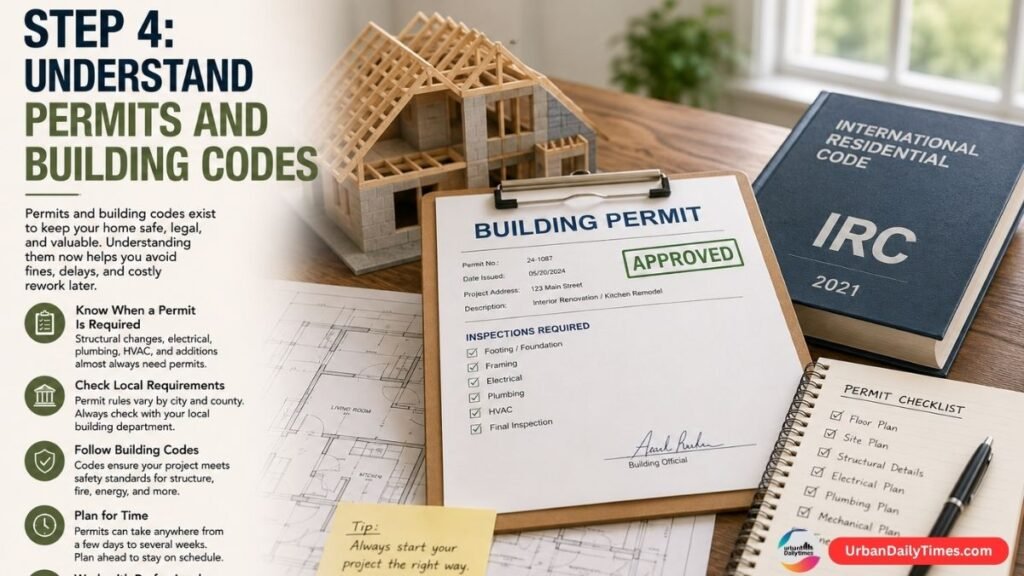
This step trips up more first-time renovators than any other, mostly because people assume permits are only for additions. In reality, building codes apply to a much wider range of work than most homeowners expect.
When You Need a Permit (and When You Don’t)
| Generally Requires a Permit | Generally Does Not |
| Moving or removing walls | Painting |
| Electrical or plumbing changes | Installing new flooring |
| Adding square footage | Replacing cabinets (no layout change) |
| Replacing a roof | Minor landscaping |
| Installing new HVAC systems | Cosmetic fixture swaps (like-for-like) |
Code compliance isn’t just bureaucratic box-checking. It protects your safety, your home’s value, and your ability to sell the property later without complications from unpermitted work showing up in an inspection.
Local Code Requirements to Check Before You Start
Contact your local building department before finalizing your renovation plan. Requirements vary significantly by city and county, and they cover areas like:
- Electrical load requirements for new circuits
- Plumbing venting and drainage standards
- Egress window requirements for bedrooms
- Setback and zoning rules for additions
- Energy code requirements for windows and insulation
Skipping permits to save time or money is a common and costly mistake. Unpermitted work can lead to fines, forced removal of completed work, and serious complications when you eventually sell the home.
Step 5: Hire the Right Contractor

Even the best renovation plan falls apart in the hands of the wrong contractor. This step deserves as much research time as your budgeting did.
General Contractor vs. Specialty Contractors vs. DIY
| Option | Best For | Tradeoffs |
| General contractor | Multi-trade projects (kitchen, whole-house) | Higher cost, single point of accountability |
| Specialty contractor | Single-trade work (roofing, electrical) | Lower cost, requires you to coordinate trades |
| DIY | Small cosmetic DIY projects | Saves labor cost, requires real skill and time |
A licensed contractor carries liability insurance and is bonded, which protects you if something goes wrong on the job site. Always verify license status through your state’s contractor licensing board before signing anything.
Questions to Ask Before Signing a Contract
Use this checklist when interviewing a renovation contractor:
- Are you licensed and insured in this state/county?
- Can you provide references from similar projects?
- What’s your typical timeline for a project this size?
- How do you handle change orders and unexpected issues?
- What’s your payment schedule structure?
- Who pulls the permits, you or me?
- What’s your warranty on labor and materials?
Get at least three written contractor quotes before deciding. Comparing quotes side by side reveals which bids are realistic and which are either inflated or suspiciously low.
Red Flags When Vetting a Contractor
- Demands full payment upfront
- No written contract or vague scope of work
- Can’t provide proof of license or insurance
- Pressures you to skip permits
- No local references or physical business address
- Significantly underbids every other quote with no clear explanation
Case study: A homeowner in a mid-size suburban market hired the lowest-bidding contractor for a kitchen remodel, skipping the reference check to save time. The contractor failed to pull electrical permits, and the work didn’t pass inspection when the home was listed for sale two years later. The homeowner had to pay a licensed electrician to redo the wiring and retroactively secure permits, costing nearly 40% more than the original remodel. The lesson: a lower bid that skips proper code compliance isn’t actually cheaper.
Step 6: Create a Detailed Renovation Plan and Schedule

With design finalized and a contractor selected, it’s time to build the actual renovation checklist and remodeling schedule that will guide the project day to day.
Sequencing the Work
Construction has a natural order, and getting it wrong creates expensive rework. A standard sequence looks like this:
- Demolition
- Structural and framing work
- Rough-in electrical work, plumbing systems, and HVAC
- Inspections of rough-in work
- Insulation and drywall
- Flooring installation
- Cabinetry and built-ins
- Painting and finishes
- Fixture and appliance installation
- Final inspection and walkthrough
Trying to install flooring before rough-in plumbing is finished, for example, almost always means redoing work, which costs both time and money.
Coordinating Deliveries, Permits, and Inspections
Material lead times can derail even a well-planned schedule. Custom cabinetry, specialty windows, and certain tile or stone products can take 6–12 weeks to arrive. Order long-lead items as soon as your design is finalized, not after demolition starts.
Best practice: Build a simple shared calendar (digital or physical) showing permit approval dates, material delivery windows, and inspection appointments. This keeps you and your contractor aligned and reduces costly idle days on the job site.
Step 7: Prepare Your Home and Household

The planning isn’t just about the construction itself. It’s also about preparing your actual living situation for weeks or months of disruption.
Preliminary Projects Before Renovation Begins
- Declutter and remove belongings from the work zone
- Protect furniture and flooring in adjacent rooms with coverings
- Shut off utilities to the affected area as instructed by your contractor
- Set up temporary kitchen or bathroom facilities if needed
- Photograph the space before work begins for insurance and reference purposes
Should You Stay or Move Out During the Renovation?
| Factor | Stay at Home | Move Out Temporarily |
| Cost | Lower | Added housing cost |
| Convenience | Higher disruption | Less daily disruption |
| Best for | Single-room, partial renovations | Whole-house, major structural work |
| Safety | Manageable with precautions | Avoids dust, noise, safety hazards |
If you’re renovating your only bathroom or kitchen, or doing structural work that compromises utilities, staying with family or in short-term housing is often worth the added cost in reduced stress.
Updating Your Homeowners Insurance Before Work Begins
Contact your insurance provider before construction starts. Standard homeowners policies may not automatically cover renovation-related risks like theft of materials, contractor liability gaps, or increased fire risk during construction. Ask specifically about:
- Builder’s risk insurance for the renovation period
- Confirmation that your contractor carries adequate liability coverage
- Whether your policy needs a rider for increased home value after renovation
Step 8: Start the Renovation — What Happens On-Site
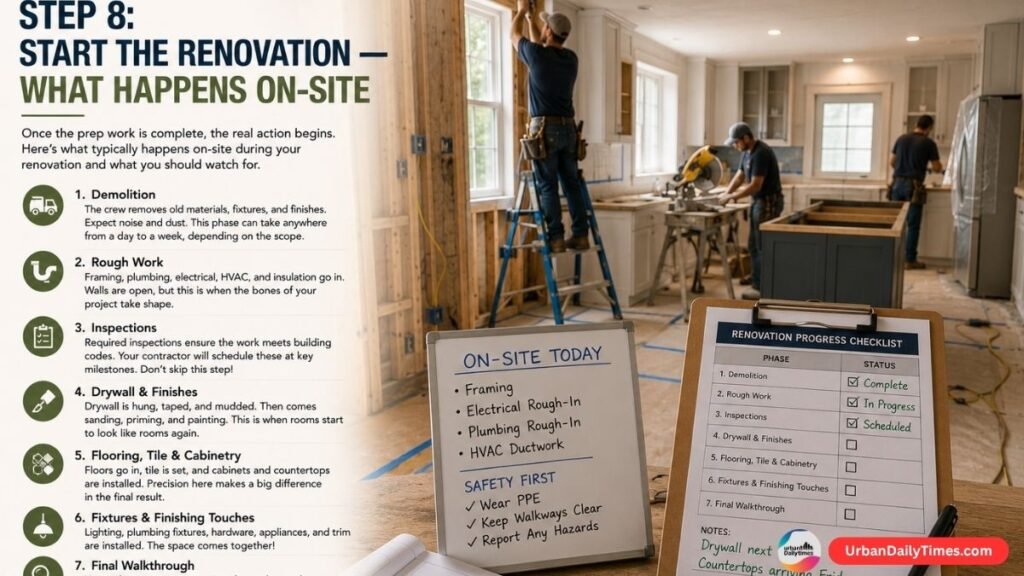
Once permits are approved and materials are ordered, construction begins. Knowing what to expect during this phase helps you manage expectations and communicate effectively with your renovation contractor.
Demolition and Site Prep
Demolition is loud, dusty, and disruptive, but it’s also when hidden issues get discovered, like outdated wiring, water damage, or structural deficiencies behind walls. This is normal. It’s also exactly why your contingency fund exists.
Managing Change Orders and Unexpected Issues
A change order is a formal modification to the original contract, typically triggered by unexpected discoveries or homeowner-requested changes mid-project. Every change order should be documented in writing with updated cost and timeline impacts before work proceeds.
Common mistake: Approving verbal changes without written documentation. This creates disputes later about what was agreed to and at what cost. Always insist on written change orders, even for small adjustments.
Step 9: Inspections and Final Walkthrough
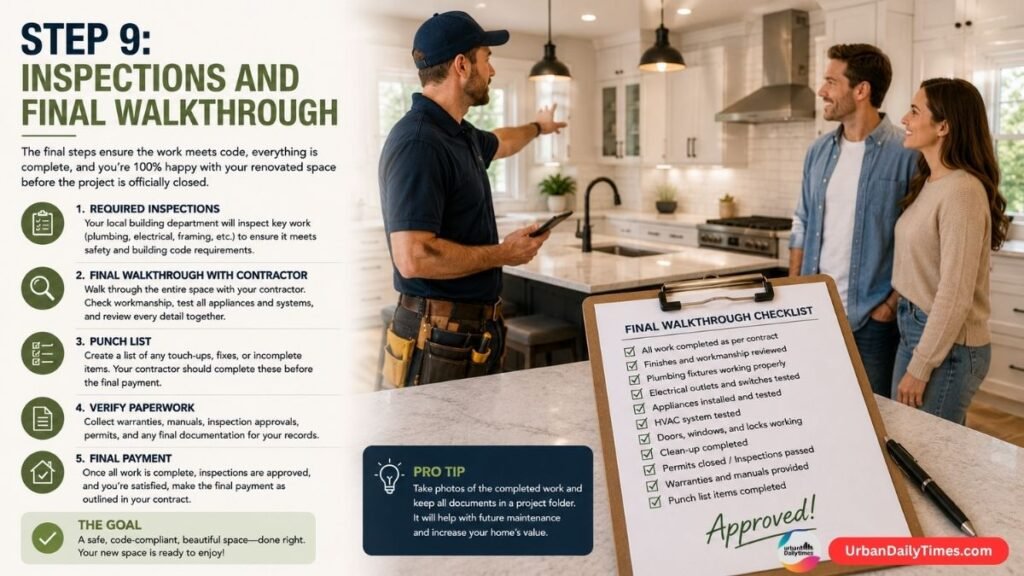
Inspections aren’t just a formality, they’re your safeguard that the work meets safety and building codes.
Scheduling Required Inspections
Depending on your project scope, you may need separate inspections for:
- Framing
- Electrical rough-in
- Plumbing rough-in
- Insulation
- Final building inspection
Your contractor typically schedules these with the local building department, but confirm who is responsible before work begins.
What to Check Before Final Sign-Off
Before signing off as complete, walk through with a checklist:
- All fixtures and appliances function properly
- No visible gaps, cracks, or unfinished trim work
- Doors and windows open, close, and lock correctly
- Paint and finishes are even and free of defects
- All permits have received final approval
- You’ve received warranty documentation for materials and labor
Hold back final payment (commonly 10%, per many standard contracts) until this walkthrough is complete and any punch-list items are resolved.
Common Renovation Mistakes to Avoid
- Skipping the contingency fund — leaves no buffer for the surprises that show up in nearly every older home
- Choosing a contractor based on price alone — the cheapest bid often means cut corners or skipped permits
- Starting demolition before permits are approved — can result in stop-work orders and fines
- Not getting multiple written contractor quotes — makes it hard to spot inflated or unrealistic bids
- Changing the scope mid-project without documentation — leads to disputes over cost and timeline
- Underestimating material lead times — causes avoidable delays
- Ignoring building codes to save money — creates costly problems at resale
How to Save Money on a Home Renovation
A smaller budget doesn’t mean a worse outcome. It means being strategic about where your money goes.
Where to Splurge vs. Where to Save
| Splurge On | Save On |
| Structural and code-related work | Cosmetic finishes you can upgrade later |
| Quality fixtures used daily (faucets, hardware) | Paint colors (cheap to change) |
| Energy-efficient windows and insulation | Decorative tile accents |
| A licensed, reputable contractor | Non-structural DIY projects you can handle |
Reusing or Repurposing Existing Materials
Refinishing existing hardwood floors instead of replacing them, reusing cabinet boxes with new fronts, or repurposing salvaged fixtures can cut costs significantly without sacrificing the finished look.
Timing Your Renovation for Better Contractor Rates
Contractors are typically busiest in spring and summer. Scheduling interior renovation work during fall or winter can sometimes result in more competitive pricing and faster availability, since demand for indoor projects often dips when outdoor construction season winds down.
Key Takeaways
- Define clear goals before designing anything
- Build a budget that includes a 15–20% contingency fund
- Understand which parts of your project require building permits
- Vet contractors thoroughly and always get written quotes
- Sequence work properly to avoid costly rework
- Prepare your household, not just your house, for the disruption
- Don’t skip inspections, they protect your safety and your investment
Conclusion
Planning ahead always beats fixing problems later. This house renovation guide shows that good results start with a clear budget, a smart design, and a contractor you trust. Permits and building codes protect your home and your wallet, so don’t skip them. A solid plan keeps your project on track from day one.
Renovations test your patience, but preparation makes the process smoother. This house renovation guide reminds you to expect surprises, build in a contingency fund, and communicate clearly with your contractor. Small choices, like sequencing work correctly, save real money and time. Follow these steps, and your home renovation will feel manageable, organized, and worth every effort.
Frequently Asked Questions
What’s the best first step when starting a house renovation guide checklist?
Start by defining your goals and setting a realistic budget with a 15–20% contingency fund before touching design or contractors.
Is it cheaper to renovate or move to a new house in 2026?
Renovating is often more cost-effective than moving, especially with current mortgage rates making relocation expensive, but costs depend heavily on project scope and local labor rates.
How do I know if my contractor is licensed and legitimate?
Verify their license number directly through your state’s contractor licensing board website and ask for proof of liability insurance before signing anything.
Do energy-efficient renovations qualify for tax credits?
Many energy-efficient upgrades like windows, insulation, and HVAC systems may qualify for federal tax credits under current energy efficiency programs, so check the latest IRS guidelines before filing.
What’s the difference between a renovation loan and a home equity loan?
A renovation loan, like an FHA 203(k), bundles purchase and repair costs into one mortgage, while a home equity loan borrows against equity you already have in your current home.

Welcome to Urban Daily Times. My name is Malik Akmal, and I’m passionate about sharing practical home decor and home improvement ideas that help you create a better living space. With over 15 years of experience in home design, renovation trends, and product research, I focus on providing trustworthy advice that helps homeowners save money and choose the right solutions. Every product and recommendation featured on Urban Daily Times is carefully researched and reviewed to ensure you get honest, useful, and reliable information.


