
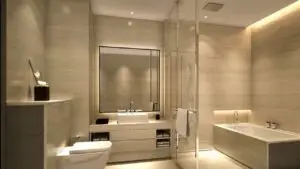
A Modern Bathroom creates a calm space with clean lines, minimal clutter, and clever features. In this guide you will learn how to design a bathroom that blends style, function, and innovation. You will see how modern bathrooms evolved from basic utility rooms into spa-like sanctuaries. This article covers design principles, materials, lighting solutions, layout ideas, trends, storage and planning tips. You will get deep knowledge about sustainability, smart gadgets, cost estimates, and real case studies. By the end you can plan or renovate with confidence.
1. Understanding Modern Bathroom Design
In a modern bathroom, the aesthetic is simple. You will find straight edges, flat surfaces, and minimal decoration. The design avoids ornate embellishments. The walls, fixtures, and layout all contribute to a sense of calm and order. Geometry, balance, and functional clarity rule the space.
Core elements include minimalism, open layouts, and visual clarity. Walls, floors, and furniture seamlessly connect. There is a smooth flow between zones (e.g. shower, sink, toilet). The modern bathroom differs from traditional styles by removing fussy curves and heavy moldings. It also differs from mere contemporary bathrooms by having a disciplined simplicity rather than ever-changing trendy features.
Sustainability and smart technology play key roles. Water efficiency, eco materials, and intelligent control make a modern bathroom livable and future-proof. You may install systems that monitor usage or regulate lighting. These innovations tie into the innovation part of modern bathroom design.
2. Key Features of a Modern Bathroom
Minimalist layouts dominate. You might see a walk-in shower without a door, a floating vanity that seems to float above the floor, or open shelving instead of bulky cabinets. The design aims to free up floor space and maintain visual openness.
Neutral color palettes are vital. Whites, grays, beiges, matte black, and natural earthy tones provide a calm backdrop. Contrasting accents (for example a matte black faucet) add interest.
Natural materials bring warmth. Stone, wood, and concrete appear in floors, vanities, or wall accents. These materials often age gracefully and provide texture.
Smart features add comfort. You can have touchless faucets, heated floors, smart mirrors with built-in lighting or displays, and digital showers that let you preset temperature and flow.
Lighting is layered. Ambient lighting provides general glow. Task lighting helps for grooming near the mirror. Accent lighting highlights architectural or decorative elements. The right combination transforms a plain bathroom into a mood space.
3. Modern Bathroom Layout Ideas
Designing for a small modern bathroom means using space wisely. A corner shower, slim floating vanity, and recesses in walls for storage help. You may zone wet and dry areas within a small footprint. Multifunctional furniture—like a mirror that slides to reveal storage—works well.
When you have a large master bathroom, you can zone wet and dry areas. You might include a freestanding tub as a focal point. A statement vanity with double sinks becomes the room’s centerpiece. You can designate shower, bath, toilet, and dressing zones.
Guest bathrooms and powder rooms require compact elegance. Use clever storage behind mirrors, narrow sinks, and light colors to make the room feel larger. Keep plumbing runs minimal to save cost.
Here is a spacing guide table for layouts:
| Bathroom Type | Recommended Clearances | Key Layout Notes |
| Small (≤ 4 m²) | 70 cm between fixtures | Use corner or sliding showers |
| Medium (5–8 m²) | 80–90 cm aisles | Place double sinks or open storage |
| Large (≥ 9 m²) | 100+ cm between zones | Freestanding tub and separate shower |
4. Materials and Finishes
Flooring options include porcelain tiles, vinyl, or natural stone. Porcelain is durable and water resistant. Vinyl is softer underfoot and cost effective. Natural stone adds luxury but needs sealing and maintenance.
Walls may use ceramic or porcelain tiles, waterproof paint, acrylic panels, or microcement. Tiles offer variety in size and pattern. Microcement gives a seamless look with minimal grout lines.
Countertops come in quartz, marble, granite, or concrete. Quartz is low maintenance and durable. Marble is elegant but can stain. Granite is strong but heavier. Concrete gives a modern edge but may crack unless reinforced.
Fixtures and fittings now appear in chrome, matte black, brushed brass, and mixed finishes. Chrome is timeless and shiny. Matte black gives a modern bold look. Brushed brass warms the palette.
Here is a cost vs durability comparison:
| Material Type | Estimated Cost (medium bathroom) | Durability / Maintenance |
| Porcelain tile | Moderate | High, low maintenance |
| Natural stone floor | High | High, periodic sealing |
| Quartz countertop | Moderate to High | Very durable, low upkeep |
| Marble countertop | High | Sensitive, needs care |
| Concrete finish | Moderate | Good if sealed properly |
5. Modern Bathroom Lighting Guide
Natural light is precious in a bathroom. Skylights or frosted windows bring daylight without compromising privacy. A window above a tub or near a vanity can brighten the space.
Artificial lighting must be carefully placed. Vanity lights should flank mirrors or sit above them. Recessed ceiling lights can provide ambient illumination. LED strip lighting under vanities or behind mirrors offers soft accent lighting.
Color temperature matters. A 3000K to 4000K (warm white to neutral white) range works well for bathrooms. Too cool (5000K) may feel sterile. Too warm (below 2700K) may distort skin tones.
To save energy use LED fixtures, motion sensors, dimmable circuits, and daylight sensors. These ensure light only uses electricity when needed.
6. Color Schemes and Themes
Trending color combinations include black & white, beige & wood, or monochrome grays. A black wall, white tile, and wooden vanity create contrast. A beige tile with pale wood brings warmth.
Color psychology matters. Blue tones can feel calm. Soft gray feels elegant. Earth tones (beige, taupe) feel cozy. Bold accents (matte black, deep green) can excite. Use accent walls or trims sparingly.
You can visualize themes via mock mood boards: pair photos of tile, fixtures, wall paint, and accessories. Use these visuals to test the look before committing.
7. Smart and Sustainable Bathroom Innovations
Water-saving fixtures include dual-flush toilets, low-flow faucets, and showerheads with air injection. These reduce water use often by 30–50%.
Smart toilets offer bidet functions, heated seats, automatic lids, and self-cleaning. Smart mirrors can display weather, time, or news. Temperature control systems regulate floor and air temperature.
Automation and voice control let you turn lights, fans, or faucets on and off hands-free. You might link everything to a smart home hub.
Here is a sustainability checklist:
| Feature | Benefit |
| Low-flow fixtures | Save water, lower bills |
| Efficient LED lighting | Use less electricity |
| Eco-friendly materials | Less environmental impact |
| Smart controls & automation | Reduce waste and increase comfort |
8. Storage and Organization Solutions
Floating shelves may hold towels or décor. Recessed cabinets inside walls avoid protrusions into the room. Under-sink drawers hide toiletries while maintaining clean lines. Hidden storage behind mirror doors keeps clutter away. Use drawer organizers to sort items.
The key is to hide most items to preserve minimalism. Keep counters bare. Use trays or small boxes inside drawers. Make every piece in storage serve a purpose.
9. Decor and Accessories
A modern mirror can have LED backlighting or irregular shapes. Plants (e.g. ferns, succulents) soften the space. Wall art or framed prints may add personality.
Match towels, rugs, and hardware to your design tone. For instance, black or brass trims complement a modern palette. Soft natural fabric towels support a spa feel.
Scented candles, diffusers, or essential oil systems help create a spa ambience. Use subtle fragrances like eucalyptus or lavender.
10. Budgeting and Planning Your Modern Bathroom
You should break down costs step by step: demolition, plumbing & electrical, waterproofing, tiling, fixtures, labor, and finishing touches. New construction allows more flexibility; renovation often saves on full rework of structure.
You must balance style and budget. You might choose a quartz countertop instead of marble, or opt for a less expensive lighting fixture. Local labor costs play a big role.
Here is a table of average cost by bathroom size and design level (approximate values):
| Bathroom Size | Basic Modern Design Cost | Premium Modern Design Cost |
| Small (3–4 m²) | $3,000 – $6,000 | $7,000 – $12,000 |
| Medium (5–8 m²) | $6,000 – $10,000 | $12,000 – $20,000 |
| Large (≥ 9 m²) | $10,000 – $18,000 | $20,000 – $35,000 |
Adjust to your local currency and labor rates. These are global average ranges.
11. Common Mistakes to Avoid
One mistake is overcrowding the space with too many fixtures or accessories. That breaks the minimal principle. Another is poor ventilation and lighting; a bathroom must breathe and be bright.
Mismatch of materials or style can look disjointed. For example, pairing ultra modern tiles with ornate traditional fixtures creates tension. Ignoring functionality in favor of looks leads to regrets: storage, plumbing access, or maintenance may suffer.
12. Real-Life Inspirations and Case Studies
In a small urban apartment, a landlord removed an old tub and replaced it with a walk-in shower and sliding glass door. They installed a floating vanity in pale oak and used large format tiles to reduce grout lines. The result felt much larger and lighter.
In a luxury villa, the bathroom was replaced with a freeform tub, steam shower, and floor-to-ceiling marble walls. Smart lighting and a control panel let users dim lights, adjust heat, and play music.
In both cases the designers emphasized clean lines, natural materials, and smart features. They avoided clutter and created a flow.
13. Expert Tips for a Timeless Modern Bathroom
Always emphasize durability over trend. Materials that age well save future costs. Mix textures—smooth stone, wood grain, matte finishes—for depth and warmth. Keep your design adaptable so you can update small accents later without full reno.
Conclusion
A beautiful Modern Bathroom combines style, function, and innovation in one space. You can use clean lines, neutral tones, natural materials, smart features, and clever storage. Design each zone carefully, choose durable materials, plan lighting, and set a realistic budget. With smart planning you can build a modern bathroom that feels like a restful spa in your daily life. Start today and create your ideal modern retreat.
FAQs (5 Questions)
| Question | Answer |
| What is a modern bathroom design? | A modern bathroom emphasizes simplicity, minimal clutter, geometric forms, and neutral tones. |
| How can I make a small bathroom feel modern? | Use floating vanities, walk-in showers, large tiles, light colors, and recessed storage to open the feel. |
| Are smart features worth it? | Yes, they add comfort, efficiency, and long-term value if chosen well. |
| Which materials last longest in bathrooms? | Porcelain tiles, quartz countertops, and sealed natural stone are durable choices. |
| What color temperature suits bathroom lighting? | A range of 3000K to 4000K (warm to neutral white) is comfortable for grooming and ambiance. |




One thought on “Modern Bathroom: The Ultimate Guide to Style, Function and Innovation”