
If you’ve noticed tiny, silvery, fast-moving insects in your bathroom, kitchen, or closet, you’re likely dealing with silverfish. These nocturnal pests are often unnoticed during the day but can quietly damage paper, clothing, wallpaper glue, and stored food. Silverfish infestations can be persistent and frustrating, especially if you aren’t sure where they are coming from or how to get rid of them effectively.
This article is designed to provide a comprehensive, search-intent aligned guide on silverfish: what they are, why they infest homes, how to detect them, and proven strategies for complete elimination. By the end, you’ll have a step-by-step framework to permanently control silverfish and prevent future infestations.
What Are Silverfish?
Silverfish are small, wingless insects scientifically known as Lepisma saccharinum. Their name comes from their metallic silver color and fish-like, wriggling movements. Although they are harmless to humans in terms of biting or transmitting disease, silverfish are highly destructive to materials in your home, particularly anything containing starch or cellulose.
Key Characteristics
- Small, usually ½ to ¾ inch in length
- Teardrop-shaped, flat bodies
- Long antennae and three tail-like appendages
- Silvery-gray or metallic sheen
- Rapid, fish-like movements
- Most active at night (nocturnal behavior)
Silverfish have existed for over 400 million years, which is why they are highly adaptable and resilient to many environmental changes.
Why Do Silverfish Appear in Homes?
Silverfish infestations are almost always linked to humidity and food availability. Understanding why they appear is critical to preventing recurrence.
1. Moisture and Humidity
Silverfish thrive in areas with excessive moisture. Common moisture hotspots include:
- Bathrooms without proper ventilation
- Leaky sinks or pipes
- Damp basements
- Laundry rooms with poor airflow
Silverfish prefer environments with humidity levels between 75% and 95%. Homes in humid climates or areas prone to leaks are at higher risk of infestations.
read 7 Stunning Chair Rail Molding Ideas to Instantly Elevate Rooms
2. Food Sources
Silverfish feed on materials rich in starches and sugars. Common targets include:
- Book bindings and paper documents
- Wallpaper paste
- Cardboard boxes
- Flour, sugar, and cereals
- Natural fabrics like cotton, linen, and silk
- Dead skin cells
They do not eat meat or other high-protein foods. Infestations are often noticed after damage to valuable items, such as books, clothing, or stored pantry goods.
read 7 Stunning Reasons Lime Wash Paint Is Back in Style
Are Silverfish Dangerous?
Silverfish are not directly dangerous to humans. They do not bite, sting, or spread diseases. However, they are destructive to household items and can contaminate food supplies.
Direct answer: Silverfish are not harmful to human health, but they can cause structural and material damage by feeding on paper, fabric, wallpaper glue, and stored food items. Persistent infestations may also indicate high indoor humidity, which can lead to mold growth.
Even a small population can multiply quickly, so early detection and removal are key.
Signs of a Silverfish Infestation
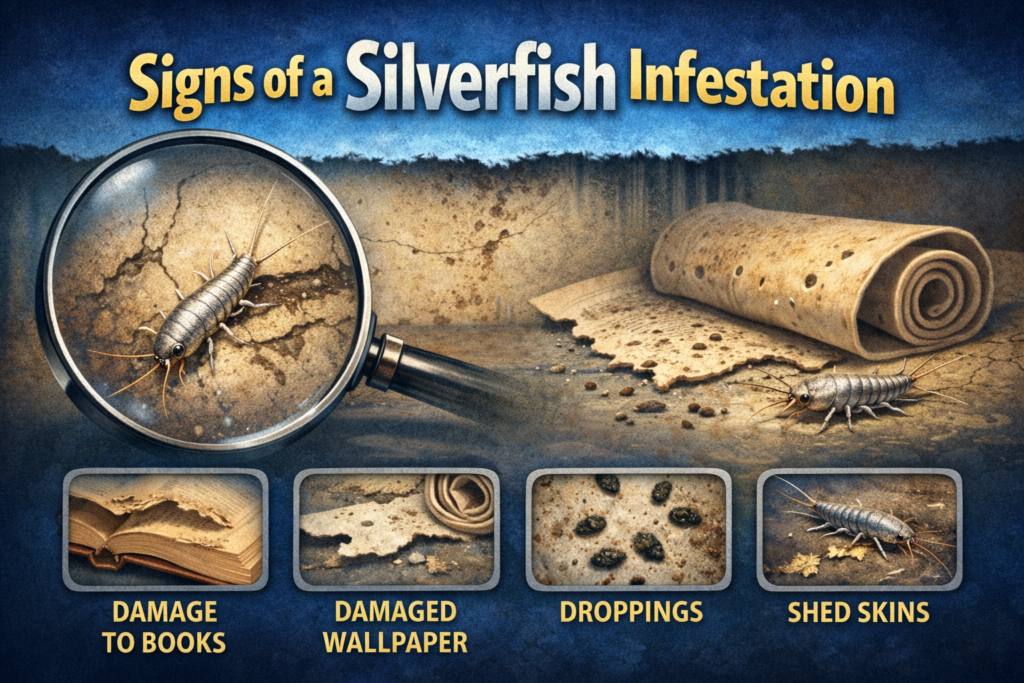
Silverfish are nocturnal and elusive, so you might not notice them immediately. Look for these signs:
- Small irregular holes in books, wallpaper, or cardboard
- Yellow stains on paper or clothing
- Tiny black pepper-like droppings in corners or cupboards
- Shed skins from molting
- Direct sightings, usually at night or when lights are turned on
Spotting a single silverfish often indicates a larger hidden population. They prefer hiding in cracks, baseboards, and dark, undisturbed areas.
read 13 Gorgeous Zellige Tile Ideas You’ll Instantly Love
Step-by-Step Framework to Eliminate Silverfish
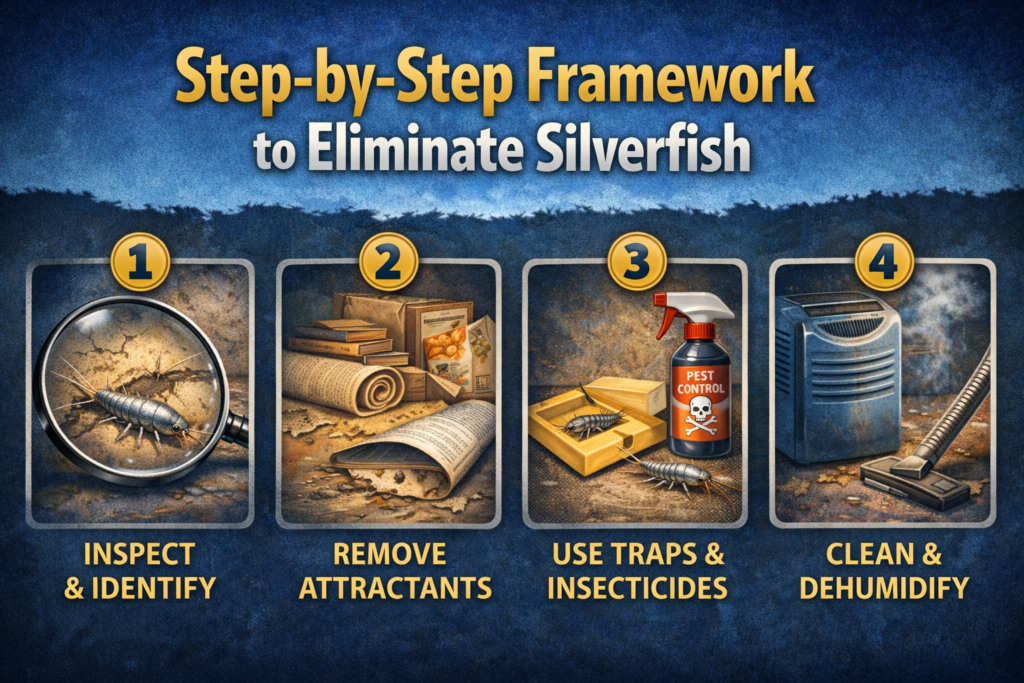
Getting rid of silverfish requires a multi-pronged approach that addresses both environmental conditions and the pests themselves.
Step 1: Reduce Indoor Humidity
Moisture control is the most critical factor in preventing and eliminating silverfish. Without addressing humidity, other treatments will only provide temporary relief.
- Use a dehumidifier to maintain indoor humidity below 50%
- Fix leaky plumbing, faucets, and pipes immediately
- Ensure proper ventilation in bathrooms and kitchens; run exhaust fans for at least 20 minutes after showers
- Avoid storing wet laundry indoors or in enclosed areas
- Insulate cold water pipes to reduce condensation
Consistent moisture management is the foundation of long-term prevention.
Step 2: Deep Cleaning and Decluttering
Silverfish thrive in cluttered, dark environments. A thorough cleaning routine can significantly reduce their hiding spots:
- Vacuum behind appliances, under sinks, and along baseboards
- Remove old newspapers, cardboard boxes, and unused items
- Store valuable papers and books in airtight plastic containers
- Dispose of infested items that cannot be salvaged
Vacuuming and cleaning not only removes adult insects but also destroys eggs and young nymphs.
Step 3: Natural Silverfish Treatments
For smaller infestations or eco-conscious households, natural remedies can be effective:
Diatomaceous Earth
A fine, natural powder that dehydrates and kills silverfish on contact. Apply along cracks, baseboards, and hidden areas.
Cedar
Cedar blocks, shavings, or essential oil can repel silverfish from closets and storage areas.
Bay Leaves
Placing bay leaves in pantry shelves or cabinets helps deter silverfish naturally.
These natural methods work best for minor infestations or as preventive measures.
Step 4: Chemical Control Options
For larger infestations, chemical treatments may be necessary. Use these methods with caution:
- Boric acid powder: Effective when applied in small amounts in cracks and crevices
- Silverfish bait traps: Contain slow-acting poison that silverfish carry back to hidden nests
- Pyrethrin-based insecticides: Kill visible insects and can reduce populations
Always follow label instructions and avoid applying chemicals directly to food or surfaces children touch.
Step 5: Seal Entry Points
Preventing future infestations involves denying silverfish access to your home. Seal gaps and cracks:
- Baseboard edges and floor-wall joints
- Wall cracks and crevices
- Pipe openings around sinks and appliances
- Window and door frames
Use silicone caulk or weather stripping for long-lasting results.
Silverfish in Specific Home Areas
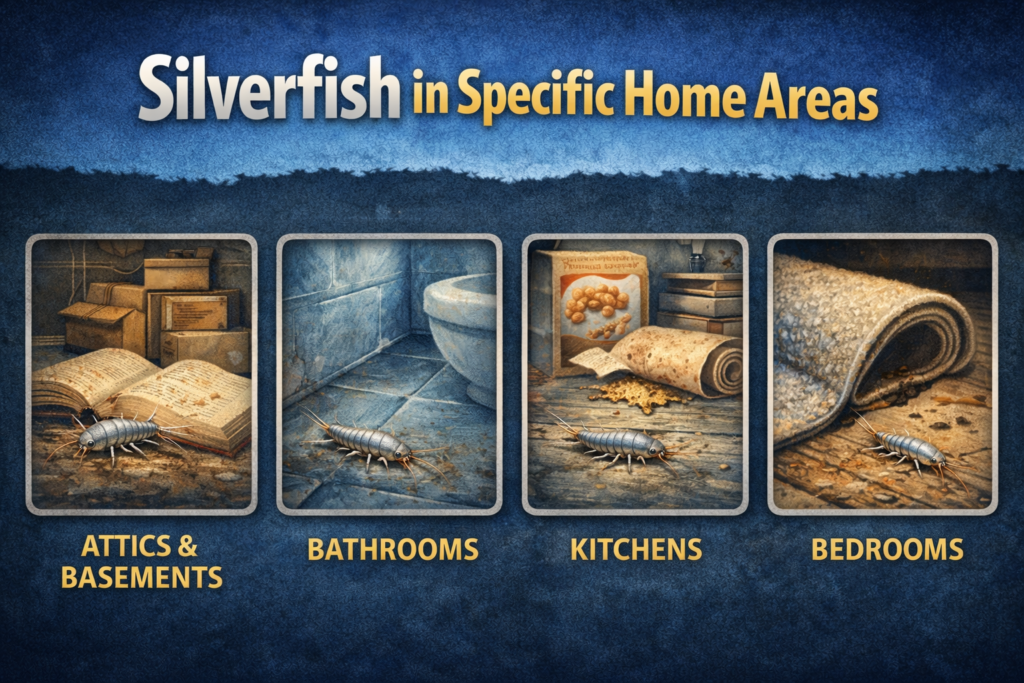
Bathroom Infestations
Bathrooms are often the most common area for silverfish. High humidity and damp surfaces create an ideal environment.
Prevention Tips:
- Run exhaust fans during and after showers
- Dry wet floors immediately
- Avoid storing paper or cardboard in bathrooms
- Use moisture-absorbing packets in cabinets
Kitchen Infestations
Silverfish are attracted to starchy foods. They may infest:
- Pantry shelves
- Flour, sugar, and cereal containers
- Cardboard packaging
Prevention Tips:
- Use airtight containers for all dry goods
- Clean up crumbs and spills immediately
- Rotate food supplies regularly
Bedroom and Closet Infestations
Closets and bedrooms can harbor silverfish that feed on fabrics and personal items:
- Silk, cotton, and linen are particularly attractive
- Add silica gel packets to reduce humidity
- Vacuum baseboards and corners regularly
How Long Does It Take to Eliminate Silverfish?
Answer
Small infestations can be controlled within 2–4 weeks with consistent cleaning, moisture control, and treatment. Larger infestations may require 1–3 months and professional intervention. Maintaining low indoor humidity and proper storage habits is critical for permanent elimination.
Common Mistakes in Silverfish Control
Many homeowners fail because they overlook the root cause of infestations. Avoid these mistakes:
- Using sprays without reducing indoor humidity
- Ignoring a single sighting
- Storing cardboard boxes or paper in damp areas
- Neglecting ventilation issues
- Failing to apply treatments in hidden cracks and crevices
Successful silverfish control combines pest elimination with environmental management.
Long-Term Prevention Strategy
A systematic, ongoing strategy ensures silverfish do not return:
Monthly:
- Inspect storage areas for moisture or signs of silverfish
- Clean behind appliances
Quarterly:
- Deep clean closets and pantries
- Reapply diatomaceous earth in hidden areas
Annually:
- Inspect insulation, attic spaces, and crawl spaces for moisture
- Replace damaged caulking or sealants
- Consider installing smart humidity sensors
Prevention is more cost-effective than repeated pest control treatments.
Do Silverfish Go Away on Their Own?
Rarely. Silverfish can survive for long periods without food, and females lay eggs in hidden cracks, meaning infestations grow quietly. Simply removing visible insects is not enough; addressing environmental triggers is the only permanent solution.
When to Call a Professional
Professional pest control is recommended if:
- You see silverfish daily despite DIY methods
- Damage is widespread across multiple rooms
- Infestations persist for over 6 weeks
- You suspect hidden colonies inside the walls
Professionals have access to residual insecticides and inspection tools to detect hidden populations that DIY methods cannot reach.
Modern Trends in Pest Prevention
Home pest management is evolving. New strategies include:
- Smart humidity sensors that alert homeowners to high-moisture areas
- Integrated moisture detection systems in plumbing
- Routine pest monitoring services that provide early warnings
With increasing indoor humidity in many regions due to climate patterns, silverfish may become more common in homes that are poorly ventilated or improperly insulated.
Conclusion
Silverfish are not harmful to humans but can cause long-term damage to books, clothing, and stored food. Eliminating them requires more than killing visible insects; it requires a strategic approach targeting humidity, food sources, and hiding places. By following the step-by-step framework outlined in this guide, you can permanently remove silverfish from your home and prevent future infestations.
Frequently Asked Questions
1. Why do I suddenly have silverfish in my house?
Sudden infestations are usually caused by increased humidity, plumbing leaks, or newly introduced cardboard or paper storage that provides food and shelter.
2. Can silverfish climb walls?
Yes, silverfish can climb walls, paper surfaces, and ceilings due to their clawed legs.
3. What smells do silverfish hate?
Silverfish are repelled by cedar, citrus oils, and bay leaves.
4. Do silverfish mean my house is dirty?
Not necessarily. Silverfish are more attracted to moisture than dirt, so even clean homes can develop infestations.
5. Are silverfish hard to get rid of?
They can be persistent because they hide in cracks and survive long periods without food. Moisture control significantly improves removal success.
6. Can silverfish live in beds?
They rarely infest mattresses but may hide in baseboards or feed on starch in bedding materials.

Welcome to Urban Daily Times. My name is Malik Akmal, and I’m passionate about sharing practical home decor and home improvement ideas that help you create a better living space. With over 15 years of experience in home design, renovation trends, and product research, I focus on providing trustworthy advice that helps homeowners save money and choose the right solutions. Every product and recommendation featured on Urban Daily Times is carefully researched and reviewed to ensure you get honest, useful, and reliable information.


