
Bedroom panelling ideas describe the range of decorative wall treatments where raised panels, mouldings, or slatted boards are fixed to a bedroom wall to add texture, structure, and architectural detail. Rather than relying on paint or wallpaper alone, panelling introduces dimension through shadow lines, grooves, and framed sections that transform a flat surface into a designed feature.
Here’s what most homeowners don’t realise: panelling isn’t just a decorative upgrade, it’s one of the few wall treatments that genuinely changes how a room feels to sleep in. The raised texture softens harsh light, adds a subtle cocooning effect after dark, and gives even a modest bedroom the kind of tailored, considered look usually reserved for period homes with original architectural detail.
From bold colour-drenched panels to slim vertical slats that stretch a low ceiling upward, there’s a panelling style suited to nearly every bedroom shape, budget, and design preference. The ideas ahead cover everything from classic moulded panels to modern square grids, along with the materials, costs, and installation know-how needed to bring any of them to life.
What Is Bedroom Wall Panelling?
Wall panelling, sometimes called wall cladding or interior wall panelling, is the practice of covering all or part of a wall with raised or textured panels, typically made from wood, MDF, or engineered composite boards. It’s an old technique — wainscoting and raised panel walls date back centuries in British and European homes, originally used to insulate stone walls and protect plaster from damage.
Today, panelling is chosen for aesthetics as much as function. It adds architectural detail to flat walls, creates a natural focal wall, and gives a sleep space a sense of craftsmanship that paint alone can’t achieve. According to search trend data from Pinterest’s annual predictions reports, panelled and moulded wall treatments have consistently ranked among the top-searched home décor trends for several years running, driven largely by the rise of period property renovation content and DIY bedroom project culture on social media.
There are several common styles of panelling worth knowing before you pick one:
| Panelling Style | Best For | Typical Material |
|---|---|---|
| Shaker wall panels | Modern and transitional bedrooms | MDF |
| Board and batten | Farmhouse, coastal, or rustic bedroom | Timber or MDF strips |
| Beadboard panelling | Cottage or country home style | Tongue-and-groove wood |
| Slatted / reeded panels | Contemporary and Scandinavian bedroom | Wood slats or veneered MDF |
| Raised panel walls | Traditional, heritage home interiors | Solid wood or moulded MDF |
| Geometric wall panels | Statement or accent wall | MDF with applied moulding |
Understanding these categories upfront makes the rest of the ideas below far easier to picture in your own room.
9 Bedroom Panelling Ideas to Try
Add Panelling Behind the Bed
Panelling the wall behind your headboard is one of the simplest ways to create a bedroom feature wall without redesigning the whole room. Full-height panels frame the bed like a piece of furniture in its own right, while half-height panelling (roughly 1.2 metres up the wall) creates a softer, more traditional panelled headboard effect that pairs well with a low bed frame.
Expert tip: If your bed frame already has a tall upholstered headboard, keep the panelling simple and let the headboard be the star. If your headboard is low or absent, full-height panelling can do the visual work instead.
Use Panelling to Frame Artwork or Accessories
Rather than covering the whole wall, some homeowners use rectangular or square mouldings to create “frames” directly on the wall, with artwork, mirrors, or wall lights placed inside each section. This decorative moulding technique borrows from traditional French and Georgian interiors and works particularly well in a period home with high ceilings, where the extra vertical space allows for layered detail.
This approach is also one of the more budget-friendly options, since you’re only buying moulding for outlines rather than solid boards for full coverage.
Make Panelling the Bedroom’s Feature Wall
Choosing one wall — usually the one facing the door or behind the bed — as your feature wall panelling focus lets you commit to a bolder look without overwhelming the whole room. This is the single most common approach among interior designers because it balances impact with restraint.
Case study insight: In a 2023 renovation featured by Homes & Gardens, a small Victorian terrace bedroom used slatted oak panelling on just the chimney breast wall, painted the surrounding walls in a matching neutral, and reported the room “instantly felt larger and more considered” despite no structural changes being made. The lesson: a single statement wall often outperforms panelling every wall, both visually and financially.
Go Bold With Colour
Painting your panelling in a strong colour — rather than the traditional white — has become one of the defining bedroom trends of the past few years. Colour drenching, where the panelling, walls, ceiling, and even trim are painted in the same or closely related tone, creates a cocooning, sleep sanctuary feel that flat white walls simply can’t replicate.
Popular colour-drenching palettes for 2025–2026 bedrooms include:
- Deep forest green with matching trim
- Warm terracotta or burnt umber
- Charcoal or near-black with brass hardware accents
- Muted clay pink for a softer cozy bedroom aesthetic
Colour drenching ideas work especially well with panelling because the raised grooves and shadow lines of the panels catch light differently at each angle, adding depth that a flat painted wall lacks.
Create Interest and Texture With Wallpaper-Filled Panels
For a layered, high-end look, install your panel frames first, then fill the recessed sections with wallpaper instead of paint. Chinoiserie wallpaper, botanical prints, and textured grasscloth are particularly popular choices for this technique, as the moulding acts like a picture frame around the pattern.
This method gives you the architectural structure of panelling combined with the personality of wallpaper panels, and it’s a smart way to use a bold or expensive wallpaper without covering an entire wall in it.
Try Modern Square Panelling
Square panelling, arranged in a symmetrical grid wall design, is one of the most requested looks for a modern bedroom or minimalist interior. The key to making square panelling look intentional rather than busy is consistent spacing — designers typically recommend leaving gaps of 5 to 8cm between panels, with equal margins from the ceiling, floor, and adjoining walls.
Common mistake to avoid: Uneven spacing is the most frequent DIY error with square and geometric layouts. Always measure and mark the full grid on the wall in pencil before cutting a single piece of MDF.
Keep It Classic With Elegant Moulded Panels
If your home has original cornicing, ceiling roses, or picture rails, raised panel walls in the Georgian or Victorian style will feel far more at home than a modern slatted design. This classic bedroom design approach uses deeper, more ornate moulding profiles and is traditionally painted in soft off-whites, sage, or heritage blues.
This is one of the more expensive panelling styles to install, particularly with bespoke joinery, but it remains one of the best options for maintaining authenticity in a genuine heritage home or character home.
Create a Shelf With Low-Level Bedroom Panelling
Low-level panelling, topped with a narrow ledge or picture rail shelf, adds a practical display surface for books, framed photos, or a reading lamp, while still delivering the visual benefit of panelled walls. This works particularly well in a small bedroom ideas context, since it adds functionality without visually shrinking the room the way full-height panelling can.
Use Long, Thin Panels to Elongate the Room
Vertical wall panels, particularly slim slatted or reeded designs, draw the eye upward and can make a low-ceilinged bedroom feel noticeably taller. This is currently one of the most popular styles in contemporary home decor, often paired with integrated LED strip lighting behind the slats for a soft, ambient glow at night — ideal for a restful bedroom environment.
Expert tip: For the elongating effect to work, panels should run from skirting board to ceiling (or as close as possible) without horizontal breaks. Interrupting the vertical line with a shelf or dado rail cancels out the height illusion.
Choosing the Right Panelling Material
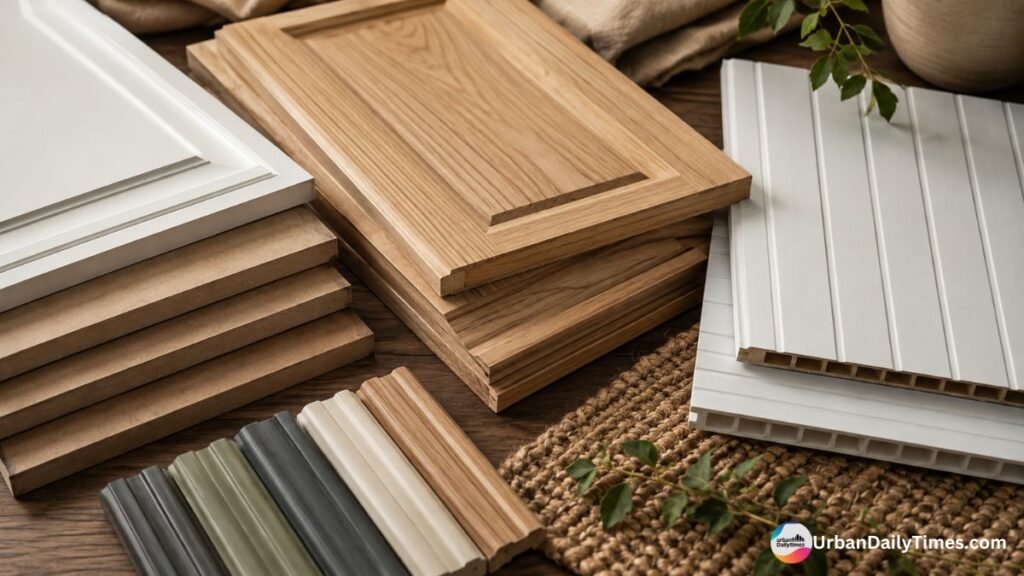
MDF vs. Real Wood vs. PVC
Material choice affects cost, durability, and the overall finish of your decorative wall panels. Here’s how the three most common options compare:
| Material | Average Cost | Durability | Best For |
|---|---|---|---|
| MDF wall panels | Low to mid | Good indoors; poor with moisture | Most bedroom panelling projects |
| Real wood (oak, pine) | Mid to high | Excellent, ages well | Period homes, premium finishes |
| PVC/composite | Low | Very durable, moisture-resistant | Rentals, budget projects |
MDF remains the most widely used material for bedroom wall panels because it’s affordable, easy to cut, and takes paint smoothly. Real timber costs more but offers a natural grain that many homeowners prefer for a rustic bedroom or timeless interiors look. PVC panelling is less common in bedrooms specifically, but it’s a practical, low-maintenance option if the room is prone to condensation.
Best Materials for Damp or Older Bedrooms
If your bedroom is in an older property with solid walls or occasional damp issues, avoid standard MDF, as it swells and deteriorates when exposed to moisture. Moisture-resistant MDF (MR MDF) or solid timber with a breathable paint finish are safer choices, and it’s worth addressing the underlying damp issue before installing any panelling.
Panelling Ideas for Small Bedrooms
Panelling in a small bedroom doesn’t have to make the space feel cramped if you follow a few proven principles:
- Keep panelling to a single accent wall rather than covering the whole room
- Use half-height panelling to maintain a sense of openness above eye level
- Choose lighter tones or monochromatic decor, where the panelling closely matches the wall colour
- Avoid deep, heavily shadowed mouldings, which can visually crowd a compact bedroom interior
- Combine with vertical wall panels rather than horizontal ones to draw the eye upward
Panelling for Rented Properties
Renters often assume panelling isn’t an option, but several removable systems now make it possible without breaching a tenancy agreement:
- Peel-and-stick panels, applied with adhesive rather than nails or screws
- MDF panels fixed with removable strips (such as Command-style mounting strips rated for the panel’s weight) instead of glue or nails
- Freestanding or lightweight framed panels that lean against the wall rather than attach to it
Always check your tenancy agreement and get written permission from your landlord before any wall alteration, even a removable one.
How Much Does Bedroom Panelling Cost?
Costs vary significantly depending on material, wall size, and whether you DIY or hire a tradesperson. As a general guide for a single feature wall (roughly 3–4 metres wide):
| Approach | Estimated Cost Range |
|---|---|
| Peel-and-stick panelling | £50–£150 |
| DIY MDF panel kit | £150–£400 |
| Bespoke joinery (hired tradesperson) | £600–£1,800+ |
These figures reflect UK market ranges commonly cited by home renovation retailers and tradesperson platforms such as Checkatrade, and will vary by region, panel height, and finish quality. Paint, primer, caulk, and fixings should be budgeted separately and typically add another £30–£80 to a DIY project.
DIY vs. Hiring a Professional
What You Can Realistically DIY
Flat MDF strip panelling, kit-based square or grid panelling, and peel-and-stick systems are all achievable for a confident DIYer with basic tools. DIY wall panelling kits are widely available and usually include pre-cut MDF strips, adhesive, and fitting instructions.
When to Hire a Carpenter
Call in a professional if:
- Your walls are visibly uneven, curved, or out of square
- You want bespoke raised panel walls with intricate mouldings
- The project involves working around fitted wardrobes, coving, or period skirting
- You need panelling that must meet fire or building regulations (rare in bedrooms, but relevant in shared or rental buildings)
Step-by-Step: How to Install Basic Wall Panelling
- Measure the wall and sketch your layout on paper, then transfer measurements directly onto the wall in pencil
- Mark stud and socket locations so panels and fixings avoid wiring
- Cut your MDF strips or panels to size using a mitre saw for clean, angled joins
- Dry-fit the layout on the floor or against the wall before fixing anything permanently
- Fix panels using adhesive and finishing nails, working from one edge across the wall
- Fill nail holes and seams with caulk or filler, then sand smooth once dry
- Prime and paint in your chosen colour, applying at least two coats for even coverage
Tools typically needed: tape measure, spirit level, mitre saw or hand saw, adhesive gun, nail gun or hammer, filler, sandpaper, and a paintbrush or roller.
Common Panelling Mistakes to Avoid
- Incorrect spacing: Uneven gaps between panels are the most visible sign of a rushed DIY job
- Skipping the caulk step: Without caulking joins and nail holes, seams remain visible even after painting
- Ignoring sockets and skirting: Failing to plan around fixtures leads to awkward cuts later
- Using standard MDF in damp rooms: This causes swelling and warping within months
- Choosing the wrong paint finish: Matte emulsion can look flat on mouldings; a soft eggshell or satin finish reflects light better and highlights the panel detail
Things to Consider Before Panelling a Wall
Before you commit to a design, weigh up the following:
- Room height and proportions — tall, narrow panels suit low ceilings; wider grid panelling suits larger rooms
- Existing trim and architectural details — panelling should complement, not compete with, existing skirting or coving
- Lighting — natural and artificial light both interact with panel texture, so consider how shadows fall across the wall at different times of day
- Long-term maintenance — grooved and moulded panels collect more dust than flat walls and need occasional cleaning with a soft brush attachment
- Resale and rental considerations — bold colour drenching can be a strong personal statement but may need repainting in a neutral tone before selling or re-letting
Pros and Cons of Bedroom Wall Panelling
| Pros | Cons |
|---|---|
| Adds texture, depth, and architectural interest | Can be time-consuming to install well |
| Works in both modern and traditional interiors | Real wood options can be costly |
| Improves insulation slightly on solid walls | Requires maintenance to keep grooves dust-free |
| Increases perceived value of a period property | Not always reversible without landlord permission in rentals |
| Wide range of styles to suit any bedroom decor | Poor installation is highly visible |
Final Thoughts
These bedroom panelling ideas show that a plain wall doesn’t have to stay plain. Simple choices like panel style, colour, and placement can turn an ordinary bedroom into a space with real character. Whether you prefer bold colour drenching, classic moulded panels, or slim vertical slats, the right approach depends on your room’s size, light, and existing style.
Getting started doesn’t need to be complicated. Pick one wall, choose a material that suits your budget, and follow the steps that fit your skill level. With the right bedroom panelling ideas, even a small change can make a big difference to how your room looks and feels every day.
FAQ’s
What is the best type of panelling for a bedroom?
MDF panelling is the most popular choice for bedroom panelling ideas because it’s affordable, easy to paint, and simple to cut into custom shapes.
How long does it take to install bedroom panelling?
A single feature wall usually takes a full weekend, including cutting, fitting, filling, and painting.
Does bedroom panelling add value to a home?
Yes, well-fitted panelling is often seen as a desirable upgrade, especially in period or character homes where it complements original architectural details.
Is panelling better than wallpaper for a bedroom?
Panelling offers more texture and durability, while wallpaper is quicker to install and easier to change, so the best choice depends on your budget and how often you like to update your decor.
What colour panelling is trending for bedrooms right now?
Deep, moody tones like forest green, charcoal, and terracotta are currently popular, often used with colour drenching for a cohesive, cocooning look.

Welcome to Urban Daily Times. My name is Malik Akmal, and I’m passionate about sharing practical home decor and home improvement ideas that help you create a better living space. With over 15 years of experience in home design, renovation trends, and product research, I focus on providing trustworthy advice that helps homeowners save money and choose the right solutions. Every product and recommendation featured on Urban Daily Times is carefully researched and reviewed to ensure you get honest, useful, and reliable information.


