
If you’ve ever stepped onto your patio with a coffee in hand and thought, “this could look so much better,” you’re not alone. Turning a bare slab of concrete or a patchy strip of garden into a real outdoor living space is one of the most rewarding home projects you can take on, and it doesn’t require a professional landscaper or a five-figure budget to get there.
This guide walks you through everything you need to know about outdoor living space styling, from the planning decisions that come before you buy a single cushion, right through to the small decorative touches that make a space feel finished. You’ll find practical advice on seating, dining, lighting, shade, plants, budget-friendly DIY ideas, and small-space solutions for balconies and compact patios. By the end, you’ll have a clear framework for styling your patios and gardens in a way that actually holds up to weather, works for your lifestyle, and looks good enough to photograph.
Whether you’re working with a sprawling backyard or a narrow city balcony, the principles are the same: plan before you decorate, choose materials that last, and layer in details gradually rather than trying to do everything at once.
How to Plan Your Outdoor Living Space Before You Buy Anything
Most outdoor living ideas fail not because the furniture is wrong, but because no one thought about the space itself first. Before you order a single sofa or planter, take a step back and assess three things: the space, the budget, and the style direction.
Assessing Your Space, Sun Exposure, and Privacy
Walk your patio, terrace, or garden at three different times of day: morning, midday, and early evening. Note where the sun hits hardest, where shade naturally falls, and how the wind moves through the space. This single exercise will tell you more about furniture placement than any design blog.
Ask yourself:
- Where does the sun sit at the times you’ll actually use the space? If you mostly relax outside after work, afternoon shade matters more than morning sun.
- Is there a natural focal point, like a tree, a view, or an existing structure, that furniture should be arranged around?
- How private does the space feel? Overlooked patios often need screening, tall planters, or pergolas before anything else gets added.
- What’s underfoot? Uneven paving, gravel, or soil affects what furniture and rugs will actually work.
Southern and western exposures in the Northern Hemisphere tend to get the most intense afternoon sun, which affects both comfort and how quickly fabrics and finishes fade. If your space runs hot in the afternoon, plan shade structures (more on this below) into your budget early rather than as an afterthought.
Expert tip: Take a few photos of your space at each time of day over the course of a week, not just one day. Weather and cloud cover vary enough that a single observation can be misleading, and you want to base furniture placement on the pattern, not the exception.
“The biggest mistake I see homeowners make is buying furniture before they understand how the sun moves through their space. A sofa that looks perfect in the showroom can become unusable if it sits in direct afternoon glare for three hours a day.” — a common observation echoed by landscape designers and outdoor furniture retailers alike.
Case study: Turning a shaded, narrow side patio into a usable space. Consider a typical scenario: a homeowner with a 6-foot-wide side patio that gets almost no direct sun due to a neighboring fence and mature trees. Rather than fighting the shade, the space was styled around it, using the naturally cool, shaded conditions to support a small collection of shade-loving ferns and hostas in planters, paired with a single daybed and a portable lamp for evening reading. The lesson here is one that applies broadly: work with your space’s natural conditions rather than trying to force a sun-drenched Mediterranean look onto a shaded courtyard, or a full-sun tropical look onto a windy, exposed rooftop.
Setting a Realistic Budget and Prioritizing Key Zones
Outdoor styling projects have a way of ballooning once you start browsing. A useful trick is to rank your priorities before you shop:
| Priority Tier | Typical Spend | What It Covers |
|---|---|---|
| Essential | 40-50% of budget | Seating, a table, basic weatherproofing |
| Comfort | 20-30% of budget | Cushions, rugs, shade (umbrella or pergola) |
| Ambience | 15-20% of budget | Lighting, plants, decorative accents |
| Luxury additions | Remaining budget | Outdoor kitchen, fire feature, custom furniture |
This isn’t a rigid formula, but it stops the common mistake of spending your entire budget on a statement sofa and having nothing left for lighting or plants, both of which do a disproportionate amount of work in making a space feel finished.
Choosing a Cohesive Style Direction
Pick one style direction before you start buying pieces individually. A few reliable directions for patio styling and garden styling:
- Coastal or Mediterranean — whitewashed or natural wood tones, linen textiles, terracotta pots, and lots of greenery.
- Modern minimalist — clean-lined furniture, a neutral palette, sculptural planters, and restrained decor.
- Boho or laid-back — rattan and macrame textures, warm earth tones, mixed patterns, and layered textiles.
- English garden — cottage-style planting, wrought iron or painted wood furniture, and a slightly romantic, undesigned feel.
Having a direction in mind prevents the “one of everything” problem, where a space ends up with a rattan chair, a metal bistro table, and a plastic planter that never quite come together. Consistency in material and tone is what separates a styled space from a collection of outdoor furniture.
Creating Distinct Zones for Lounging, Dining, and Relaxing
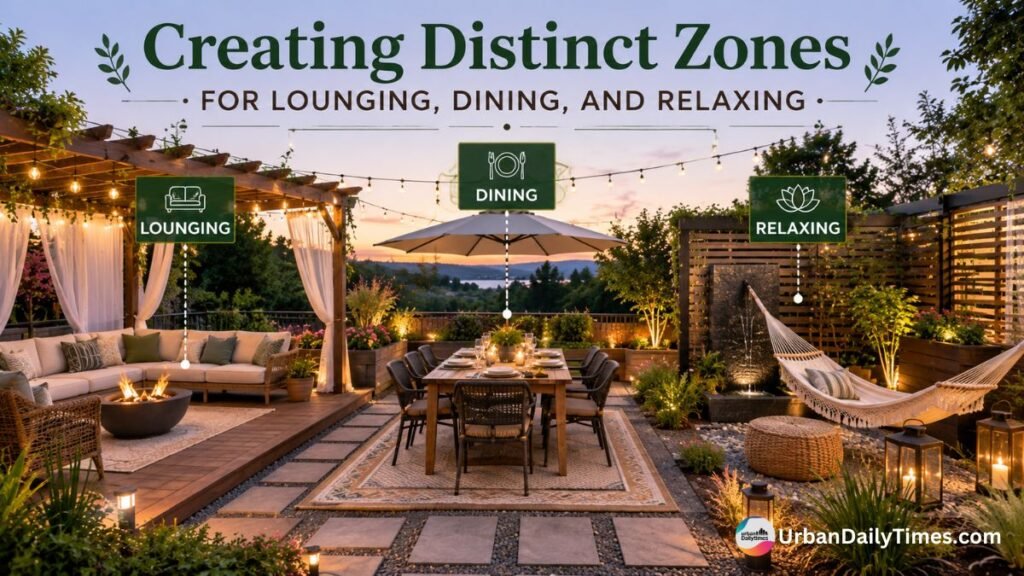
Even a small patio benefits from having clearly defined zones rather than one undifferentiated area. This is one of the most overlooked principles in outdoor living space design, yet it’s what makes larger backyards feel intentional and smaller patios feel bigger than they are.
Defining Zones on a Small Patio vs. a Large Garden
On a compact patio, zoning might mean nothing more than angling a two-seater sofa away from a small bistro table so the eye reads them as separate areas. On a larger property, you might have a fully separate lounge area, a dining pavilion, and a fire pit zone connected by pathways.
A simple rule of thumb: each zone should have its own “anchor” piece. The lounge zone anchors around a sofa or seating cluster. The dining zone anchors around a table. A relaxation zone might anchor around a hammock, daybed, or swing chair.
Using Rugs, Planters, and Screens as Visual Dividers
You don’t need walls to create separation outdoors. Some effective, budget-friendly dividers include:
- Outdoor rugs placed under seating clusters to visually “ground” that zone
- Tall planters or potted trees used as soft screens between zones
- Low hedging or lattice panels for more permanent division
- Pergolas that define a dining or lounge area without fully enclosing it
Traffic Flow and Furniture Spacing Basics
A common mistake is cramming furniture too close together, leaving no room to walk comfortably between zones. As a general guideline:
- Leave at least 24-36 inches (60-90 cm) of walking clearance between furniture groupings
- Keep at least 18 inches (45 cm) between a coffee table and the seating around it
- Avoid placing a dining table so close to a lounge area that chairs collide when pulled out
Good traffic flow is invisible when done right, but painfully obvious when it’s missing.
A Simple Zoning Checklist
Before finalizing furniture placement, run through this checklist:
- [ ] Does each zone have a clear anchor piece?
- [ ] Is there at least 24-36 inches of clearance between zones?
- [ ] Can someone walk from the door to the dining area without weaving through the lounge furniture?
- [ ] Does each zone make sense given the sun and shade patterns you observed earlier?
- [ ] Is there a visual divider (rug, planter, or screen) between zones that sit close together?
Seating Ideas That Anchor the Space
Seating is the backbone of any outdoor living space, and it’s usually the first thing people invest in. The right choice depends on how you actually plan to use the space, entertaining, solo relaxing, or both.
Sofas and Modular Seating for Lounge-Style Layouts
Stylish contemporary outdoor sofas have become one of the most popular ways to bring an indoor-style lounge feel outside. Modular sectional pieces are particularly practical because they can be rearranged for different group sizes and reconfigured if you move or redesign the space later.
Look for:
- Powder-coated aluminum or teak frames, which resist rust and rot far better than untreated wood or basic steel
- Quick-dry foam cushions with removable, machine-washable covers
- Modular pieces that can be split into smaller seating groups for flexibility
Daybeds and Swing Chairs for Relaxed Retreats
Stylish outdoor daybeds create a dedicated spot for lounging that reads as more indulgent than a standard chair. They work particularly well positioned under a pergola or shade sail, since daybeds are typically used for longer stretches of time and benefit from protection against direct midday sun.
Swing chairs offer a similar relaxed-retreat feeling in a smaller footprint, making them a strong option for patios where a full daybed won’t fit. A hanging egg chair or a wooden A-frame swing seat can anchor a reading nook or a quiet corner of the garden without dominating the space.
Hammocks, Including Macrame and Boho Styles
Hammocks are one of the simplest ways to add a relaxed, low-effort seating option. Two main approaches work well:
- Classic fabric or rope hammocks strung between two trees or a freestanding frame
- Macrame hammocks, which lean into a boho aesthetic with their handwoven, textural look and pair particularly well with rattan furniture and warm, earthy color palettes
Macrame hammocks do require slightly more care than synthetic versions, since natural cotton fibers can weaken with prolonged sun and moisture exposure. Bringing them indoors during heavy rain or winter months extends their lifespan significantly.
Deckchairs and Portable Seating for Flexibility
Deckchairs remain a genuinely practical option for relaxed outdoor seating, particularly for spaces that need to be reconfigured often or stored away seasonally. Their fold-flat design makes them ideal for smaller gardens, rooftop terraces, or anyone who wants extra seating on hand for guests without permanently committing floor space to it.
Choosing Between Seating Styles: Pros and Cons
Sofas and modular seating
- Pros: comfortable for long periods, flexible layouts, strong visual impact
- Cons: higher cost, cushions require seasonal storage, heavier to move
Daybeds
- Pros: dedicated relaxation spot, doubles as extra guest seating
- Cons: takes up significant floor space, best suited to larger patios
Swing and egg chairs
- Pros: compact footprint, strong style statement, good for small gardens
- Cons: single-person seating limits capacity for groups, hanging versions need a secure mounting point
Hammocks
- Pros: inexpensive, easy to install and remove, very relaxed feel
- Cons: not ideal for formal entertaining, requires two solid anchor points
Deckchairs
- Pros: affordable, foldable and storable, lightweight
- Cons: less comfortable for extended lounging, more casual look that may not suit every style direction
Quick comparison of seating types:
| Seating Type | Best For | Storage Needs | Approx. Lifespan (Outdoors) |
|---|---|---|---|
| Aluminum/teak sofa | Larger patios, entertaining | Cushions need indoor storage in winter | 10-20 years (frame) |
| Daybed | Dedicated lounging, under shade | Cover or store cushions | 8-15 years |
| Swing/egg chair | Compact spaces, reading nooks | Some fold or detach | 5-10 years |
| Hammock | Casual relaxing | Easy to remove and store | 3-8 years (fabric), longer for rope |
| Deckchair | Flexible, guest seating | Folds flat, easy storage | 5-10 years |
Bringing Your Interior Style Outdoors
One of the strongest trends in outdoor living ideas over the past several years has been treating the patio or terrace as a genuine extension of the home’s interior style, rather than a separate, purely functional space.
Coordinating Indoor and Outdoor Color Palettes
A simple way to do this is to pull two or three colors from your interior palette and repeat them outside, whether through cushion fabric, planter color, or painted trim. This creates visual continuity when doors or windows connect the two spaces, which is especially effective for homes with bifold or sliding doors that blur the line between indoors and out.
Weatherproof Fabrics and Cushions That Still Feel “Indoor”
Styling with outdoor cushions is one of the fastest ways to add comfort and personality to a space, but material choice matters enormously outdoors. Solution-dyed acrylic fabrics (Sunbrella is the best-known brand) resist fading, mold, and moisture far better than standard cotton or linen blends, while still offering the soft, tactile feel associated with indoor upholstery.
Key fabric considerations:
- Solution-dyed fibers hold color better than fabrics dyed after weaving
- Quick-dry foam inserts prevent cushions from staying waterlogged after rain
- UV-resistant treatments slow fading from direct sun exposure
Layering Outdoor Rugs to Define and Soften Hard Flooring
Outdoor rugs do double duty: they soften hard surfaces like concrete, stone, or decking, and they help visually zone a space, as mentioned earlier. Polypropylene and PET (recycled plastic) rugs have become the standard for outdoor use because they resist mildew and can typically be hosed down and left to air dry.
Choosing the Right Rug Size and Placement
A rug that’s too small for its seating area tends to make the whole arrangement look disconnected, floating in the middle of the patio rather than anchoring it. As a general guideline:
- For a lounge area, choose a rug large enough that at least the front legs of each seating piece rest on it
- For a dining area, the rug should extend roughly 24 inches beyond the table edge on all sides, so chairs remain on the rug even when pulled out
- Darker rug tones tend to hide dirt and weather staining better than very light colors, which is worth considering for high-traffic outdoor zones
Small Accents That Reinforce Indoor-Outdoor Continuity
Beyond rugs and cushions, a handful of smaller touches reinforce the sense that the patio is a genuine extension of the home rather than a separate, purpose-built zone:
- Matching or complementary planters to those used indoors
- A consistent metal finish (brass, matte black, brushed nickel) across both indoor and outdoor light fixtures and hardware
- Repeating a single accent color, a specific blue or terracotta, for instance, across both spaces in smaller doses, like a cushion, a vase, or a piece of art
Tables and Surfaces for Function and Style
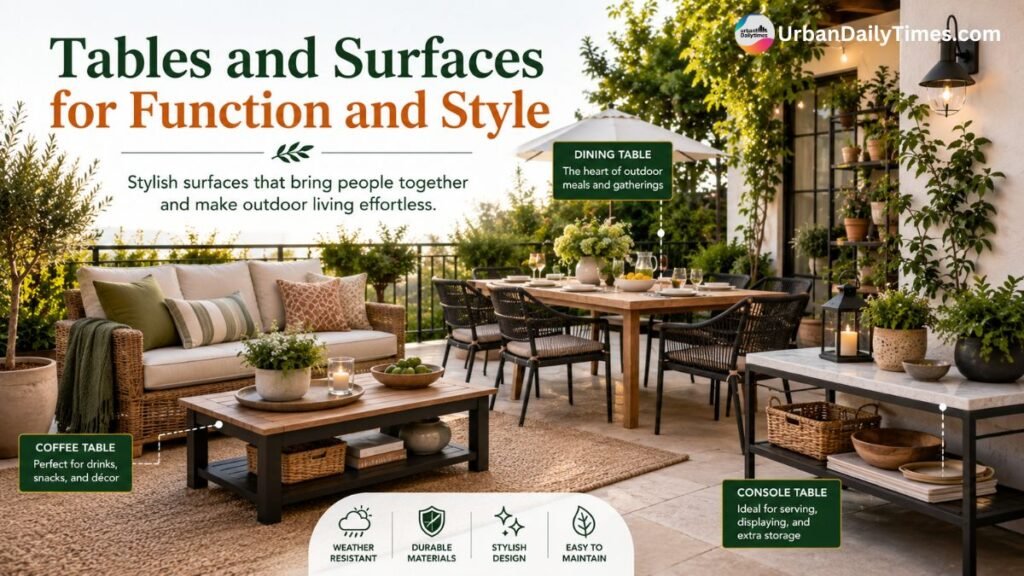
Surfaces are where the small decorative details of outdoor living space styling really come through, and they’re often the most affordable way to refresh a space without buying new furniture.
Console and Side Tables for Practical Styling Touches
Styling an outdoor console table gives a patio or terrace a sense of intentional design the way an entryway table does indoors. A console positioned against an exterior wall can hold a stack of books, a lantern, a small sculptural object, or a vase of greenery, and it breaks up an otherwise empty stretch of wall.
Side tables are equally important and often underrated. A side table placed beside a lounge chair or sofa gives guests somewhere to set down a drink without balancing it on an armrest, and it’s a natural spot to add a small styling moment, a candle, a stack of coasters, or a potted succulent.
Setting a Tablescape for Alfresco Dining
Beautifully set tables for alfresco dining don’t require expensive tableware. The key is layering:
- Start with a base layer — a tablecloth, table runner, or the bare wood/stone surface if it’s attractive on its own
- Add dinnerware in a consistent tone or texture (stoneware and terracotta-toned ceramics both work well outdoors)
- Layer in glassware and cutlery
- Finish with a centerpiece — this could be a low arrangement of garden flowers, a cluster of candles, or a simple bowl of citrus fruit
Neutral-Toned vs. Bold Tablescape Approaches
Creating a tablescape in neutral tones works well for daytime entertaining and photographs beautifully in natural light, since whites, creams, and warm woods let the food and greenery take center stage. Bolder tablescapes, using patterned linens, colored glassware, or vibrant florals, tend to suit evening entertaining, where artificial lighting and candlelight can carry more saturated colors without feeling overwhelming.
Outdoor Dining Setups That Work Year-Round
Outdoor dining in modern designs has shifted from simple plastic patio sets toward genuinely considered furniture, often built to handle four-season use in temperate climates.
Modern Dining Table and Chair Pairings
A well-chosen dining set is arguably the single most-used piece of furniture in an outdoor living space, particularly for households that entertain regularly. Mixing materials, a stone or concrete-look table with woven or wood chairs, is a reliable way to add visual interest without looking mismatched.
Materials That Hold Up to Weather
| Material | Pros | Cons | Maintenance |
|---|---|---|---|
| Teak | Naturally weather-resistant, ages to silver-gray patina | Higher upfront cost | Occasional oiling if you want to retain original color |
| Aluminum | Lightweight, rust-proof, low maintenance | Can feel less premium than wood | Minimal, occasional wipe-down |
| All-weather wicker (synthetic rattan) | Resembles natural rattan, resists moisture | Can degrade with prolonged UV exposure over many years | Wipe clean, avoid abrasive cleaners |
| Concrete/stone composite | Extremely durable, modern look | Heavy, harder to move or reconfigure | Very low maintenance |
| Untreated softwood | Budget-friendly, natural look | Prone to rot and splitting without treatment | Requires regular sealing/staining |
Wood-Fired Ovens and Outdoor Kitchens for Entertaining
Outdoor wood-fired ovens have grown in popularity as a genuine cooking feature rather than a purely decorative one, largely thanks to the rise in home pizza-making. They work particularly well as a focal point for a dining zone, since the cooking process itself becomes part of the entertaining.
Bespoke outdoor kitchens take this further, often including built-in grills, prep counters, and storage, essentially extending the kitchen workflow outside. These are a significant investment, typically requiring plumbing, electrical, and sometimes gas line work, so they’re worth planning early if you know you want one, rather than retrofitting later.
Freestanding vs. Built-In Outdoor Kitchen Layouts
Freestanding outdoor kitchens for relaxed entertaining offer a lower-cost, more flexible alternative to fully bespoke builds. Modular units, a grill cart, a separate prep station, a small bar cart, can be arranged and rearranged as needed, and they don’t require the structural work of a built-in kitchen.
Quick decision guide:
- Choose built-in/bespoke if you entertain frequently, have a permanent patio structure, and want a true kitchen extension
- Choose freestanding modular if you want flexibility, have a smaller budget, or aren’t certain about the long-term layout of your space
Lighting That Extends Outdoor Living Into the Evening
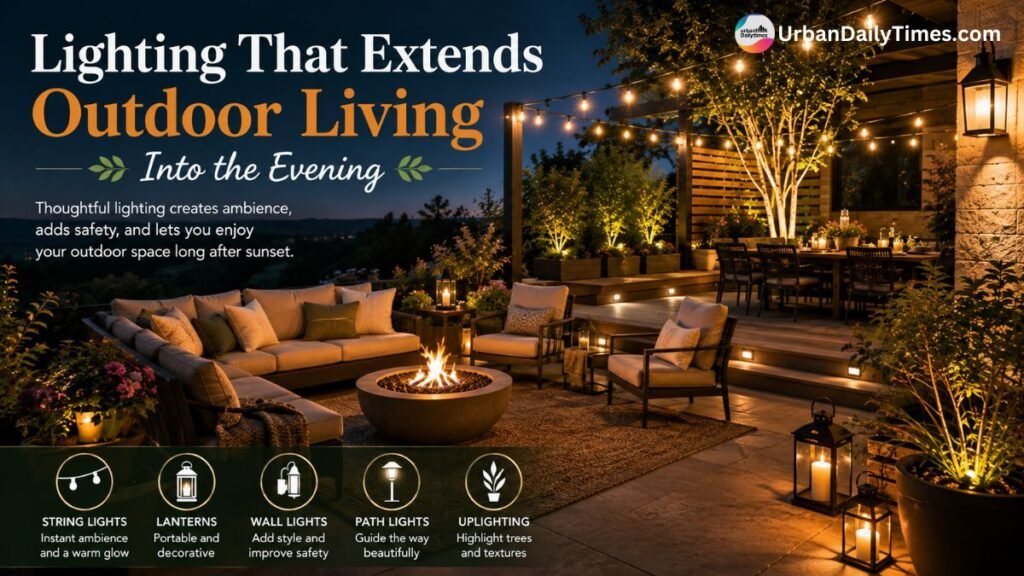
Lighting does more for the atmosphere of an outdoor space than almost any other single element, and it’s frequently the last thing people think about, when it should be one of the first.
Pendant Lights and Statement Fixtures
Exterior pendant lights as a stylish feature bring the same design impact outdoors that a statement pendant brings to an indoor dining room. Mounted over a dining table or lounge area, a pendant fixture instantly signals that a space has been designed intentionally rather than furnished as an afterthought. Look for fixtures rated for outdoor or “damp/wet location” use, since standard indoor fixtures will corrode quickly outside.
Portable and Battery-Powered Lamps
Outdoor portable lamps for a soft evening glow have become especially popular thanks to rechargeable LED technology, which allows genuinely attractive table lamps to run cordless for hours. These are particularly useful for dining tables, side tables, and any spot where running an electrical cord isn’t practical.
Lanterns, Candles, and String Lighting for Ambience
Lanterns and candles for atmosphere remain one of the most affordable ways to transform a space after dark. A cluster of lanterns at varying heights on a table or along a pathway creates depth and warmth that a single overhead light can’t replicate.
Layering approach for evening lighting:
- Ambient layer — string lights or a pendant fixture for overall soft illumination
- Task layer — portable lamps near dining or reading areas
- Accent layer — lanterns and candles for warmth and visual interest
Layering Lighting for Safety and Mood
Beyond aesthetics, lighting has a practical safety role: pathways, steps, and level changes should always have some form of illumination, whether solar-powered stake lights, in-ground fixtures, or simple lanterns placed along the route. This is a detail that’s easy to overlook but genuinely important, particularly for households with older family members or young children navigating the space after dark.
Step-by-Step: Planning Your Outdoor Lighting Layout
- Map your zones first. Identify the lounge, dining, and pathway areas you defined earlier in the planning stage.
- Assign a lighting layer to each zone. Dining areas usually need a stronger central light source (a pendant or a cluster of lanterns), while lounge areas do well with softer, lower ambient light.
- Check power access. Note where outdoor-rated outlets exist, and where you’ll need battery or solar-powered fixtures instead.
- Layer in accent lighting last. Once the functional lighting is placed, add string lights, candles, or uplighting on trees and planters for atmosphere.
- Test at night before finalizing placement. Lighting that looks fine in daylight can be too dim, too harsh, or awkwardly angled once it’s actually dark.
Common mistake: relying on a single overhead light source for the entire space. This creates harsh shadows and an uneven, unflattering glow. A mix of ambient, task, and accent lighting almost always looks more polished and feels more comfortable than one bright fixture doing all the work.
Shade, Shelter, and Warmth Solutions
Comfort in an outdoor living space depends heavily on managing temperature and exposure, both from sun and from cooler evening air.
Pergolas and Parasols for Sun Protection
Parasols and pergolas for shade and style serve overlapping but distinct purposes. A parasol (umbrella) is a flexible, moveable solution well suited to a single table or seating cluster. A pergola is a permanent or semi-permanent structure that can support climbing plants, string lighting, and retractable shade sails, making it a stronger long-term investment for a space you plan to use heavily.
Exterior Curtains for a Resort Feel
Exterior curtains for that luxury hotel feel have become a popular way to soften a pergola or covered patio while adding privacy and a sense of enclosure. Outdoor-rated fabrics (again, solution-dyed acrylics are the standard) resist mildew and fading far better than indoor curtain fabric repurposed for outdoor use.
Wood-Burning Stoves and Fire Pits for Cool Evenings
Wood-burning stoves for cosy evenings outside extend the usable season of an outdoor living space significantly, particularly in climates with cool spring and autumn evenings. A well-placed fire feature also naturally becomes a gathering point, much like a fireplace does indoors.
A few practical notes on fire features:
- Check local regulations before installing a wood-burning stove or open fire pit; many municipalities have restrictions on open flame, smoke, and required clearances from structures
- Position fire features away from overhanging branches, fences, and seating that would be directly in smoke drift
- Gas-fired alternatives offer a lower-maintenance option with instant on/off control, though they lack the ambience of a genuine wood fire for some homeowners
Decorative Details That Make a Space Feel Finished
This is the layer that separates a functional outdoor space from a genuinely styled one. These details are often the least expensive part of the project but have an outsized impact on how finished the space feels.
Exterior Mirrors to Add Depth and Light
Exterior mirrors to add depth outdoors are a clever, often-overlooked trick borrowed directly from interior design. A mirror mounted on an exterior wall or fence reflects greenery and light, making a small or shaded patio feel larger and brighter. Look for mirrors specifically rated for outdoor use, since standard mirror backing will oxidize and degrade quickly when exposed to moisture.
Outdoor Art and Wall Decor
Outdoor art as a decorative focal point has become increasingly accessible thanks to weatherproof materials like powder-coated metal, ceramic tile, and UV-resistant printed canvas designed specifically for exterior use. A single piece of art on a bare wall does the same job it would indoors: it gives the eye somewhere to land and adds personality that furniture alone can’t provide.
Potted Plants, Planters, and Seasonal Flowers
Outdoor planters for your favourite flowers are arguably the single most transformative and cost-effective styling tool available. Plants add color, texture, softness, and life in a way that furniture and decor simply can’t replicate.
A few practical guidelines:
- Group planters in odd numbers (three or five) at varying heights for a more natural, layered look
- Mix foliage textures — combine broad-leafed plants with something spiky or trailing for contrast
- Choose pots proportional to the plant’s mature size, not just its current size, to avoid frequent repotting
- Terracotta pots are breathable and classic-looking but can crack in freezing climates unless rated frost-resistant
Styling With Potted Flowers on the Table
Styling with potted flowers on the table is a simple, low-effort way to bring color to a dining or lounge area without committing to a full floral arrangement that needs daily water changes. A small potted herb, like rosemary or basil, or a compact flowering plant works particularly well since it doubles as both decor and a functional kitchen ingredient.
Choosing Plants That Suit Your Climate and Care Level
Not every plant that looks good in a styling photo will actually thrive in your specific outdoor conditions. A few practical categories to consider:
- Low-maintenance, drought-tolerant options — succulents, lavender, and ornamental grasses suit sunny, dry patios and require minimal watering
- Shade-tolerant options — ferns, hostas, and begonias work well for covered or north-facing spaces with limited direct sun
- Seasonal color — annuals like petunias or marigolds provide a burst of color for a single season, while perennials return year after year with less ongoing cost
- Edible and dual-purpose plants — herbs, dwarf citrus, and berry bushes add both greenery and function, particularly useful near a dining or outdoor kitchen zone
Best practice: repot new plants into decorative containers rather than leaving them in their original plastic nursery pots. This single change dramatically improves the finished look of a space and costs very little compared to buying larger, more mature plants.
Budget-Friendly and DIY Styling Ideas
Not every outdoor living space transformation requires a large budget. Some of the most characterful spaces are built from repurposed and custom-made pieces.
Repurposed Furniture Ideas
DIY outdoor furniture made from scaffolding planks has become a genuinely popular trend, particularly within industrial and rustic-styled gardens. Reclaimed scaffolding boards can be built into benches, tables, and planters at a fraction of the cost of retail furniture, and the weathered, textured wood grain adds a character that new furniture often lacks.
A bamboo child’s bed reimagined as an outdoor daybed is another example of the broader upcycling trend, taking furniture originally designed for one purpose and adapting it for outdoor lounging. This kind of repurposing works particularly well in boho and eclectic-styled spaces, where a slightly mismatched, collected-over-time look is part of the aesthetic.
Where to Splurge vs. Where to Save
| Splurge On | Save On |
|---|---|
| Main seating (used most, seen most) | Accent decor and small planters |
| Weatherproof cushions in quality fabric | Occasional-use accessories |
| A well-made dining table (long lifespan) | Side tables (easy to DIY or thrift) |
| Structural shade (pergola) | Portable lighting |
Bespoke and Custom Furniture for a Personal Touch
Bespoke outdoor furniture for a personal touch doesn’t always mean expensive. A locally made piece from a small workshop, or a custom-built bench sized exactly to fit an awkward corner, often costs comparably to mass-produced furniture while fitting the space and your style far more precisely.
Small-Space Styling Ideas for Balconies and Compact Patios
Not every outdoor living space is a sprawling garden. Balconies, courtyard patios, and small terraces need a slightly different approach.
Space-Saving Furniture and Multi-Use Pieces
- Folding or stacking chairs that can be stored when not in use
- Wall-mounted or drop-leaf tables that fold flat against a wall
- Storage benches that double as seating and hide cushions or gardening supplies
- Nesting side tables that tuck away when extra surface space isn’t needed
Vertical Planting and Wall-Mounted Decor
When floor space is limited, going vertical is the answer. Wall-mounted planters, tiered plant stands, and hanging baskets add greenery without consuming precious floor area. A vertical herb garden mounted on a balcony wall, for instance, provides the same styling impact and functional benefit as a full planter bed in a fraction of the footprint.
Case Study: Styling a 40-Square-Foot Balcony
A common real-world scenario: a compact apartment balcony, roughly 5 feet by 8 feet, with no direct access to soil for planting and limited weight-bearing capacity for heavy furniture. The approach that tends to work best in this kind of space combines a few strategies covered throughout this guide:
- A folding bistro table and two stacking chairs instead of a fixed dining set, freeing up floor space when not in use
- Wall-mounted planters along the railing rather than floor-standing pots, keeping the limited floor area clear
- A single statement item, in this case a small hanging egg chair, rather than multiple competing furniture pieces
- Battery-powered string lights run along the railing, avoiding the need for outdoor electrical work entirely
The result is a space that reads as fully styled and genuinely usable, despite its small footprint, by focusing on a handful of well-chosen pieces rather than trying to fit in everything covered in this guide at a smaller scale.
Best Practices for Small-Space Outdoor Styling
- Choose one or two statement pieces rather than many small items, which can make a compact space feel cluttered
- Stick to a tighter color palette than you might use in a larger garden, since visual noise reads more strongly in a small area
- Prioritize multi-functional furniture — a storage bench, a folding table, a stackable chair — over single-purpose pieces
- Use light, reflective colors on hard surfaces and furniture to make the space feel more open
Common Mistakes to Avoid When Styling Outdoor Spaces
Even with the best intentions, a few recurring mistakes show up again and again in outdoor styling projects.
- Overcrowding a small area. More furniture doesn’t equal more style; it usually just restricts movement and makes a compact patio feel smaller.
- Skipping weatherproof materials. Indoor furniture, fabric, and decor moved outside “temporarily” almost always deteriorates faster than expected, even in covered areas.
- Ignoring scale and proportion. An oversized sofa on a tiny balcony, or a tiny bistro set lost in a huge garden, throws off the entire visual balance of the space.
- Forgetting lighting until the end. Retrofitting electrical or lighting solutions after furniture and hardscaping is complete is far more disruptive than planning it in from the start.
- Choosing style over function. A beautiful chair that’s uncomfortable to sit in, or a table too small for your usual guest count, undermines the whole point of an outdoor living space.
Maintaining Your Outdoor Living Space Through the Seasons
Styling doesn’t end once the furniture is in place. Ongoing care keeps a space looking good and extends the lifespan of everything in it.
Storing and Protecting Furniture and Textiles
- Bring cushions and soft textiles indoors or into a storage box during heavy rain and over winter
- Cover or store furniture with fabric elements during freezing temperatures, particularly wicker and rattan pieces
- Oil teak furniture annually if you want to maintain its original honey tone rather than letting it weather to gray
- Clean outdoor rugs periodically with a hose and mild soap to prevent mildew buildup
Seasonal Refreshes Without a Full Redesign
You don’t need to redesign a space each season to keep it feeling fresh. Small, low-cost swaps go a long way:
- Rotate cushion covers between a warm-weather and cool-weather palette
- Swap seasonal flowers in existing planters rather than replacing the planters themselves
- Add a throw blanket and a portable heater or fire feature to extend usability into cooler months
- Refresh lantern candles and check string lighting before peak entertaining season
Frequently Asked Questions
How Do I Style a Small Patio to Feel Bigger?
Use a limited color palette, choose furniture scaled appropriately to the space, add a mirror to reflect light and greenery, and lean on vertical planting rather than large floor planters. Multi-functional, foldable furniture also helps free up floor space when it’s not in use.
What Furniture Materials Last Longest Outdoors?
Teak, powder-coated aluminum, and high-quality all-weather wicker are generally the most durable options for long-term outdoor use. Untreated softwoods and basic plastic furniture tend to degrade fastest, particularly with prolonged sun and moisture exposure.
How Much Should I Budget for an Outdoor Living Space?
Costs vary enormously depending on scope, from a few hundred dollars for a small balcony refresh with DIY furniture and plants, to tens of thousands for a full outdoor kitchen and structural pergola build. Prioritizing essential seating and shade first, then adding decorative layers over time, is a practical way to manage cost without compromising on the final result.
Can I Use Indoor Furniture Outside If It’s Covered?
Even under a roof or pergola, outdoor humidity, temperature swings, and indirect sun exposure will degrade indoor-grade fabrics and finishes faster than they would indoors. It’s generally worth investing in furniture specifically designed or rated for outdoor use, even in covered areas, particularly for anything left outside long-term rather than brought in after each use.
What’s the Difference Between a Pergola and a Gazebo?
A pergola typically has an open or partially covered roof structure, often designed to support climbing plants or a retractable shade sail, and is usually attached to or near the house. A gazebo is a fully roofed, freestanding structure, often octagonal, that provides more complete weather protection but less flexibility in how it’s used.
Final Thoughts: Bringing It All Together
Good Outdoor Living Space Styling starts with a plan, not a shopping cart. Know your sun, pick a style, and set clear zones for seating and dining. Choose weatherproof materials that last through rain and sun. Add shade, good lighting, and a few plants. These simple steps turn a bare patio into a space you actually want to use.
Small touches finish the job. A mirror, a lantern, or a potted flower can do as much as a new sofa. Outdoor Living Space Styling works best when every piece feels chosen, not collected by chance. Start with the essentials, then build up slowly. Your patio, terrace, or garden will feel finished, personal, and ready for daily life.

Welcome to Urban Daily Times. My name is Malik Akmal, and I’m passionate about sharing practical home decor and home improvement ideas that help you create a better living space. With over 15 years of experience in home design, renovation trends, and product research, I focus on providing trustworthy advice that helps homeowners save money and choose the right solutions. Every product and recommendation featured on Urban Daily Times is carefully researched and reviewed to ensure you get honest, useful, and reliable information.


