
8 Bathroom Renovation Mistakes Contractors Wish You’d Stop Making: If you’re planning a bathroom renovation, you’ve probably already scrolled through hundreds of gorgeous before-and-after photos. What those photos don’t show you is the plumber muttering under his breath about a drain in the wrong spot, or the homeowner who spent an extra $4,000 fixing mold behind a wall that was never waterproofed correctly.
Contractors see the same bathroom renovation errors over and over, and most of them are completely avoidable. This guide walks through the ten mistakes that come up most often in the field, why they happen, and exactly how to avoid them so your bathroom remodeling project adds value instead of headaches. Whether you’re doing a full gut renovation or a smaller bathroom makeover, these lessons apply.
Poor Space Planning
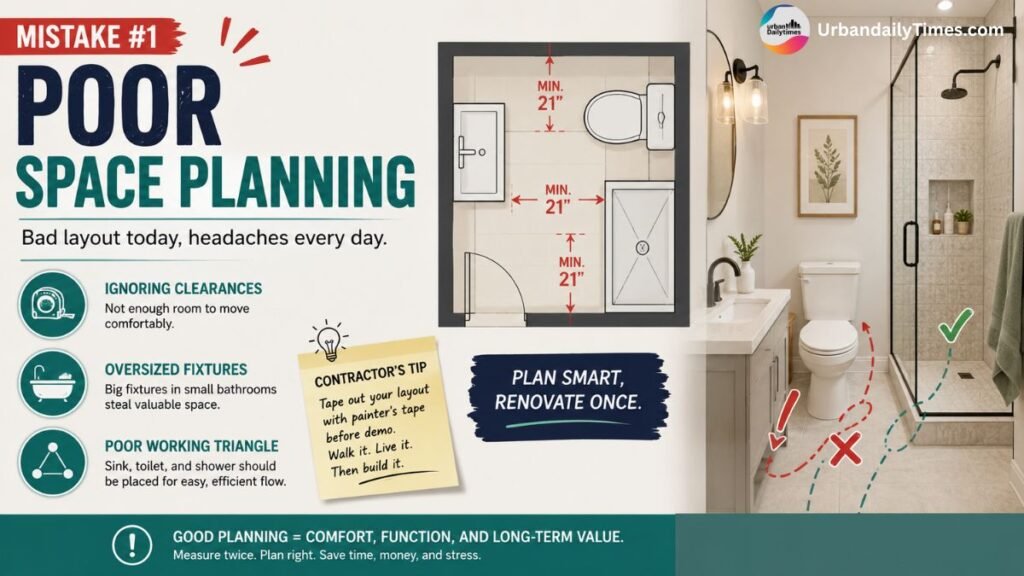
Poor space planning is the single most common complaint contractors have about DIY-designed bathrooms. It sounds simple — measure the room, pick your fixtures — but the details trip people up constantly.
Ignoring Clearance Codes and Door Swing
Most local building codes require at least 21 inches of clear floor space in front of a toilet, sink, or shower. Skip this, and you end up with a door that bangs into the vanity or a toilet so close to the tub that sitting down feels like a yoga pose. A proper bathroom floor plan accounts for clearances before a single tile gets ordered.
Oversized Fixtures in Undersized Rooms
A freestanding tub looks stunning in magazine spreads, but in a 5-by-8-foot bathroom, it can eat up so much space optimization potential that you lose storage and walking room. Space planning should always start with the room’s actual dimensions, not the fixture you fell in love with on Pinterest.
The Working Triangle
Kitchen designers talk about the “work triangle” between the sink, stove, and fridge. Bathrooms have a similar concept: the relationship between the sink, toilet, and shower. Contractors recommend keeping these three zones logically connected so the bathroom layout supports how people actually move through the space each morning.
Contractor’s Tip: “I always tell clients to tape out the floor plan with painter’s tape before demo starts. Walking through the taped-out space catches clearance problems that blueprints hide.” — a common piece of advice echoed across renovation forums and licensed contractor communities.
Ignoring Ventilation
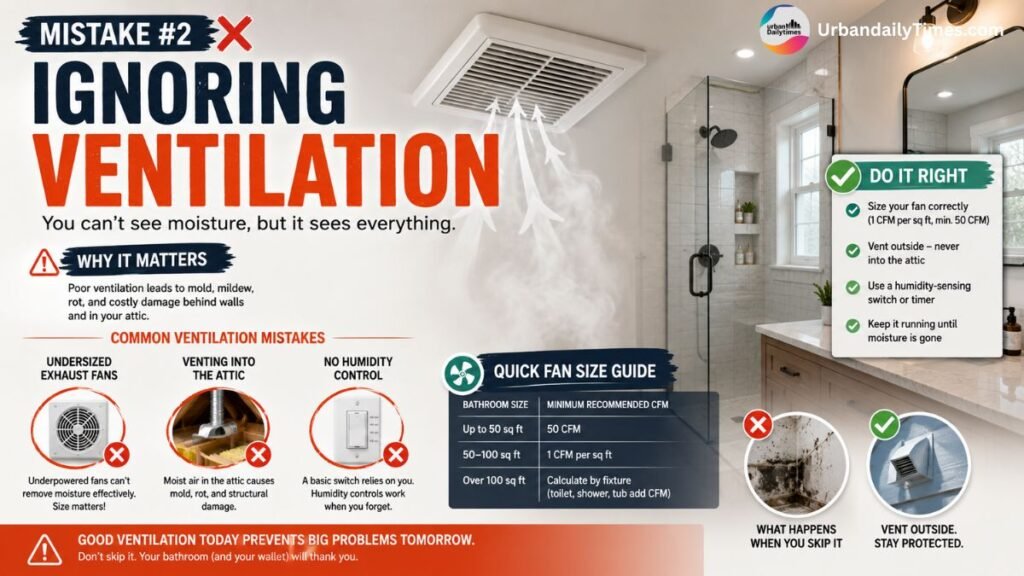
Ignoring ventilation ranks near the top of every contractor’s mistake list, because the consequences show up months later — long after the tile is grouted and the invoice is paid.
Undersized Bathroom Exhaust Fans
A bathroom exhaust fan needs enough capacity to fully exchange the air in the room. The Home Ventilating Institute recommends sizing a fan based on 1 CFM (cubic feet per minute) per square foot of floor area for bathrooms up to 100 square feet, with a minimum of 50 CFM for smaller rooms. Installing an underpowered fan is one of the most common bathroom ventilation shortcuts homeowners regret.
Quick CFM reference table:
| Bathroom Size | Minimum Recommended CFM |
| Up to 50 sq ft | 50 CFM |
| 50–100 sq ft | 1 CFM per sq ft |
| Over 100 sq ft | Calculate by fixture (toilet, shower, tub each add CFM) |
Venting Into the Attic Instead of Outside
An exhaust fan that dumps humid air into the attic instead of venting it outside is a mold growth factory waiting to happen. This single mistake is responsible for a large share of attic mold and rot claims contractors get called out to inspect. Every exhaust duct should terminate outside the home through a proper roof or wall vent cap.
Skipping Humidity Controls
A basic on/off switch relies on someone remembering to flip it. A humidity-sensing switch or timer keeps the fan running until moisture levels actually drop, which matters far more for moisture control and mildew prevention than most homeowners realize.
Improper Waterproofing
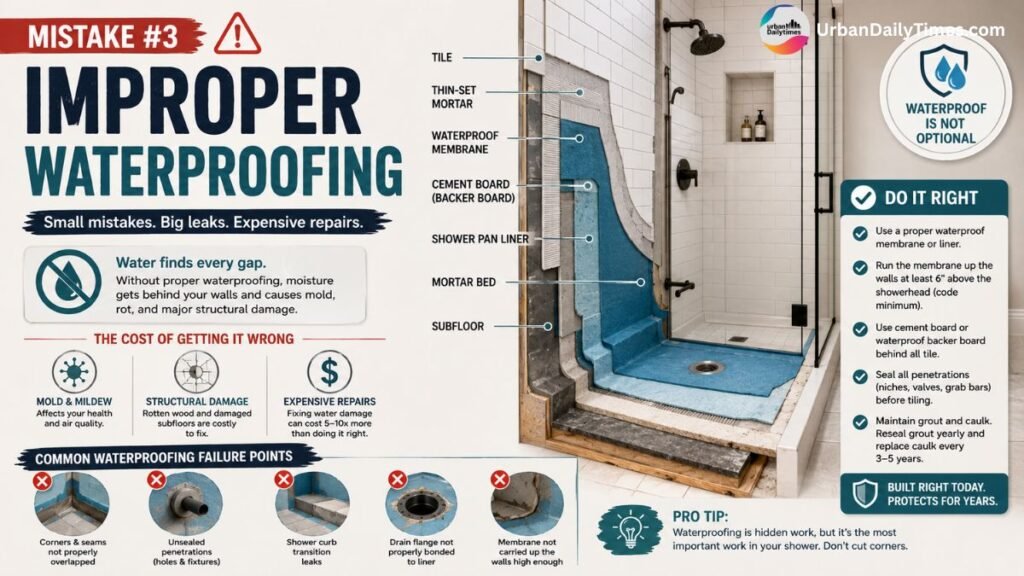
Improper waterproofing is where small oversights turn into five-figure repair bills. Water finds every gap, and once it’s behind the wall, you often don’t know until you see soft drywall or a musty smell.
Skipping a Proper Shower Pan Liner
Tile is not waterproof. It’s water-resistant at best, and every grout line is a potential entry point. A code-compliant shower needs a waterproof membrane — whether that’s a traditional CPE liner, a sheet membrane, or a liquid-applied waterproof barrier — installed underneath the mortar bed and up the walls to a minimum height (typically 6 inches above the showerhead, per most plumbing codes).
Drywall Behind Tile Is Not Optional to Avoid
Standard drywall breaks down when it gets wet repeatedly. Cement board, fiber-cement backer board, or a foam waterproofing panel system belongs behind any tile in a high-moisture environment, including tub surrounds and shower walls. This is one of the most frequently skipped steps in budget renovations, and it’s also one of the most expensive to fix after the fact.
Grout and Caulk Have a Lifespan
Even correctly waterproofed showers need maintenance. Grout is porous and should be resealed roughly once a year in high-use showers. Silicone caulk at seams and corners typically needs replacing every 3–5 years. Skipping this maintenance slowly undermines even a well-built shower waterproofing system.
Common waterproofing failure points:
- Corners and seams where membrane isn’t properly overlapped
- Grab bar and shower niche penetrations that weren’t sealed before tiling
- The transition between the shower curb and the bathroom floor
- Around the drain flange, if it wasn’t properly bonded to the liner
Ignoring Functionality
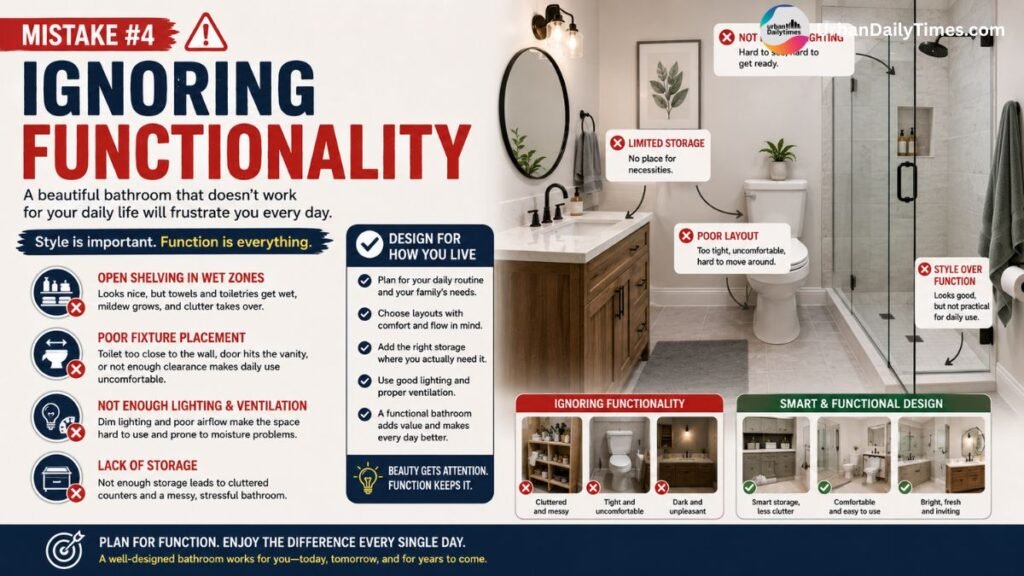
Ignoring functionality in favor of aesthetics is an easy trap. Showroom displays are designed to look beautiful in photos, not necessarily to work well every single day.
Open Shelving in Wet Zones
Open shelving looks clean and modern, but towels and toiletries stored in direct water exposure paths mildew faster and look cluttered within weeks. It works better outside the direct spray zone, not inside the shower itself unless it’s a built-in niche designed for it.
Awkward Control Placement
Shower valves installed too close to the shower head force you to get blasted with cold water while adjusting the temperature. A functional bathroom design places controls near the entry point, so you can start the water and adjust it before stepping in.
Storage as an Afterthought
Bathroom storage gets tacked on at the end of many projects, after the “statement” pieces are chosen. A truly practical bathroom design builds storage into the plan from day one — recessed medicine cabinets, vanity drawers sized for actual toiletries, and linen storage that doesn’t require a trip to another room for a fresh towel.
Choosing the Wrong Materials
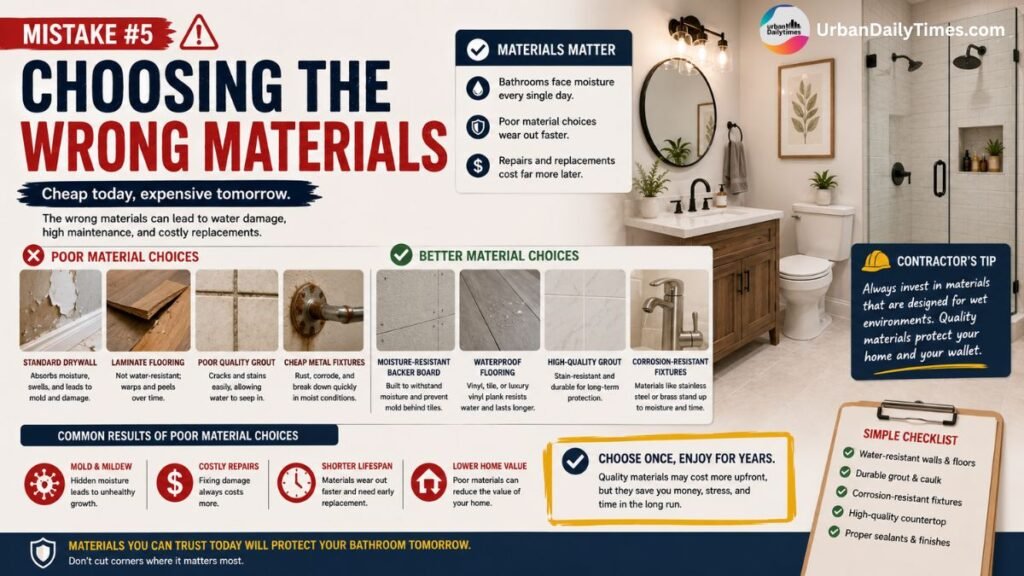
Choosing the wrong materials for a room that deals with constant humidity, splashing, and temperature swings is a mistake contractors flag on nearly every walkthrough of a failed DIY job.
Porous Materials Without Sealing
Natural stone like marble or travertine is beautiful, but it’s porous. Without a penetrating sealant reapplied every 12–18 months, it absorbs water, stains, and can even harbor bacteria. Porcelain tile and ceramic tile are far more forgiving because they’re manufactured to be low-porosity or non-porous, making them a more reliable choice for water-resistant materials in wet zones.
Slippery Flooring
A polished, glossy floor might photograph well, but bathrooms are one of the most common locations for household slip-and-fall injuries, according to the CDC’s home injury data. Look for bathroom flooring rated with a coefficient of friction suited for wet areas — textured porcelain, matte finishes, or small-format mosaic tile with more grout lines for traction.
Material Comparison Table
| Material | Water Resistance | Maintenance | Best Use |
| Porcelain tile | Excellent | Low | Floors, showers, walls |
| Ceramic tile | Very good | Low | Walls, floors |
| Natural stone (marble, travertine) | Poor without sealing | High | Accent areas only |
| Quartz countertops | Excellent | Low | Vanity tops |
| Solid wood vanity (untreated) | Poor | High | Not recommended near water splash |
| Sealed wood vanity (marine-grade finish) | Good | Moderate | Vanity cabinetry away from direct spray |
Vanities and Countertops
A wood vanity without a proper moisture-resistant finish will swell, warp, and delaminate at the seams within a few years in a humid bathroom. Countertops made of quartz resist staining, scratching, and water absorption far better than laminate or unsealed stone, making them one of the most durable choices for moisture-resistant materials near sinks.
Not Future-Planning
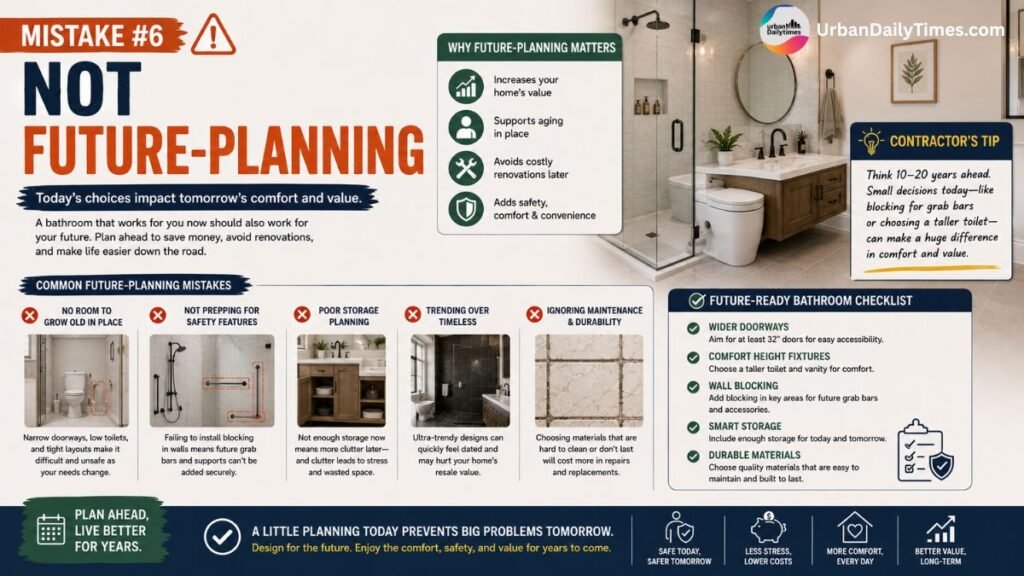
Failing to future-proof your bathroom is a mistake that doesn’t show up immediately — it shows up in ten or twenty years, when the household’s needs change and the bathroom can’t keep up.
Universal Design Principles
Universal design principles aim to make spaces usable for people of all ages and mobility levels without looking clinical or institutional. This isn’t just for aging homeowners — it also benefits anyone temporarily on crutches, parents managing young children, or guests with mobility needs.
Practical future-proofing features:
- Blocking installed in the wall behind future grab bar locations (even if you don’t need bars now)
- A curbless shower entry for step-free access
- Wider doorways (32–36 inches clear) to accommodate mobility aids
- Comfort-height toilets
- Lever-style faucet handles instead of twist knobs
Aging in Place Is a Growing Priority
According to AARP’s ongoing research on housing preferences, a large majority of adults over 50 say they want to remain in their current home as they age. A bathroom built with accessible bathroom features from the start avoids a costly second renovation down the road — and this kind of long-term durability planning is exactly what separates a good renovation from a great one.
Trend-Proofing Your Choices
Bold, trendy finishes date faster than neutral ones. A contractor’s rule of thumb: keep permanent, hard-to-change elements (tile, tub, shower enclosure) in timeless neutral tones, and save bold colors for easily swapped elements like towels, rugs, and paint.
Setting an Unrealistic Budget or Timeline
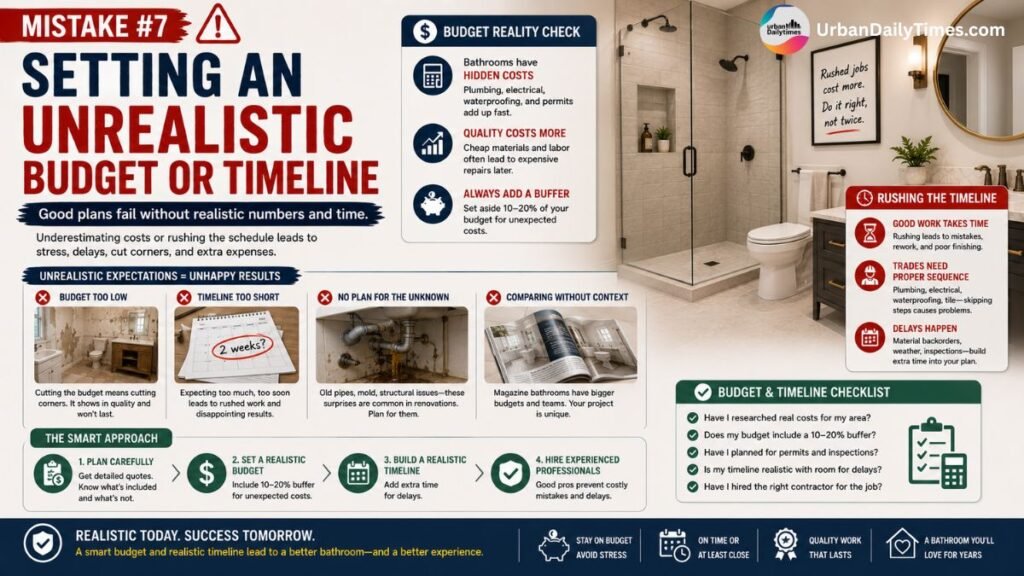
Even a well-designed bathroom can turn into a stressful project if the budget or timeline wasn’t realistic from the start.
Build In a Contingency Fund
Renovation industry data consistently points to unexpected issues — like water damage behind an old wall — showing up once demolition begins. Setting aside 10–20% of your total budget as a contingency fund is standard advice among custom home builder professionals and remodeling associations alike.
Labor vs. Materials
In a typical bathroom renovation project, labor often accounts for 40–65% of total cost, depending on the complexity of plumbing and electrical work involved. Homeowners frequently underestimate labor while overspending on fixtures, which throws the whole budget out of balance.
What Causes Most Delays
- Special-order materials with long lead times
- Discovering outdated or non-code-compliant plumbing/electrical mid-project
- Permit and inspection scheduling
- Changing your mind on finishes mid-build
Hiring the Wrong Contractor (or Skipping Permits)
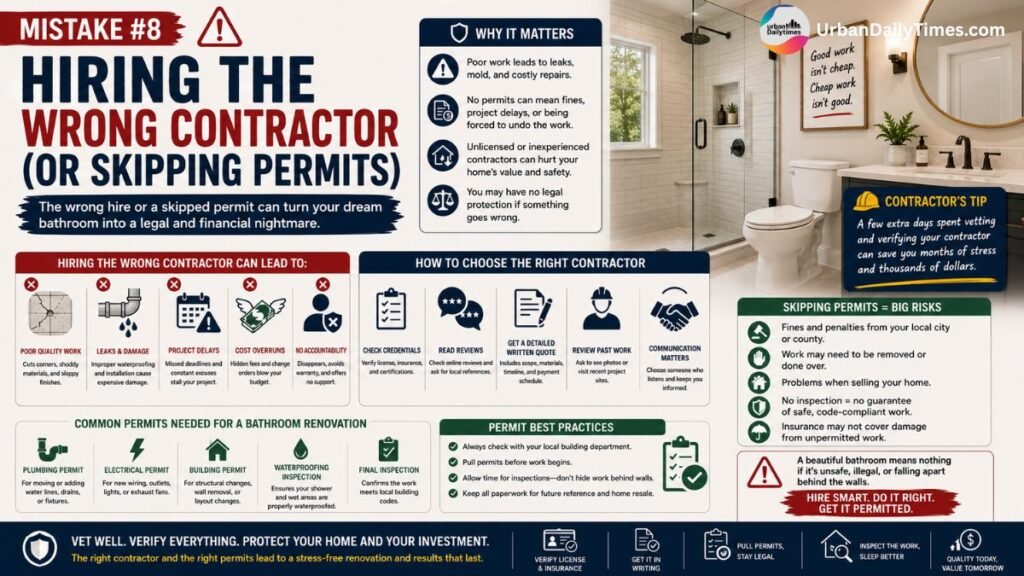
The final — and arguably most important — mistake is choosing who does the work, or trying to skip the paperwork altogether.
Vet Your Bathroom Contractor
A qualified bathroom contractor should carry current licensing and liability insurance, and be able to provide references from recent, comparable projects. A reputable bathroom designer or contractor will also walk you through code requirements specific to your municipality rather than cutting corners to save time.
Don’t Skip Permits
Plumbing and electrical changes in a bathroom almost always require permits in the U.S. Skipping this step can cause serious problems at resale, since unpermitted work often has to be disclosed and can reduce buyer confidence or even required to be redone to code.
Red Flags When Getting Quotes
- Quotes significantly lower than every other bid, with no clear explanation
- Reluctance to provide a written contract or itemized estimate
- No mention of permits, inspections, or code compliance
- Pressure to pay the full amount upfront
Bathroom Renovation Checklist: Avoiding the Top Mistakes
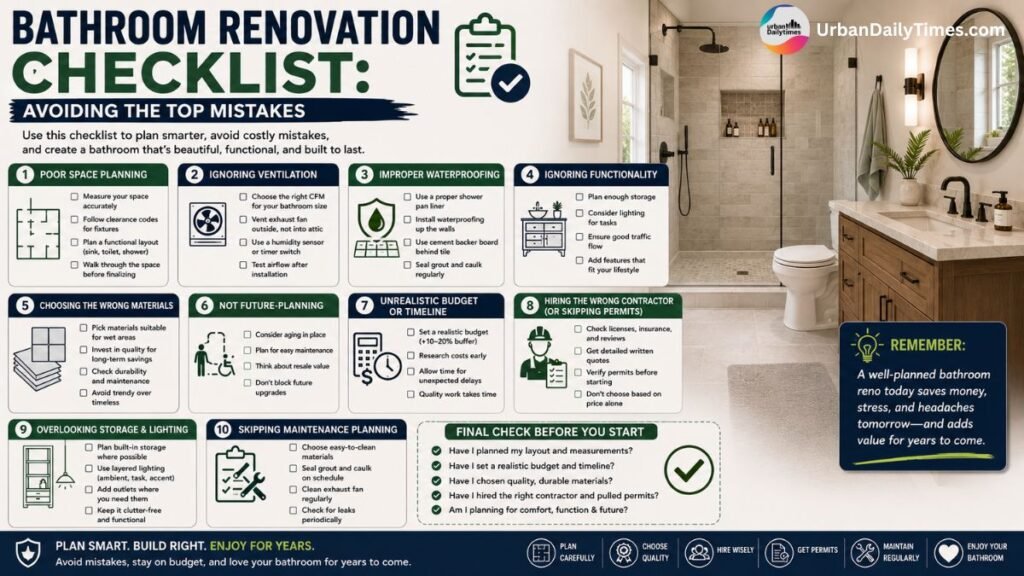
Use this quick-reference bathroom remodeling checklist before you start demo:
- [ ] Floor plan accounts for code-required clearances
- [ ] Exhaust fan is sized correctly and vents outside
- [ ] Waterproof membrane specified for all wet areas
- [ ] Cement board or approved backer used behind tile
- [ ] Flooring is slip-rated for wet conditions
- [ ] Storage planned into the layout, not added later
- [ ] Grab bar blocking installed even if not needed yet
- [ ] Budget includes a 10–20% contingency
- [ ] Contractor is licensed, insured, and permitted
- [ ] Timeless materials chosen for permanent fixtures
Key Takeaways
- Space planning and ventilation issues are the most common — and most preventable — bathroom renovation mistakes.
- Waterproofing failures cause the most expensive repairs, since damage often hides behind walls and floors for months.
- Choosing water-resistant materials upfront costs less than replacing failed materials later.
- Future-proofing with universal design principles protects your investment for decades, not just the next few years.
- A licensed, permitted bathroom contractor protects you legally and financially, even if the upfront quote looks higher than an unlicensed alternative.
A well-planned bathroom renovation isn’t about chasing every trend you see online — it’s about building a room that works well, holds up to daily use, and still makes sense for your household years from now. Avoid these ten mistakes, and you’ll end up with a bathroom that looks as good as it functions.
Conclusion
These 8 bathroom renovation mistakes all share one thing in common: they’re easy to miss and costly to fix later. Poor planning, weak ventilation, and rushed waterproofing don’t show up on day one. They show up months later, hidden behind walls and floors. That’s why good decisions early on matter so much.
A smart renovation isn’t about picking the prettiest tile. It’s about avoiding the 8 bathroom renovation mistakes that quietly drain your budget and shorten your bathroom’s lifespan. Plan the space well. Choose durable materials. Hire someone qualified. Do that, and your bathroom will work hard for you, not against you, for years to come.
Frequently Asked Questions
How much does a bathroom renovation typically cost?
Costs vary widely by region, scope, and material choices, and range from a few thousand dollars for a cosmetic refresh to well over $25,000 for a full gut renovation with moved plumbing. Getting itemized quotes from local, licensed contractors is the most reliable way to get an accurate number for your specific project.
How long does a bathroom remodel take?
A straightforward cosmetic update might take one to two weeks, while a full renovation involving plumbing and electrical changes commonly takes four to eight weeks, factoring in permitting, inspections, and material lead times.
Do I need a permit to renovate my bathroom?
In most U.S. jurisdictions, yes — particularly for any plumbing, electrical, or structural changes. Cosmetic-only updates (like repainting or replacing a vanity in the same location) may not require one, but it’s worth confirming with your local building department.
What’s the biggest mistake homeowners make in a bathroom remodel?
Contractors most frequently point to improper waterproofing and poor space planning as the two mistakes with the highest cost to fix after the fact, since both are largely hidden behind finished surfaces until a real problem develops.
Can I do any of this myself to save money?
Cosmetic work like painting, hardware swaps, or installing a new mirror is generally DIY-friendly. Plumbing, electrical, and waterproofing work carry higher risk if done incorrectly and are typically better left to licensed professionals, both for safety and for code compliance.

Welcome to Urban Daily Times. My name is Malik Akmal, and I’m passionate about sharing practical home decor and home improvement ideas that help you create a better living space. With over 15 years of experience in home design, renovation trends, and product research, I focus on providing trustworthy advice that helps homeowners save money and choose the right solutions. Every product and recommendation featured on Urban Daily Times is carefully researched and reviewed to ensure you get honest, useful, and reliable information.


