
Should you really upgrade to a high-end kitchen means weighing the cost of a luxury renovation against what buyers and homeowners actually gain from it. A high-end kitchen upgrade typically includes custom cabinetry, premium countertops, upscale appliances, and layout changes, all designed to boost comfort and property value.
Here’s the part most homeowners never check before signing a contract: the size of your kitchen budget doesn’t always match the size of your return. Real estate data shows small, smart updates often outperform expensive luxury remodels at resale, which flips a lot of common renovation advice on its head.
This guide breaks down exactly which upgrades deliver strong ROI, which ones real estate pros suggest skipping, and how your resale timeline changes the entire decision. You’ll get real cost ranges, current buyer preferences, and a clear framework for deciding what fits your kitchen, your budget, and your home’s market position.
The Short Answer — What the Data Actually Shows
Here’s the headline finding, stated plainly: smaller, smarter kitchen updates outperform full luxury renovations when it comes to resale value.
| Remodel Type | Typical Cost Range | Average ROI |
|---|---|---|
| Minor/cosmetic remodel | $20,000–$35,000 | 96%–113% |
| Mid-range major remodel | $75,000–$85,000 | 50%–51% |
| Upscale major remodel | $130,000–$175,000+ | 35%–40% |
(Figures based on the 2025 Zonda Cost vs. Value Report and 2026 Houzz Kitchen Trends Study.)
That’s a wide spread. A $28,000 refresh can add roughly $32,000 in resale value, while a $164,000 luxury renovation might only recoup about $58,000. Both projects will make your kitchen nicer. Only one of them makes financial sense if resale is your main goal.
This doesn’t mean a luxury kitchen is never worth it — it just means “worth it” depends entirely on why you’re doing the project, which is exactly what the next section untangles.
Why Bigger Kitchen Spends Return Less at Resale
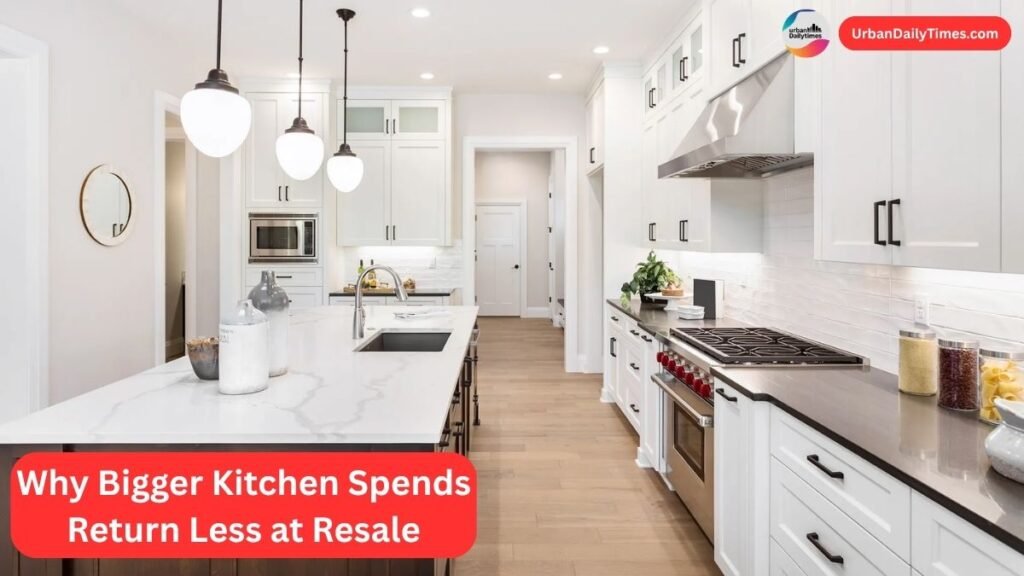
It seems backwards. A better kitchen should mean a bigger payout, right? Not according to how the property market actually values homes.
The Price Ceiling Effect
Every neighborhood has a price ceiling, and no kitchen — however gorgeous — pushes your home past it. If comparable homes on your street sell for $400,000 to $450,000, a buyer shopping in that range isn’t going to pay $550,000 just because your countertops are quartzite instead of laminate. Real estate agents call this “over-improving,” and it’s one of the fastest ways to lose money on a renovation. Your kitchen needs to match your home’s price tier, not exceed it.
Diminishing Buyer Perception
Buyers respond strongly to the jump from dated to updated. They respond far less to the jump from updated to luxury. Going from 1990s oak cabinets and laminate counters to painted cabinet fronts and quartz feels dramatic and worth paying for. Going from that refreshed kitchen to a magazine-cover gourmet kitchen costs tens of thousands more, but the buyer has already mentally checked the “updated kitchen” box. The extra spend buys you admiration during the showing, not extra dollars at closing.
Regional Variance in ROI
Not all markets behave the same way, and this is where a lot of generic advice falls apart. Minor kitchen remodels return roughly 167% in Maine, around 124% in Washington, and about 122% in California, according to state-level analysis of Zonda’s Cost vs. Value data. At least 21 states deliver 100% ROI or higher on minor remodels. Meanwhile, national averages sit closer to 96%–113%. Before you plan your budget, it’s worth checking your specific metro area rather than relying on a national number alone.
Resale vs. Livability — Which One Are You Actually Optimizing For?
This is the question that should come before any design decision, and it’s the one most homeowners skip.
Selling in the Next One to Three Years
If a sale is on the horizon, let ROI data drive your decisions. Stick to minor and mid-range updates: cabinet refacing, new countertops, updated lighting, and fresh paint. Save the ten-year renovation plan for the next owner, because you won’t be the one enjoying it long enough to justify the spend.
Staying Put for Ten-Plus Years
The math changes completely if you’re not going anywhere. A $50,000 remodel spread across ten years works out to roughly $14 a day. If you cook two or three meals a day in that space, every single day, that daily-use value is real, even if a spreadsheet doesn’t capture it. One homeowner summed this up well after a $75,000 remodel: “We cook every meal and hardly ever go out. The improved functionality and the joy of being in a beautiful space adds value to our lives every single day that a spreadsheet can’t capture.” That’s a legitimate reason to spend more, as long as you’re honest with yourself about the ROI tradeoff you’re accepting.
A Quick Framework to Decide
- Check your neighborhood comps. Don’t spend more than your price tier supports.
- Confirm your timeline. Selling soon means minor remodel. Staying long-term opens the door to bigger investments.
- Separate emotional value from resale value. Both are valid, but only one shows up on a closing statement.
- Get quotes tiered by scope (minor, mid-range, upscale) so you can compare real numbers, not vague estimates.
Upgrades That Consistently Pay Off
These are the kitchen improvements that show up again and again in ROI data, regardless of which report you check.
Cabinetry: Refacing Beats Full Replacement
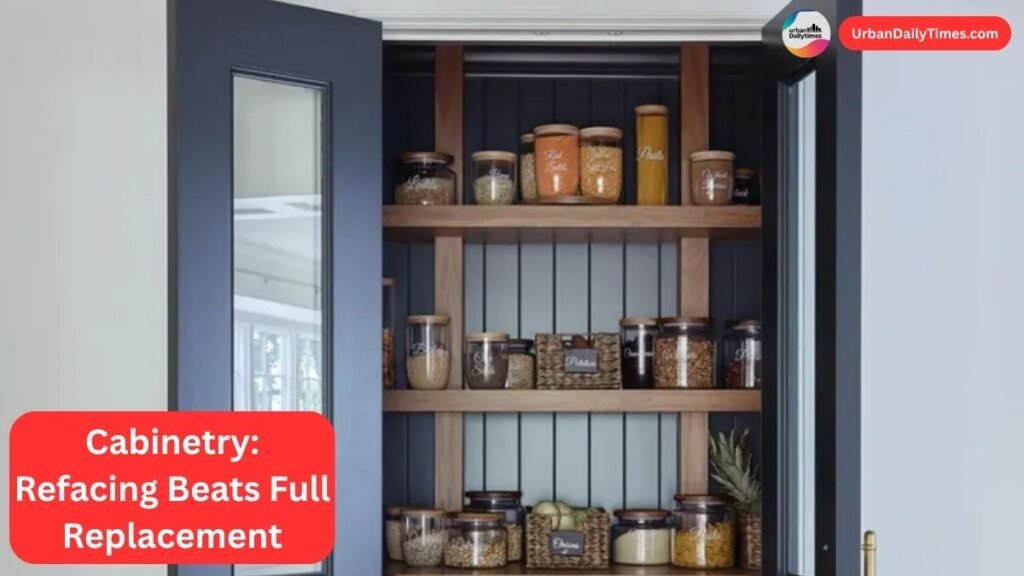
Cabinets typically eat up 30% to 40% of a total kitchen budget, which makes this the single most important cost decision in the entire project. Full cabinet replacement looks impressive, but cabinet refacing — keeping the existing boxes and replacing doors, drawer fronts, and hardware — delivers ROI figures around 72% to 96% in various industry reports, at a fraction of the cost.
Cabinet painting is an even cheaper variation of the same idea, and it works especially well when the cabinet boxes are structurally sound and the layout already functions. If you’re drawn to open shelving or a bit of glass cabinetry for display, use it sparingly as an accent rather than your primary kitchen storage solution — buyers tend to favor closed storage for everyday practicality, even in a design-forward kitchen.
Expert tip: If your cabinet boxes are plywood rather than particleboard, refacing is almost always the smarter move. If they’re already sagging or water-damaged, replacement becomes worth the extra cost.
Countertops: Material Matters More Than You’d Think
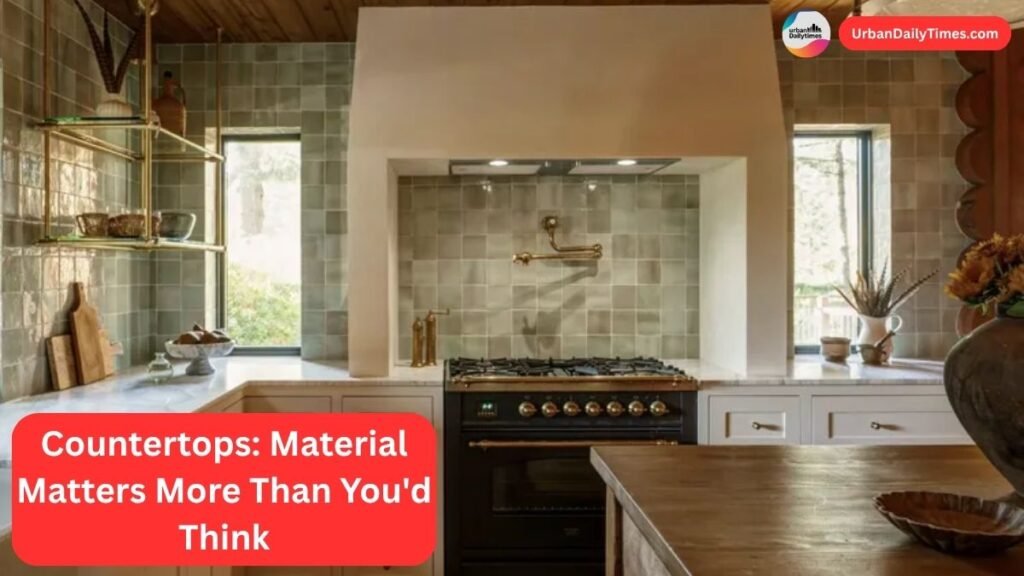
Countertop upgrades return somewhere between 64% and 80% depending on material and source. Here’s how the most common countertop materials stack up:
| Material | Typical ROI | Maintenance | Buyer Perception |
|---|---|---|---|
| White quartz countertops | ~68%–72% | Very low (non-porous, no sealing) | High — seen as premium and low-maintenance |
| Granite | ~64% | Requires annual sealing | Solid, slightly dated in some markets |
| Quartzite or porcelain countertops | Strong, trending up | Low to moderate | Increasingly desirable, especially paired with natural wood |
| Butcher block | Weaker in humid or dry climates | High | Warm aesthetic, but higher upkeep |
| Laminate | Lowest | Low cost, low durability | Reads as budget, hurts buyer appeal |
Quartz remains the top choice for a reason: it doesn’t stain, doesn’t need sealing, and photographs well for listings. If you’re chasing a more natural, high-end look, quartzite has been gaining ground as a stone surface alternative that still performs well with buyers.
Lighting: The Cheapest Way to Change a Room
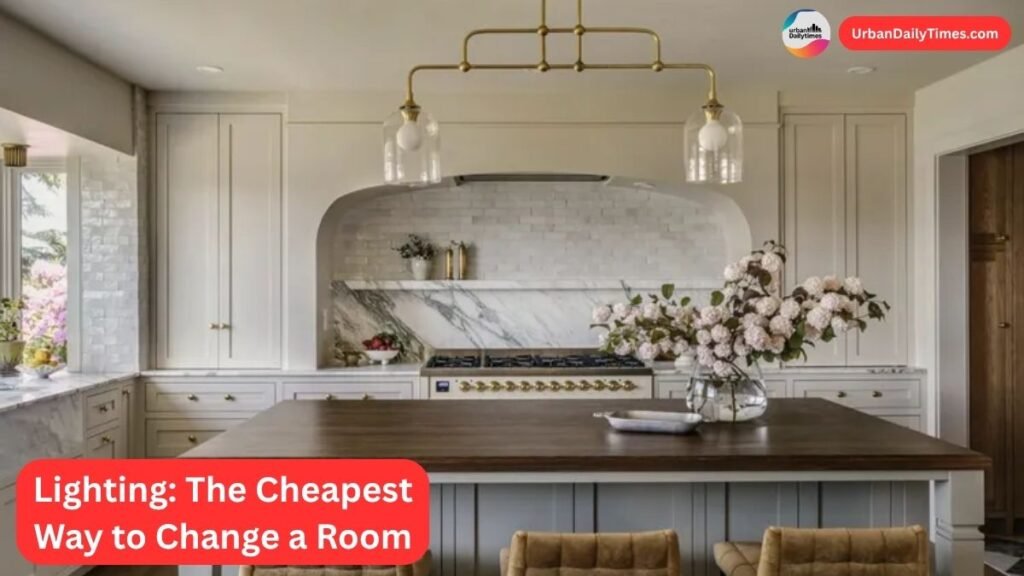
Kitchen lighting is one of the most underrated upgrades on this list because it’s inexpensive relative to the perception shift it creates. The best-performing kitchens use layered lighting, which means combining three types:
- Ambient lighting — your general overhead light source
- Task lighting — under-cabinet strips over prep areas and the sink
- Accent lighting — pendant fixtures over an island or bar seating
Adding dimmers costs very little and instantly makes a kitchen feel more intentional and upscale. Updated light fixtures alone can shift a kitchen’s entire mood without touching cabinets or counters at all — it’s the highest perception-per-dollar upgrade on this list.
Updated Appliances (Without Going Overboard)
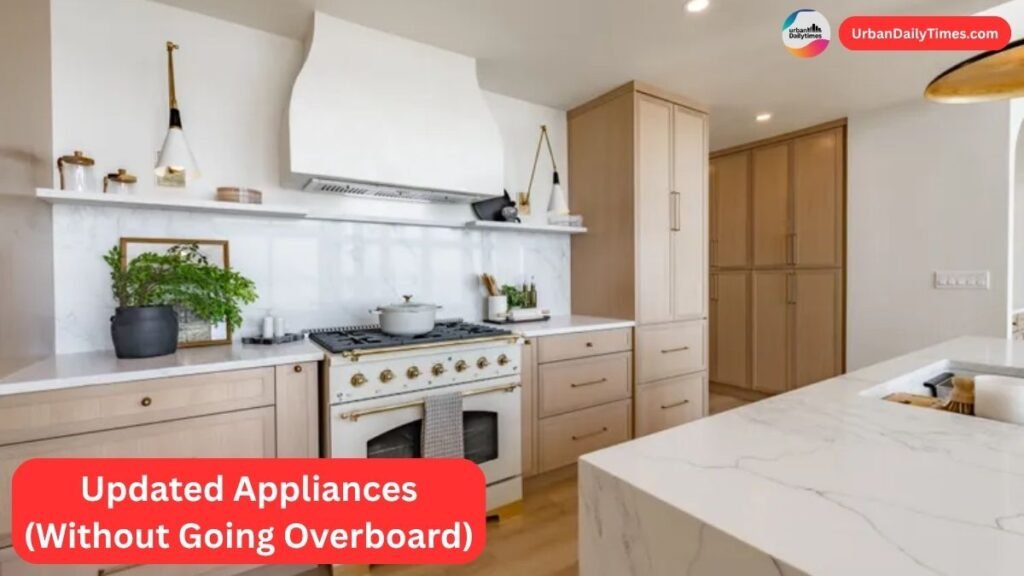
Premium appliances return roughly 68% to 71% in ROI studies, but there’s a ceiling. Mid-range stainless steel appliances hit the sweet spot buyers expect in an updated kitchen. A commercial-grade stove, a built-in espresso machine, or a $4,000 dishwasher looks fantastic to you, but buyers rarely pay a premium for brand-name fancy appliances the way they do for cabinetry or countertops. Beyond a certain point, additional appliance spend simply doesn’t show up in the resale number.
Case in point: According to the 2026 Houzz Kitchen Trends Study, gas cooktops still outsell induction models by nearly two to one among actual homeowner purchases (48% versus 26%), despite induction’s rising popularity in design media. That’s a reminder that current buyer preference, not the trendiest kitchen equipment, should guide your appliance decisions if resale is the priority.
Smart Storage and Flooring
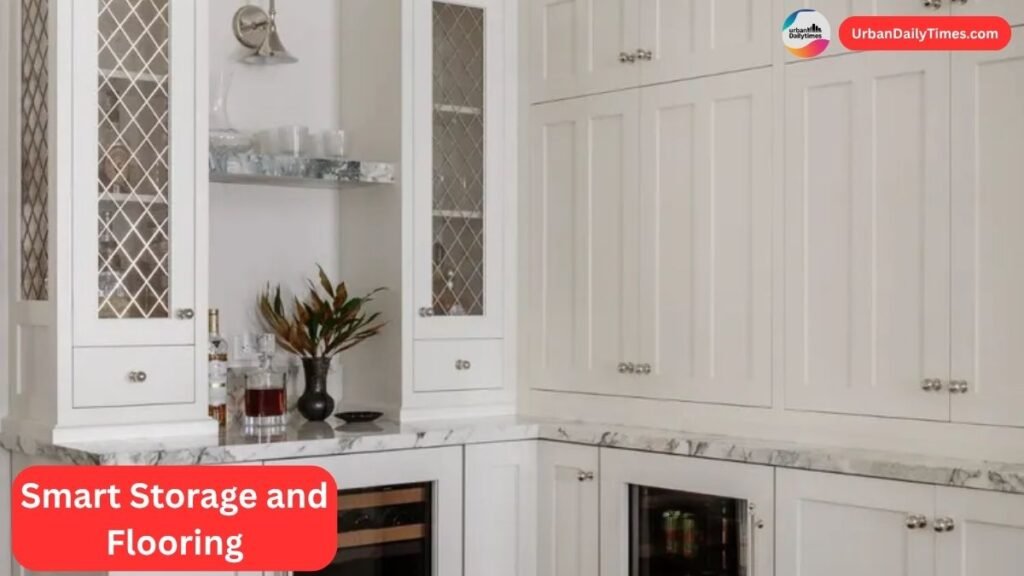
Pullout waste bins, tray dividers, and pantry pullouts show up in a large share of renovations — pantry cabinets alone appear in 47% of projects — because buyers now expect this kind of functional kitchen storage as standard, not a luxury add-on. Missing these features is increasingly something buyers notice during a showing.
On the floor, engineered wood flooring and waterproof flooring options have become the default recommendation over solid hardwood flooring in kitchens, since they resist moisture around sinks and dishwashers while still delivering the look of natural wood. A flooring upgrade here is a relatively low-cost, high-impact move, particularly when paired with updated cabinetry and countertops.
Upgrades Real Estate Pros Say to Skip (Unless You’re Staying Long-Term)
Not every dollar spent in a kitchen comes back to you. These are the categories where real estate agents most often advise homeowners to hold back.
Ultra-Luxury Appliance Packages
As covered above, appliance ROI plateaus fast. A $15,000 range might be a joy to cook on, but it won’t move your home’s price the way a comparable spend on cabinetry or countertops would. If resale is the priority, mid-range premium appliances deliver nearly all the buyer appeal at a fraction of the cost.
Fully Custom, Non-Standard Layouts
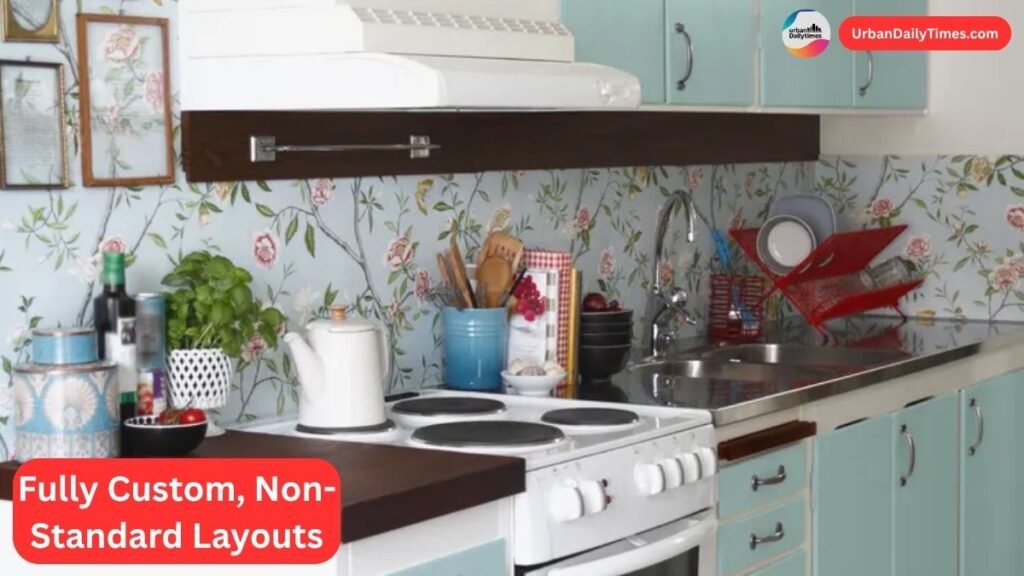
Highly custom layouts — oddly shaped islands, non-standard cabinet configurations, single-purpose built-ins — narrow your buyer pool. What feels perfectly tailored to your cooking habits can look confusing or limiting to someone else, and appraisers often struggle to assign clear value to one-of-a-kind configurations. If you’re planning to sell within the next several years, favor cabinetry and layouts that read as flexible rather than hyper-personalized.
Over-Personalized Finishes
Bold tile patterns, unusual cabinet colors, and statement wallpaper might be exactly your taste, but they carry real resale risk. Timeless neutrals, neutral colors, and classic finishes like white subway tile consistently test better with buyers because they signal a move-in ready home with broad appeal. Save the bold personal statements for rooms that matter less to a buyer’s first impression, like a powder room or a home office.
The One “Skip It” Item That’s Actually a “Do It Now” — Opening Up Walls

Older advice treated wall removal as an unnecessary luxury. That advice is outdated. In a growing number of markets, an open concept kitchen is no longer a nice-to-have — it’s a baseline expectation, on par with updated countertops.
If your kitchen is closed off while most comparable listings in your area feature an open floor plan connecting the kitchen to the living space and dining room, that layout difference can be the deciding factor between a quick sale at asking price and a listing that lingers. This is a structural change, so it comes with real considerations:
- Load-bearing walls require an engineer and permits, which adds cost and time.
- Home layout changes can affect HVAC, electrical, and plumbing runs.
- In lower-priced markets, removing a wall plus refreshing the kitchen may exceed your neighborhood’s price ceiling — check comps before committing.
When the budget and structure allow it, though, this is one of the few structural changes in a kitchen that consistently earns back more than it costs in markets where open-concept living is the norm.
Common Mistakes Homeowners Make With Kitchen Upgrades
- Renovating above your neighborhood’s price tier. A $150,000 kitchen in a $300,000 house rarely pays for itself.
- Assuming a major remodel “pays for itself.” The data says otherwise for upscale, major-scope projects.
- Chasing trends over timeless design. Bold, of-the-moment finishes age faster than classic finishes and hurt resale flexibility.
- Skipping the comps check before starting. This single step prevents most over-improvement mistakes.
- Ignoring functional storage in favor of aesthetics. Buyers notice missing pantry space and drawer organization more than you’d expect.
Pros and Cons of a High-End Kitchen Remodel
Pros
- Significant daily enjoyment if you’re staying long-term
- Strong buyer appeal when your home’s price tier supports it
- Can be the deciding factor in competitive, updated-kitchen markets
Cons
- Lower ROI than minor or mid-range remodels
- Risk of over-improving relative to neighborhood comps
- Higher chance of style choices that don’t age well
- Longer project timeline and higher disruption to daily life
Key Takeaways
- Minor kitchen upgrades consistently outperform major, upscale renovations in ROI.
- Your neighborhood’s price ceiling matters more than how nice your kitchen is.
- Cabinet refacing, quartz countertops, and layered lighting are the highest-value, lowest-risk updates.
- Mid-range appliances satisfy buyers; ultra-luxury appliances mostly satisfy you.
- Open-concept layouts have shifted from optional to expected in many markets.
- Timeless, neutral finishes protect your resale potential better than trend-driven design.
- If you’re staying long-term, livability can reasonably outweigh strict ROI math — just know which goal you’re optimizing for before you start.
Conclusion
So, should you really upgrade to a high-end kitchen? The honest answer is: it depends on your goal. If you’re selling soon, small updates like cabinet refacing, quartz counters, and better lighting bring stronger returns. A full luxury remodel looks great, but it rarely pays for itself at resale.
Should you really upgrade to a high-end kitchen if you’re staying for years? Then yes, it can be worth it. Livability matters just as much as ROI. Check your neighborhood’s price range first, pick timeless finishes, and spend where buyers actually notice. That’s how you upgrade smart, not just big.
Frequently Asked Questions
Is a full kitchen remodel worth it before selling?
Usually not, if “full” means an upscale, major-scope renovation. The data consistently shows minor and mid-range remodels deliver stronger ROI, since buyers pay based on neighborhood comps rather than renovation cost.
What’s the difference between a minor and major kitchen remodel?
A minor remodel typically involves cabinet refacing, new countertops, updated lighting, and paint, while keeping the existing layout and plumbing in place. A major remodel involves full cabinet replacement, layout changes, and often moving plumbing or electrical, which drives cost up significantly.
Do luxury appliances add resale value?
Only up to a point. Mid-range stainless appliances satisfy buyer expectations. Spending well beyond that on luxury appliances rarely shows up in your home’s final sale price.
What kitchen upgrade has the best ROI right now?
Cabinet refacing and quartz countertops consistently rank at the top of current return on investment data, often outperforming full cabinet replacement or high-end appliance packages.
Should I remodel my kitchen if I’m not planning to sell soon?
Yes, if the daily enjoyment justifies the cost to you personally. Just go in with clear eyes: a bigger, more personalized remodel is an investment in your lifestyle, not primarily in your home value.

Welcome to Urban Daily Times. My name is Malik Akmal, and I’m passionate about sharing practical home decor and home improvement ideas that help you create a better living space. With over 15 years of experience in home design, renovation trends, and product research, I focus on providing trustworthy advice that helps homeowners save money and choose the right solutions. Every product and recommendation featured on Urban Daily Times is carefully researched and reviewed to ensure you get honest, useful, and reliable information.


