
Trying to find a striking color that starts with D for a paint project, a logo, or just to win a trivia night? You’re in the right spot. This guide rounds up every notable color that starts with D, organized by hue family, complete with hex codes, real-world uses, and the stories behind their names.
By the end, you’ll know exactly which D colors work for interior design, fashion, branding, or art, and you’ll never blank on a “starts with D” question again.
Quick Reference: Every Color That Starts With D
Here’s the full list of colors that start with D at a glance. Bookmark this table if you just need fast answers.
| Color Name | Hex Code | Color Family |
|---|---|---|
| Dark Blue | #00008B | Blue |
| Dodger Blue | #1E90FF | Blue |
| Dark Cyan | #008B8B | Blue-Green |
| Dark Turquoise | #00CED1 | Blue-Green |
| Denim | #1560BD | Blue |
| Dark Red | #8B0000 | Red |
| Dusty Rose | #C9A9A6 | Pink |
| Dark Salmon | #E9967A | Pink-Orange |
| Daffodil | #FFFF31 | Yellow |
| Dandelion | #FED85D | Yellow |
| Dark Orange | #FF8C00 | Orange |
| Dark Goldenrod | #B8860B | Yellow-Brown |
| Dark Green | #006400 | Green |
| Dark Olive Green | #556B2F | Green |
| Dark Sea Green | #8FBC8F | Green |
| Dartmouth Green | #00693E | Green |
| Dark Violet | #9400D3 | Purple |
| Dark Orchid | #9932CC | Purple |
| Dark Magenta | #8B008B | Purple-Pink |
| Deep Purple | #36013F | Purple |
| Dove Gray | #6D6C6C | Neutral |
| Dim Gray | #696969 | Neutral |
| Dark Slate Gray | #2F4F4F | Neutral |
| Desert Sand | #EDC9AF | Beige/Earth |
| Davy’s Gray | #555555 | Neutral |
Most of these D color names come from one of three places: the official CSS/X11 web color standard, a paint or crayon manufacturer’s naming system, or traditional pigment and material names used by artists for centuries. We’ll break those distinctions down later, since it actually changes how reliable a hex code is.
Blue and Cyan Shades That Start With D
Blue dominates the “D” section of the color wheel, probably because so many natural blues (deep ocean water, denim fabric, twilight sky) read as darker, moodier tones.
Dark Blue (#00008B) is one of the original 16 colors in the W3C’s CSS color spec, which means web developers have relied on this exact hex code since the early days of the internet. It reads as serious, trustworthy, and a little formal, which is why so many banks and law firms lean on it.
Dodger Blue (#1E90FF), named after the Los Angeles Dodgers’ team color, is a brighter, more energetic blue that shows up constantly in sports branding and tech logos.
Dark Cyan (#008B8B) sits between blue and green, giving it a calmer, more aquatic feel. It’s a favorite for spa branding and wellness apps.
Dark Turquoise (#00CED1) is more saturated and tropical than dark cyan, often associated with clear ocean water.
Denim is less of a precise scientific color and more of a cultural one. It describes the faded indigo-blue of classic jeans, somewhere around #1560BD, though the exact shade varies depending on the wash.
Shades of Blue That Start With D: Quick Comparison
| Shade | Mood | Common Use |
|---|---|---|
| Dark Blue | Authoritative, calm | Corporate branding |
| Dodger Blue | Energetic, modern | Sports, tech |
| Dark Cyan | Soothing, fresh | Wellness, healthcare |
| Denim | Casual, nostalgic | Fashion, home decor |
Red and Pink Shades That Start With D
Dark Red (#8B0000), sometimes called “blood red,” carries intensity and drama. It’s heavily used in wine branding, luxury packaging, and warning signage where a bold statement matters.
Dusty Rose has become one of the most requested pink colors that start with D in interior design over the past several years. Unlike a bright pink, dusty rose mutes the saturation with gray undertones, landing it firmly in the “sophisticated colors” category that designers love for bedrooms and wedding palettes.
Dark Salmon (#E9967A) blends pink and orange, giving it a warmer, sun-kissed feel that works well in spring and summer color schemes.
“Dusty rose works because it’s pink without being childish. It reads as romantic and grown-up at the same time.” This is the kind of reasoning interior designers commonly give when explaining why muted, gray-toned pinks have stayed popular in modern decor trends.
Yellow and Orange Shades That Start With D
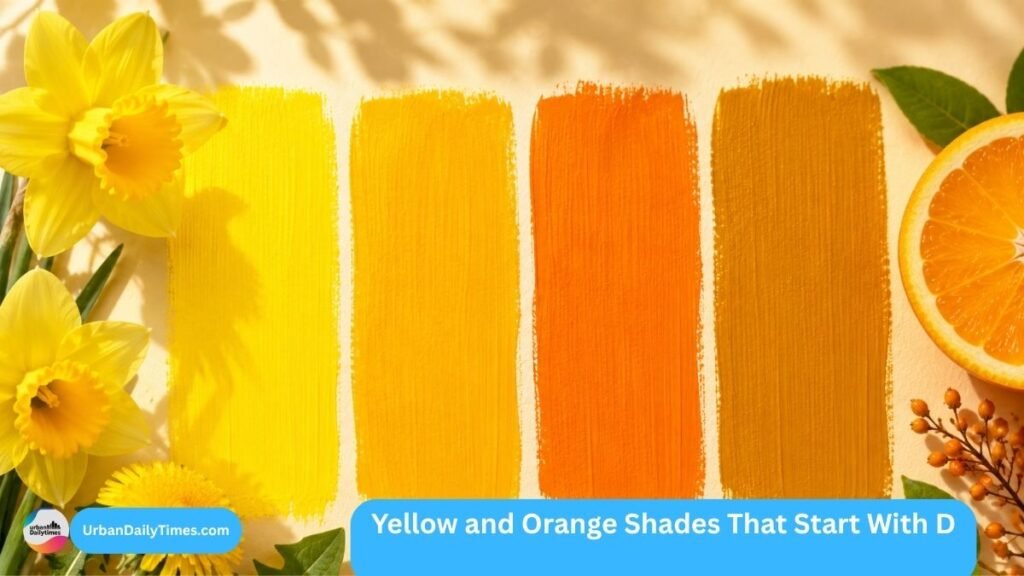
Daffodil, named directly after the flower, is a true, saturated yellow (Crayola lists its version at roughly #FFFF31). It’s cheerful and high-energy, which is why you’ll see it in children’s products and spring-themed branding.
Dandelion is slightly softer than daffodil, leaning toward a warm golden yellow rather than a pure lemon tone.
Dark Orange (#FF8C00) is bold without tipping into red, making it a strong accent color rather than a background choice.
Dark Goldenrod (#B8860B) has a metallic, antique quality to it, often used to suggest aged brass or autumn foliage.
Green Shades That Start With D
Dark Green (#006400) is one of the most universally recognized D colors, associated with forests, money, and stability.
Dark Olive Green (#556B2F) leans more brown than green, putting it firmly in the “earthy tones” camp that’s currently trending in both fashion and home decor.
Dark Sea Green (#8FBC8F) is muted and grayish, a popular choice for calming, nature-inspired color palettes.
Dartmouth Green (#00693E) is an institutional standard, the official school color of Dartmouth College, and a good example of how organizations sometimes create their own named shades.
Purple and Violet Shades That Start With D
Dark Violet (#9400D3) and Dark Orchid (#9932CC) are close cousins, both vivid and saturated, but Dark Orchid carries a touch more pink in its undertone.
Dark Magenta (#8B008B) bridges purple and pink, often used in beauty and cosmetics branding for a luxurious, bold effect.
Deep Purple, much like denim, doesn’t have one universally fixed hex code; it’s a descriptive name for any rich, dark purple typically falling somewhere between #380474 and #4B0082, depending on the source.
Neutral, Gray, and Earth-Tone Shades That Start With D
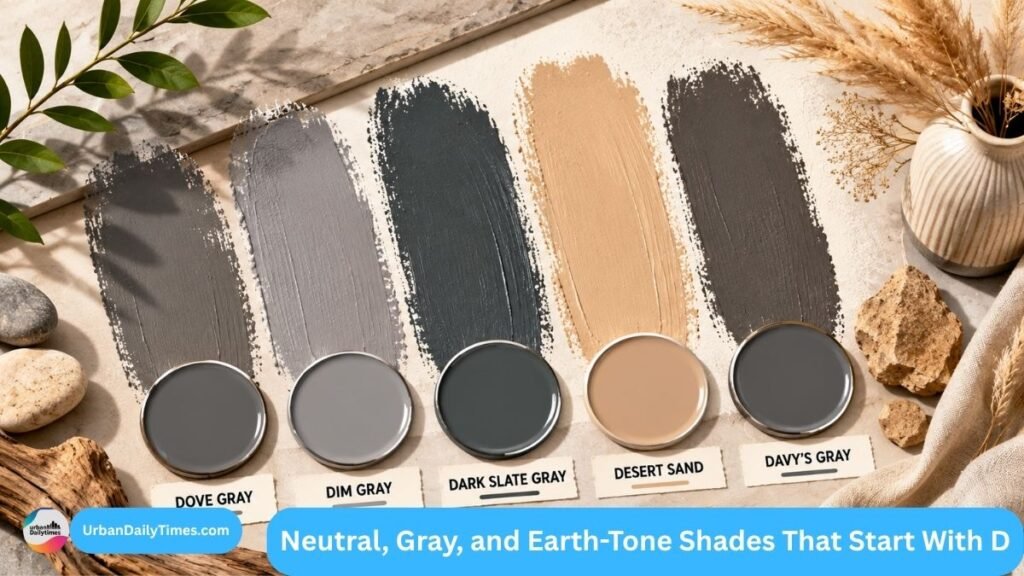
Neutral D colors are the unsung heroes of design work. They rarely headline a project, but they make everything else look better.
Dove Gray (#6D6C6C) is a warm, soft gray often used in minimalist branding and wall paint because it doesn’t fight with other colors in a room.
Dim Gray (#696969) is a standard CSS color, slightly cooler and flatter than dove gray.
Dark Slate Gray (#2F4F4F) has a hint of blue-green in it, giving it a moodier, more industrial feel, often seen in tech and finance branding.
Desert Sand (#EDC9AF) is a warm beige tied directly to its namesake, commonly used in earthy, natural-inspired home decor.
Davy’s Gray is a traditional artist’s pigment named after English painter Davy. It’s still used today by oil and watercolor painters for shadow tones and underpainting.
Where These D Colors Come From
Not all color names carry the same level of official backing, and that’s worth understanding before you use one in a design brief.
Web and CSS Standard Colors (X11 Naming System)
Colors like Dark Blue, Dark Cyan, Dark Green, Dim Gray, and Dark Slate Gray are part of the official W3C CSS Color Module, originally inherited from the X11 color system used in 1980s Unix computing. These have exact, locked-in hex codes that never change across browsers or design tools.
Crayola and Pantone Named Shades
Names like Daffodil and Dandelion trace back to crayon and paint manufacturers, who’ve created their own proprietary color libraries over the decades. These hex values can shift slightly between brands since there’s no single governing standard.
Colors Named After Nature, Pigments, and Materials
Desert Sand, Dusty Rose, and Davy’s Gray all originate from descriptive, real-world references rather than a technical spec. They’re widely understood but allow more interpretation in exact shade.
The Psychology and Mood Behind Popular D Colors
Color psychology isn’t an exact science, but decades of design research point to consistent patterns in how people respond to certain hues.
- Dark Blue is consistently linked to trust, stability, and professionalism, which explains its dominance in banking and corporate logos.
- Dark Red signals urgency, passion, or luxury depending on context, think wine labels versus warning signs.
- Dusty Rose is associated with softness, nostalgia, and romance, without the youthful energy of brighter pinks.
- Dark Green evokes nature, wealth, and growth, which is why it’s a go-to for finance and sustainability branding.
- Deep Purple carries connotations of luxury, creativity, and mystery.
How to Use D Colors in Design, Branding, and Home Decor
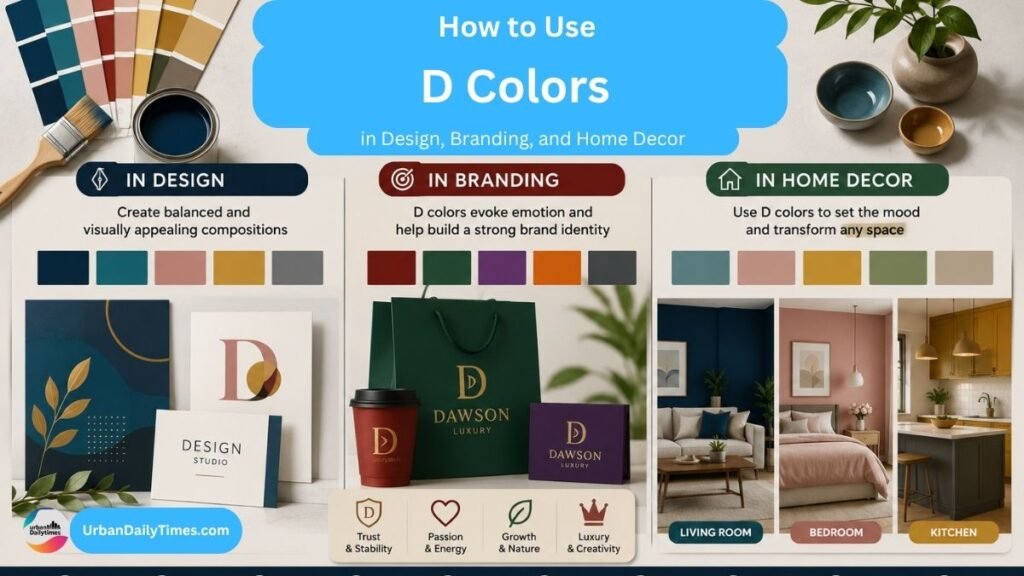
Pairing D Colors With Complementary Shades
A few combinations that consistently work well in real projects:
- Dark Blue + Desert Sand: A coastal, calming palette popular in both interior design and hospitality branding.
- Dusty Rose + Dove Gray: A soft, modern combination frequently used in bedroom and nursery color schemes.
- Dark Green + Dark Goldenrod: A rich, autumnal pairing that suits both fashion and rustic home decor.
- Deep Purple + Dark Cyan: A bold, contemporary combination for branding that wants to stand out.
Best Rooms for Popular D Colors in Home Decor
If you’re picking paint for an actual room rather than a screen, the room’s purpose matters as much as the shade itself. Here’s how the most popular D colors translate into real interior design colors for specific spaces:
| Room | Best D Color | Why It Works |
|---|---|---|
| Living Room | Dark Blue or Denim | Calming enough for daily use, versatile with both warm and cool accents |
| Dining Room | Dark Red (Deep Red) | Warm, intimate, and known to stimulate appetite and conversation |
| Bedroom | Dusty Rose or Deep Purple | Soft and romantic, or rich and restful, depending on the mood you want |
| Kitchen | Daffodil Yellow | Bright and energizing, ideal for a room people use first thing in the morning |
| Children’s Room | Daffodil or Dandelion | Cheerful, high-energy yellows that suit playrooms and kids’ bedrooms |
| Home Office | Dark Slate Gray or Dove Gray | Neutral and focused, without feeling cold or sterile |
| Bathroom | Desert Sand or Dark Cyan | Sand feels spa-like and warm; cyan feels clean and aquatic |
This kind of room-by-room thinking is exactly what a smart home design or 3D room planner tool is built for: testing a shade like Dusty Rose or Dark Cyan virtually before committing to a gallon of paint.
Accessibility and Contrast Considerations for Text and UI
If you’re using any dark D color (Dark Blue, Dark Green, Dark Slate Gray) as a text or background color, run it through a contrast checker like the WebAIM Contrast Checker to confirm it meets WCAG accessibility standards, especially when pairing dark tones with other dark tones.
Common Mistakes When Choosing or Naming D-Colored Palettes
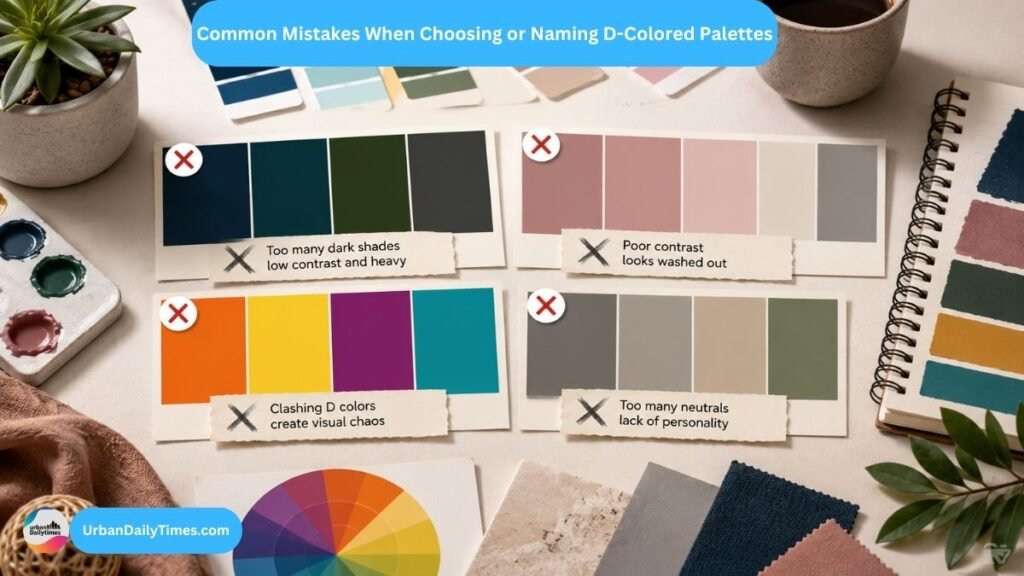
- Assuming every D color has one fixed hex code. Names like Denim and Deep Purple are descriptive, not standardized, so always confirm the exact value before finalizing a brand guide.
- Overusing dark shades without contrast. Pairing Dark Slate Gray with Dark Olive Green, for instance, can muddy a design that needs visual separation.
- Ignoring color psychology in branding. A wellness brand leaning on Dark Red instead of Dark Cyan sends an unintentionally aggressive signal.
- Mixing CSS-standard names with brand-specific names. Confirm whether a client means the official “Dark Orchid” hex or a custom shade they’ve seen elsewhere.
Frequently Asked Questions
What is the most well-known color that starts with D?
Dark Blue is generally the most recognized and most widely used, largely because it’s a long-standing CSS web standard and a common choice in corporate branding.
Is Denim an official color name?
Not in the same way Dark Blue is. Denim is a descriptive name tied to the fabric’s faded indigo color rather than a fixed entry in the CSS or X11 color standards, so its hex code can vary by source.
What’s a dark color that starts with D?
Several qualify, including Dark Blue, Dark Red, Dark Green, Dark Violet, and Dark Slate Gray, all of which are part of the standard CSS color palette.
What D colors work well together in a palette?
Dark Blue with Desert Sand, Dusty Rose with Dove Gray, and Dark Green with Dark Goldenrod are all proven, balanced combinations used frequently in design work.
Are there any rare or unusual colors starting with D?
Davy’s Gray is one of the lesser-known options, a traditional pigment still used by fine artists today but rarely seen in everyday design work.
Which D color is best for a kitchen or children’s room?
Daffodil and Dandelion are the two most commonly used yellows for these spaces, since brighter yellows tend to energize a room and pair well with a child’s natural activity level.
What are some colors that begin with the letter D?
The most commonly referenced ones include Dark Blue, Deep Red, Dusty Rose, Daffodil Yellow, Denim, Dark Green, Dove Gray, Dark Cyan, Desert Sand, and Deep Purple, though the full list of recognized D color names is much longer once you include standard CSS shades like Dark Turquoise, Dark Orchid, and Dim Gray.
Key Takeaways
- There are dozens of legitimate colors starting with D, spanning every major color family from blue to neutral earth tones.
- Standard CSS colors (Dark Blue, Dark Cyan, Dim Gray, etc.) have fixed, reliable hex codes; descriptive names like Denim and Deep Purple don’t.
- Color choice should always factor in psychology and context, not just aesthetics.
- For design work, always check contrast and accessibility when pairing dark D shades together.
Whether you’re building a brand palette, repainting a living room, or just settling a debate about what colors start with D, this list should cover it. Each shade carries its own history, mood, and best use case, so the right pick really comes down to the feeling you’re trying to create.

Welcome to Urban Daily Times. My name is Malik Akmal, and I’m passionate about sharing practical home decor and home improvement ideas that help you create a better living space. With over 15 years of experience in home design, renovation trends, and product research, I focus on providing trustworthy advice that helps homeowners save money and choose the right solutions. Every product and recommendation featured on Urban Daily Times is carefully researched and reviewed to ensure you get honest, useful, and reliable information.


