
Renting doesn’t mean settling for boring. Whether you’re working with a cozy studio or a compact one-bedroom, your living room can still feel warm, curated, and completely “you.” The trick isn’t square footage — it’s strategy. Smart layout choices, a well-placed rug, layered lighting, and a few personal touches can turn even the smallest apartment living room into a space you actually want to spend time in.
This guide walks through practical, renter-friendly apartment living room ideas that don’t require knocking down walls or breaking your security deposit. From bold color choices to multifunctional furniture, here’s how to design a living room that feels intentional, stylish, and unmistakably yours.
Small-space living comes with real constraints — limited square footage, lease restrictions, awkward layouts, and shared walls. But those constraints can actually push you toward better design decisions. When every piece of furniture and every inch of floor space has to earn its place, the result is often a more thoughtful, more functional room than an unrestricted one would be. Keep reading for ideas you can start using today, no matter how much (or how little) space you’re working with.
Don’t Be Afraid to Get Creative
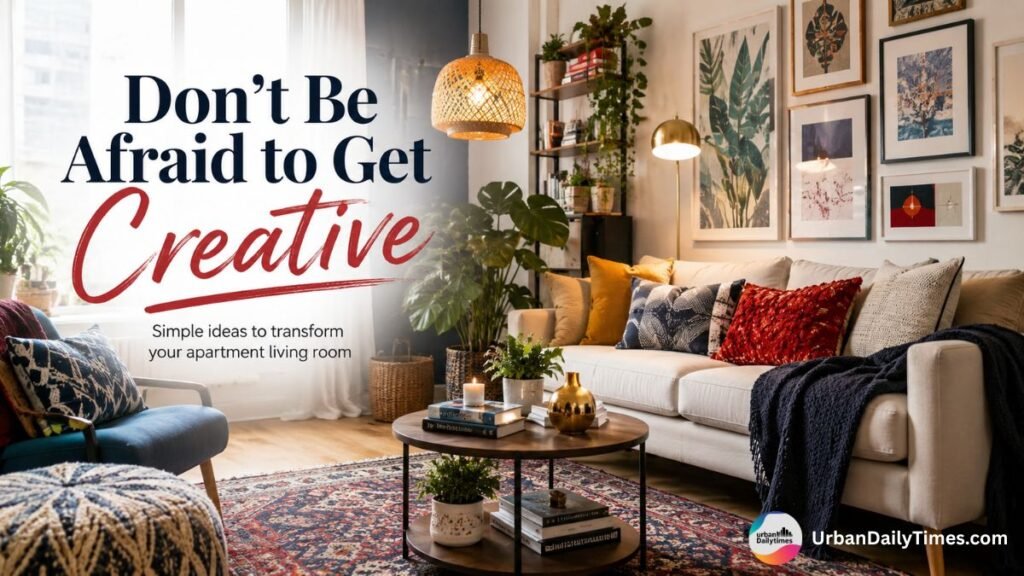
A lot of renters play it safe with beige walls and matching furniture sets because they’re worried about commitment. But a rental living room is actually the perfect place to experiment — most changes are reversible, and the ones that aren’t (like paint) can often be undone before you move out.
Some low-risk, high-impact ways to get creative:
- Mix patterns and textures. Pair a striped throw pillow with a solid-color sofa and a textured area rug. As long as your color palette is cohesive, patterns can coexist without clashing.
- Try peel-and-stick wallpaper. It’s removable, affordable, and available in hundreds of prints — from botanical prints to bold geometric designs.
- Use an accent wall. A single wall in a saturated color or wallpaper print adds personality without overwhelming a small space.
- Play with furniture arrangement. Floating your sofa away from the wall, angling a chair, or creating a reading nook in an unused corner can make a rectangular apartment living room feel more dynamic.
The goal is to move past “safe” decorating and toward a space that reflects your actual taste, not just what feels low-risk.
Start Small if You’re Unsure
If a bold accent wall or patterned wallpaper feels intimidating, start with something reversible and inexpensive, like a colorful throw blanket, a patterned rug, or a set of unexpected curtains. These smaller changes let you test a look before committing to something larger, and they’re easy to swap out if your taste shifts down the line.
Add Dimension With Contrast and Light
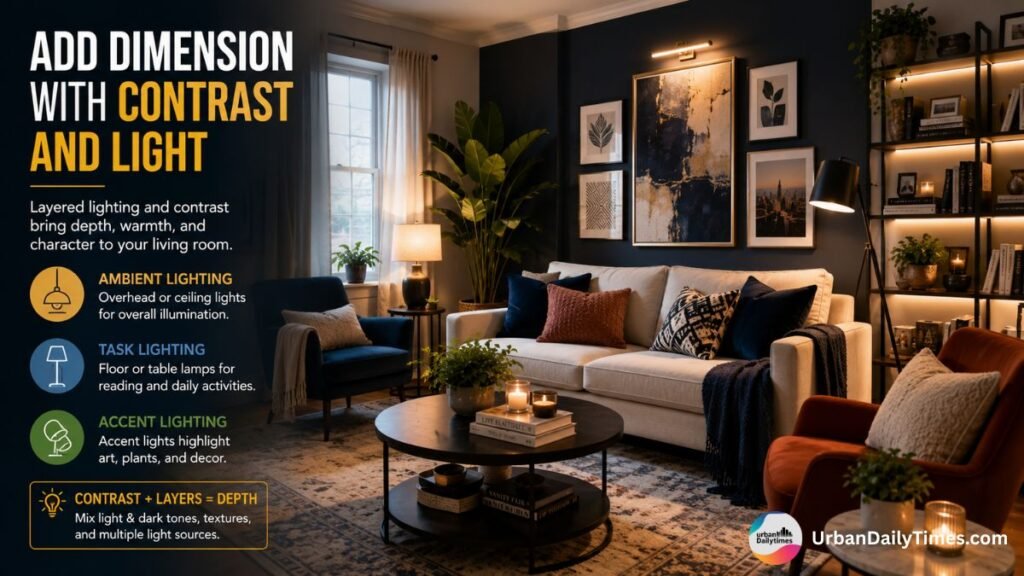
Small apartment living rooms can start to feel flat or one-note if everything is the same tone and everything is lit the same way. Contrast and layered lighting solve both problems.
Use Contrasting Colors and Materials
Pairing light and dark tones — like a charcoal sofa against pale walls, or a dark wood coffee table on a cream rug — gives a room visual depth. Mixing materials (wood, metal, glass, woven textiles) does the same thing on a smaller scale.
Layer Your Lighting
Overhead lighting alone tends to flatten a room. Instead, aim for at least three light sources:
- Ambient lighting — an overhead fixture or flush-mount light for general illumination
- Task lighting — a floor lamp or table lamp near your reading chair or sofa
- Accent lighting — string lights, a picture light, or a small lamp that highlights artwork or a bookshelf
Layered lighting also lets you control the mood of the room — bright and functional during the day, warm and relaxed in the evening.
Add Personal Touches
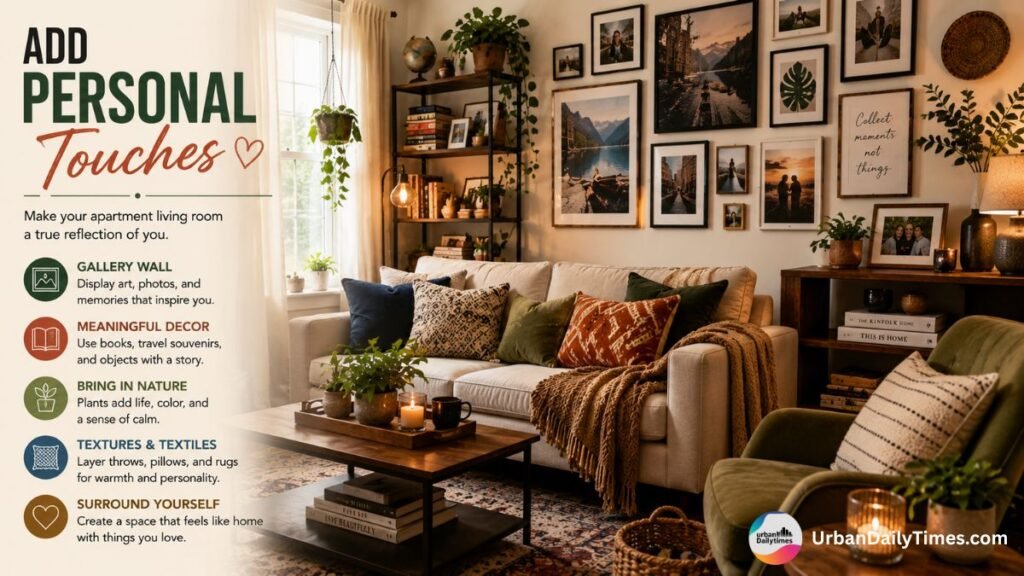
Nothing makes a living room feel more like a rental than an absence of personality. Personal touches are what separate a showroom from a home.
Consider incorporating:
- A gallery wall of photos, prints, or art that reflects your interests — travel photography, movie posters, or thrifted paintings all work.
- Books and objects with meaning, styled on open shelving or a coffee table.
- Plants, real or artificial, which soften a room and add color without much effort.
- Textiles, like a handmade throw blanket or vintage pillow covers, that add warmth and a story.
- Framed art you actually love, rather than generic mass-produced prints.
These details don’t need to be expensive. A shelf of secondhand finds, family photos, or souvenirs from a memorable trip often does more for a room’s character than a matching furniture set ever could.
Balance Personality With Cohesion
Personal touches work best when they follow a loose thread — a color palette, a shared era, or a common material. A gallery wall of mismatched frames still reads as intentional if the photos share similar tones, and a shelf of travel souvenirs feels curated rather than cluttered when it’s grouped thoughtfully instead of scattered around the room.
Create a Focal Point
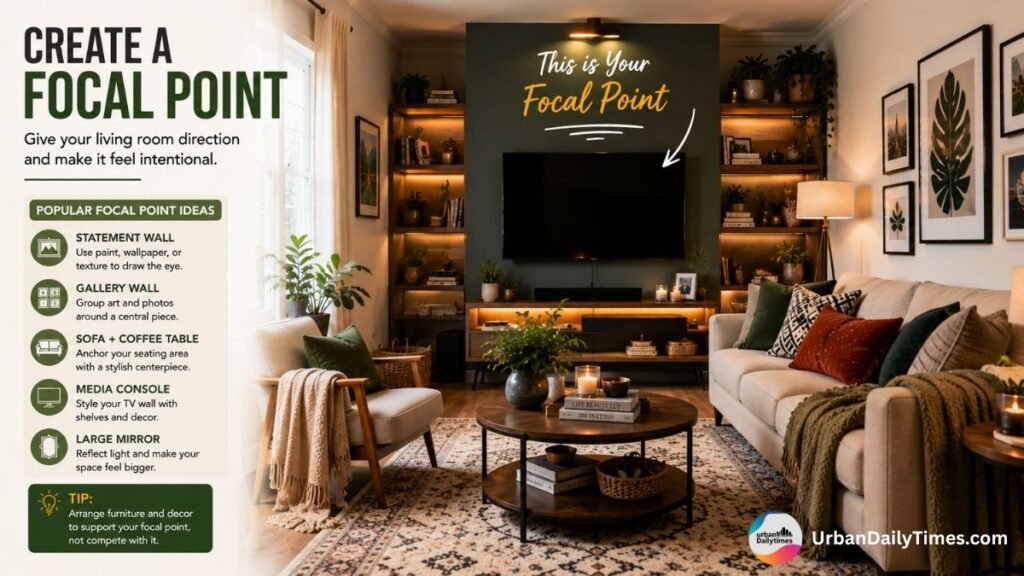
Every well-designed living room has a focal point — a spot the eye is naturally drawn to when you walk in. Without one, a room can feel scattered, with furniture and decor competing for attention instead of working together.
Common focal points for an apartment living room include:
| Focal Point Option | Best For | How to Style It |
|---|---|---|
| Statement wall (paint or wallpaper) | Rentals wanting a bold look without permanent changes | Use peel-and-stick wallpaper or a removable accent color |
| Gallery wall | Renters with a lot of art or photos | Group frames in varying sizes around a central anchor piece |
| Sofa + coffee table styling | Anyone wanting a classic, furniture-led focal point | Arrange seating to face the sofa, style the coffee table with trays and books |
| Media console/TV wall | Living rooms centered around entertainment | Style shelving around the TV with plants, books, and decor |
| Large mirror | Small or dark apartment living rooms | Position opposite a window to bounce natural light around the room |
Once you’ve chosen a focal point, arrange your furniture to support it rather than compete with it. This one shift alone can make an apartment living room feel far more put-together.
Add a Rug to Define Your Space
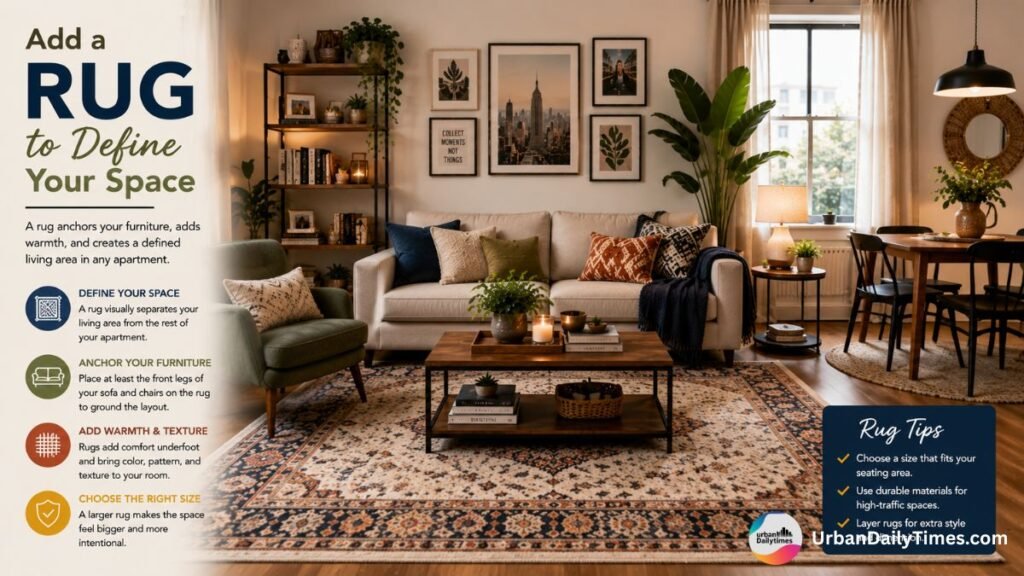
In open-concept apartments or studios, a rug does more than add comfort underfoot — it visually separates your living room from the dining area, kitchen, or entryway without needing an actual wall.
A few rug-buying guidelines worth following:
- Size matters more than you think. A too-small rug is one of the most common apartment decorating mistakes. As a general rule, at least the front legs of your sofa and chairs should sit on the rug.
- Anchor your seating area. All main furniture pieces should relate to the rug, either fully on it or with front legs resting on the edge.
- Choose durable materials for high-traffic zones. Wool and synthetic blends tend to hold up better than delicate natural fibers in daily-use spaces.
- Layer rugs for texture. A smaller patterned rug over a larger neutral one adds visual interest without overwhelming the room.
A well-placed rug also helps a rented space feel more finished, since bare flooring — especially standard-issue apartment flooring — can read as unfinished or temporary.
Make Your Living Room Uniquely Yours
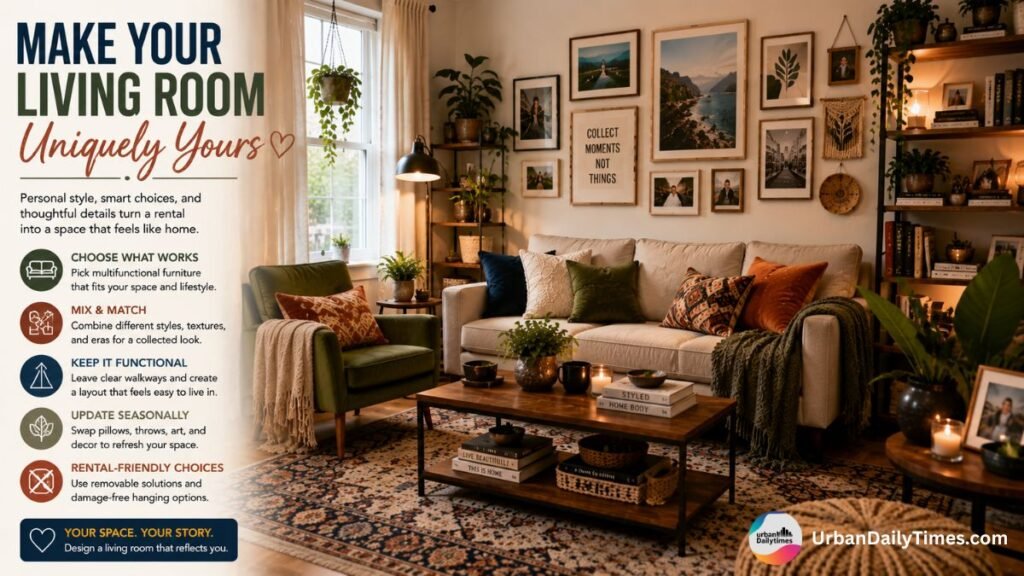
Once the fundamentals are in place — layout, lighting, a focal point, a rug — the final step is making sure the room feels like an extension of you, not a page torn from a catalog.
A few ways to keep the space personal and functional:
- Prioritize multifunctional furniture. An ottoman with storage, a sofa bed for guests, or a nesting coffee table set all help small apartment living rooms work harder.
- Don’t over-match. A room where every piece matches perfectly can feel sterile. Mixing eras, finishes, and styles usually looks more collected and lived-in.
- Keep walkways clear. Comfortable circulation matters as much as aesthetics — leave at least 30 inches for main walkways where possible.
- Update seasonally. Swapping throw pillows, art, or a rug with the seasons keeps the space feeling fresh without a full redesign.
- Respect your lease. For rentals, look for removable wallpaper, command hooks, tension rods, and freestanding shelving instead of anything that requires drilling or permanent alteration.
The most successful apartment living rooms aren’t the ones that follow every trend — they’re the ones that balance function, comfort, and a clear sense of personal style.
Final Words
You don’t need a large footprint, a big budget, or a design degree to create a stylish, comfortable apartment living room. Start with the basics — a defined focal point, a properly sized rug, and layered lighting — then build outward with personal touches that reflect how you actually live. Small, intentional choices consistently outperform expensive, generic ones when it comes to making a rental feel like home.
Whatever your space or budget, the goal is the same: a living room that feels comfortable, cohesive, and genuinely yours.
FAQs
How can I make a small apartment living room look bigger?
Use a large mirror to reflect light, choose furniture with visible legs, and stick to a light, cohesive color palette to make the space feel more open.
What size rug is best for an apartment living room?
Choose a rug large enough for at least the front legs of your sofa and chairs to rest on it, which visually anchors the seating area.
How do I decorate a living room without painting the walls?
Use removable wallpaper, tapestries, large art pieces, and freestanding shelving to add color and texture without altering the walls.
What’s the best way to arrange furniture in a small living room?
Float furniture away from walls when possible, create a clear focal point, and leave at least 30 inches of walkway space for easy movement.
How can I add personality to a rented living room?
Lean on removable decor like art, textiles, plants, and personal objects — items that add character but travel with you when you move.
Do I need overhead lighting in my living room?
Not necessarily. A mix of floor lamps, table lamps, and accent lighting often creates a warmer, more flattering look than overhead lighting alone.

Welcome to Urban Daily Times. My name is Malik Akmal, and I’m passionate about sharing practical home decor and home improvement ideas that help you create a better living space. With over 15 years of experience in home design, renovation trends, and product research, I focus on providing trustworthy advice that helps homeowners save money and choose the right solutions. Every product and recommendation featured on Urban Daily Times is carefully researched and reviewed to ensure you get honest, useful, and reliable information.


